HipHughes History & VoovoU.S. History and Government RegentsHipHughes History × Voovo
Ace the Regents in U.S. History
Short video lessons, each followed by practice questions, with a study plan to your Regents date. Taught by Keith Hughes, who taught U.S. History in Buffalo for 14 years.
Part I’s 28 multiple-choice questions can come from any of the 11 Key Ideas, from Jamestown to today. Each one starts from a document, a map or a cartoon.
Context the documents don’t give
Each short essay asks for the historical context of two documents, then how they relate or how reliable one is. The documents alone don’t give you the context.
What’s in it
Inside the course
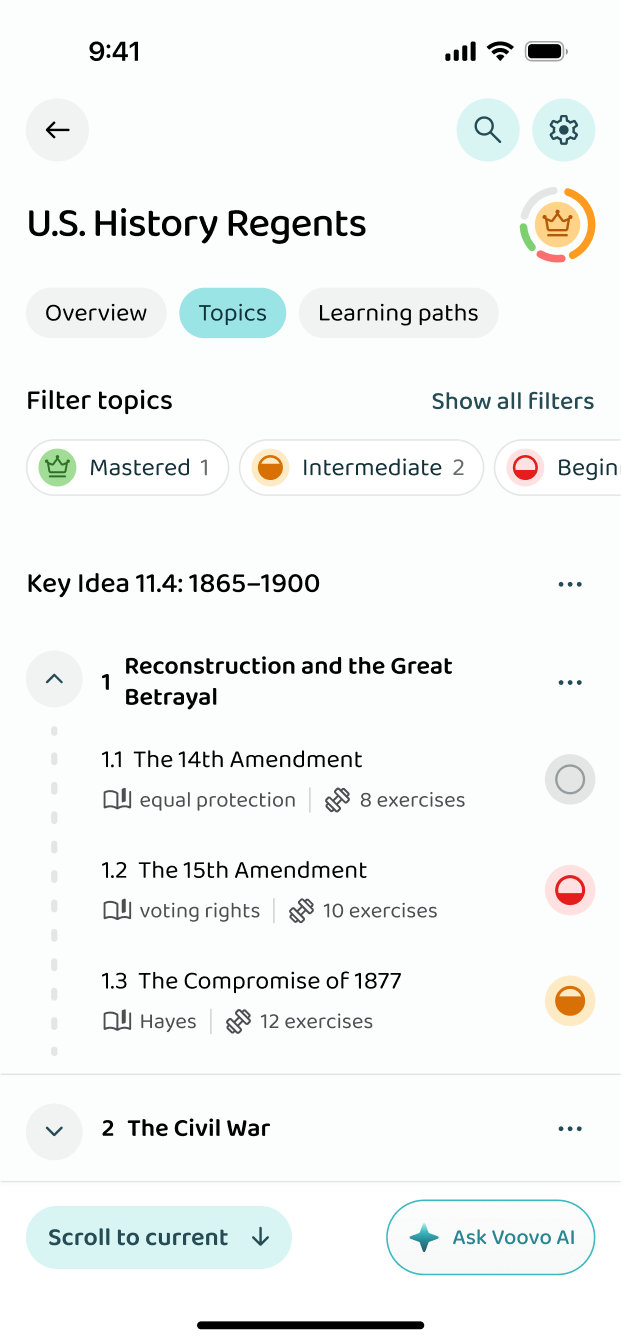
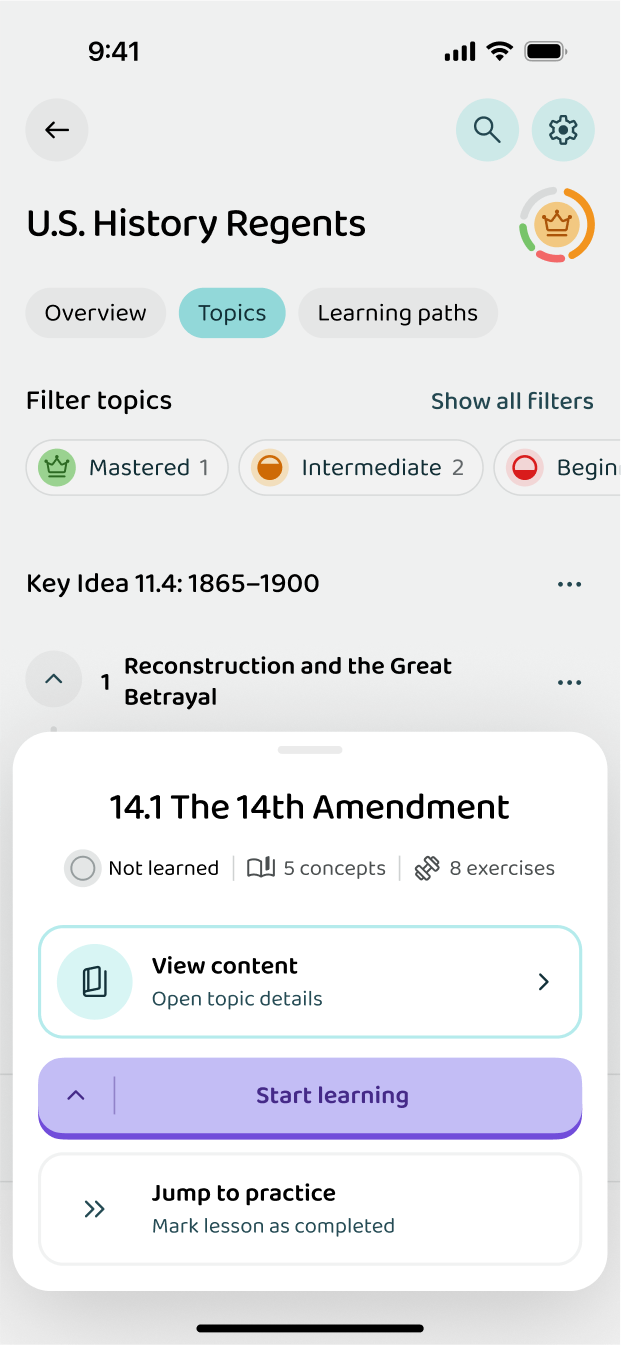
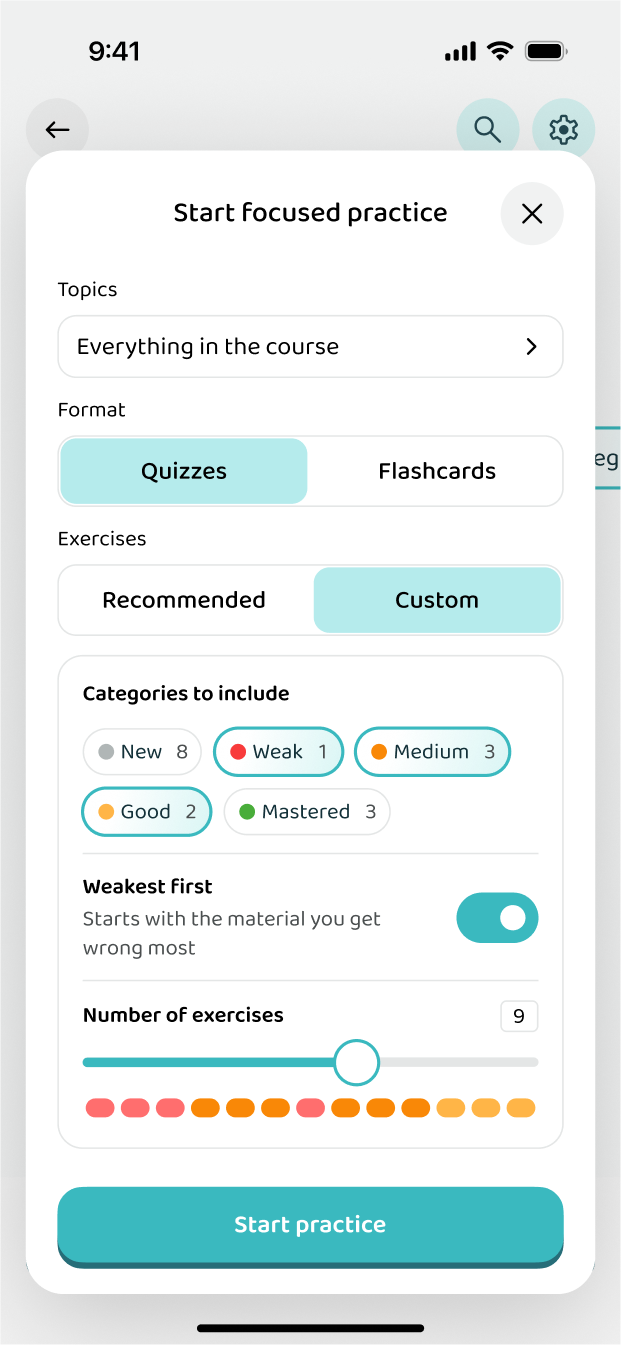
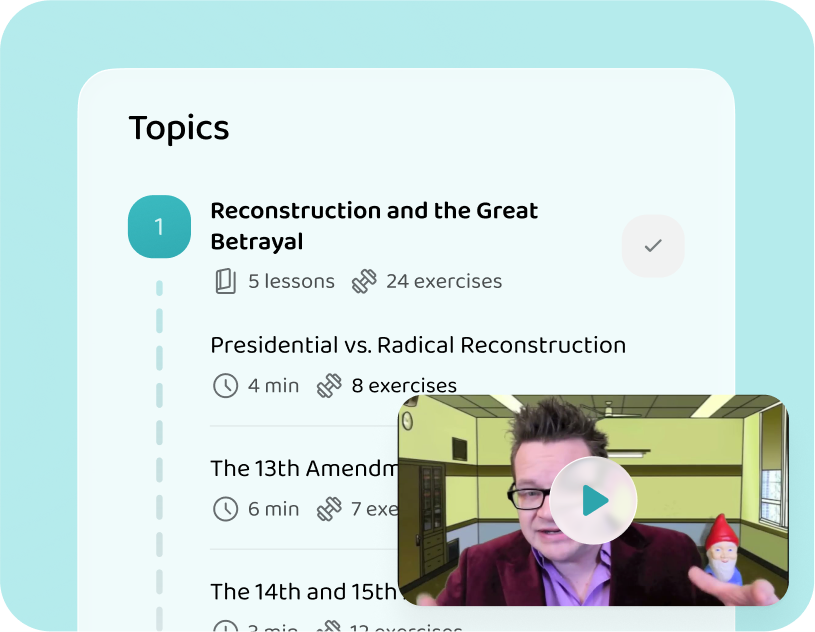
The course follows the 11 Key Ideas of the New York framework, from colonial foundations to today. Each topic is a run of short video lessons, and every lesson ends in questions. Targeted practice takes you back to your weakest topics.
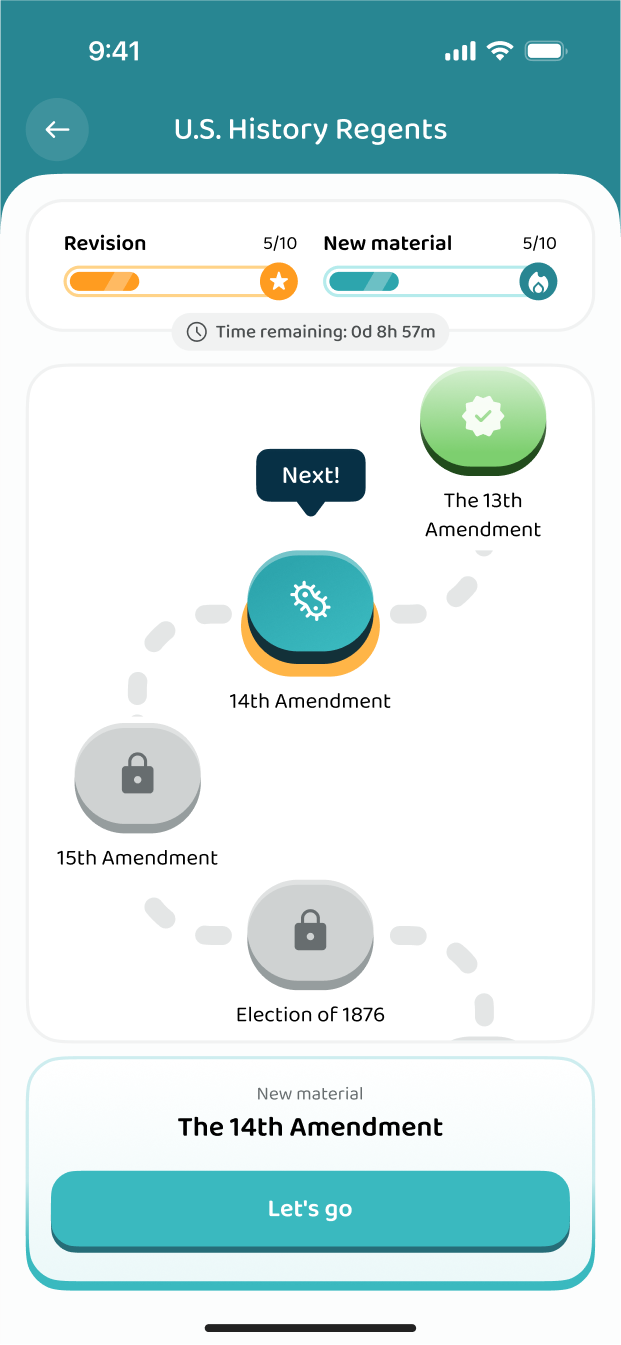
Topics and lessons follow the framework in order, so you always know which part you’re on and what’s left.
You answer instead of rewatching
Each lesson ends in questions, so you find out what you can recall without the video.
The early Key Ideas stay fresh
The topics you learned in the fall keep coming up in practice, so they still feel fresh on exam day.
How the course works
Learn it, practice it, master it
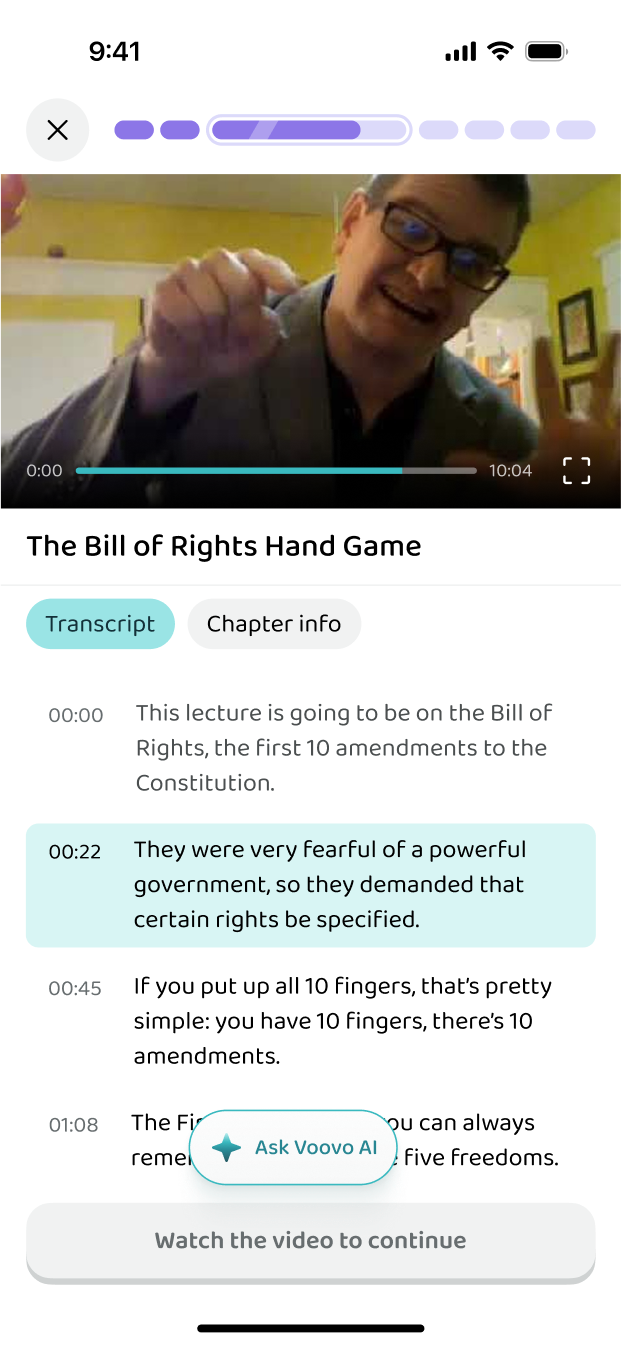
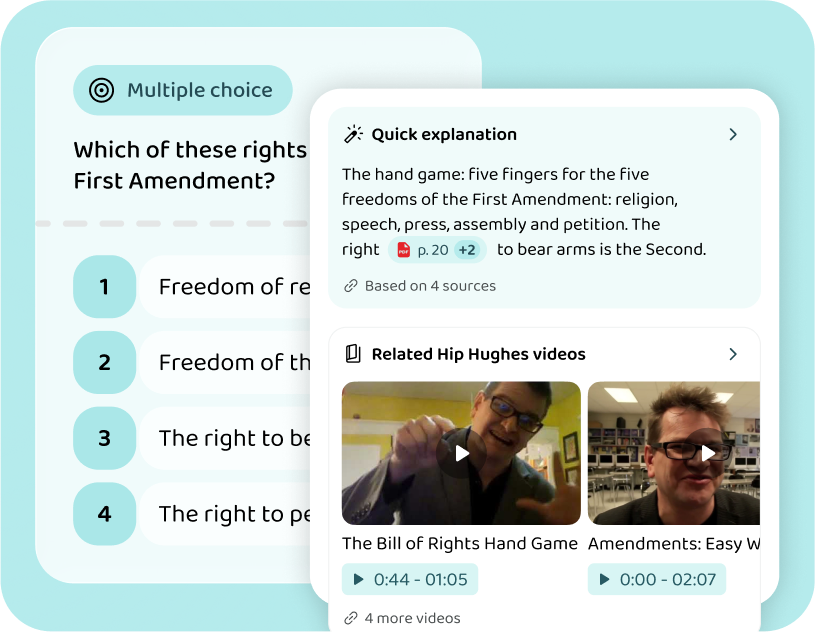
Keith made some of his best-known videos for this exam, like the Bill of Rights hand game. Each lesson starts with his explanation, then asks you about it.
01Lessons
Every Key Idea explained first
Each lesson is built from his videos, Key Idea by Key Idea: the idea in plain words, then the people, laws and court cases the exam asks about.
All 11 Key Ideas
From his videos
02Practice
Then you answer it yourself
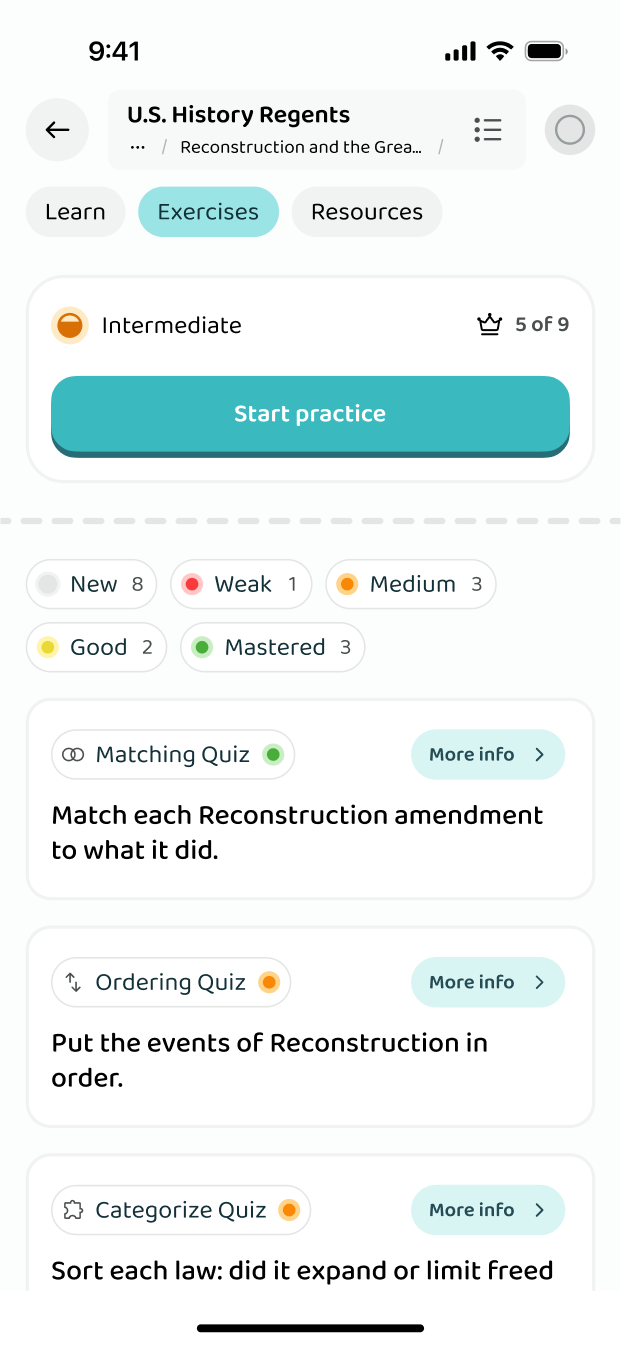
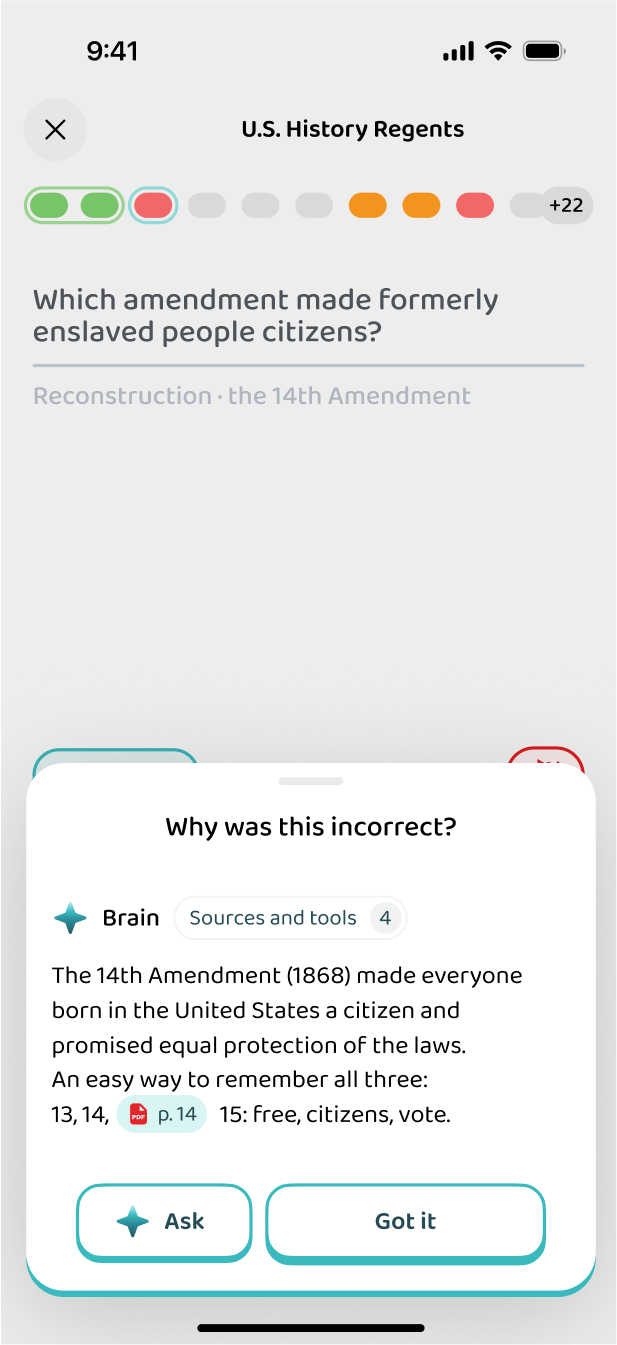
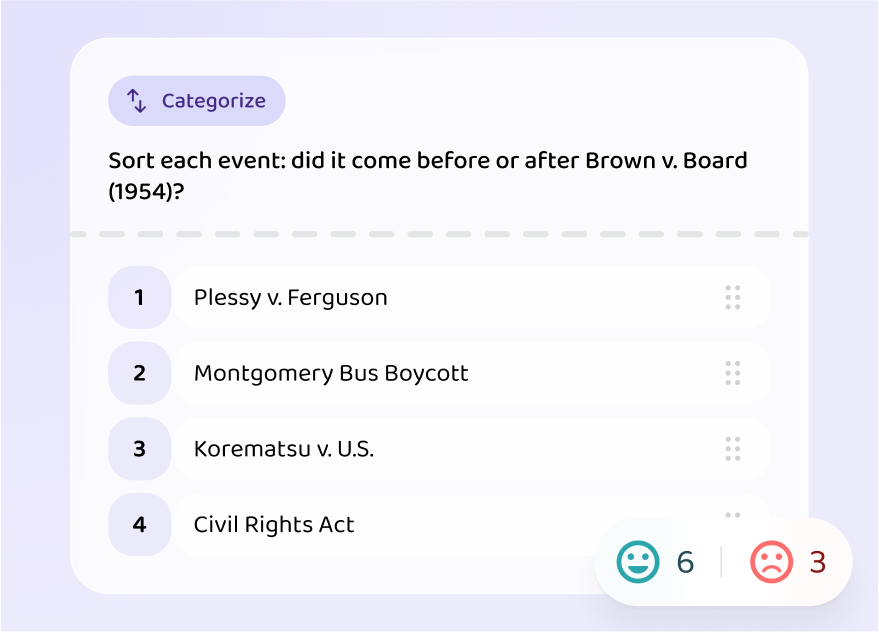
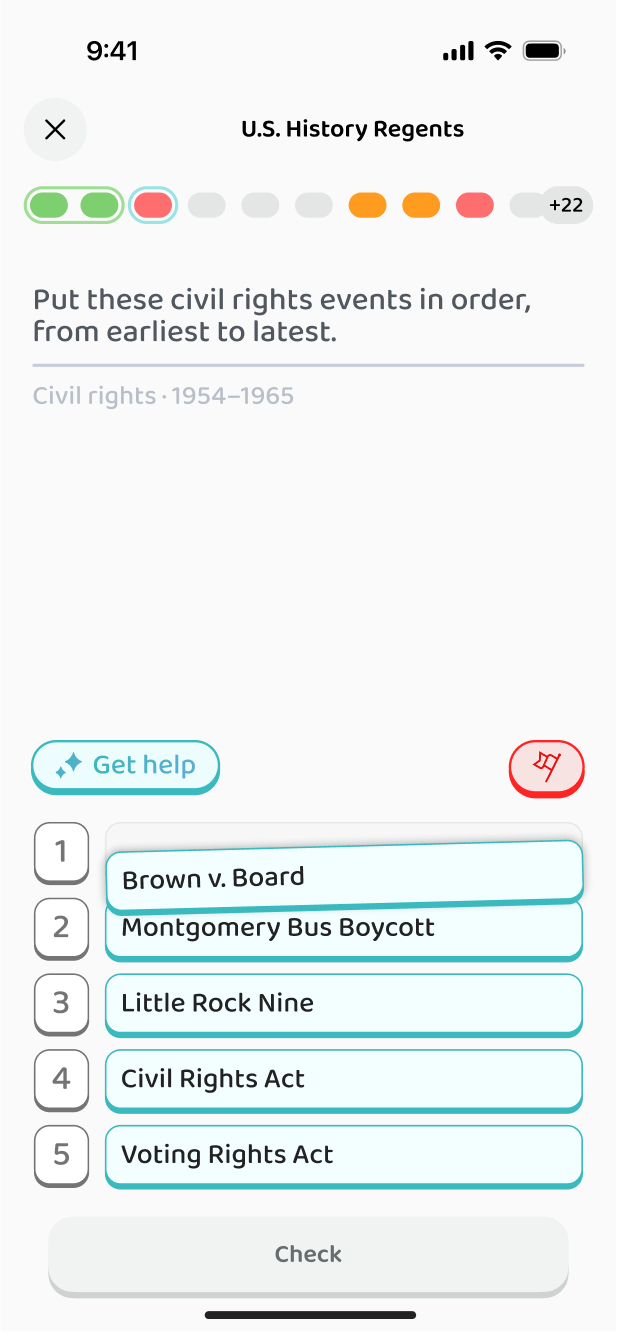
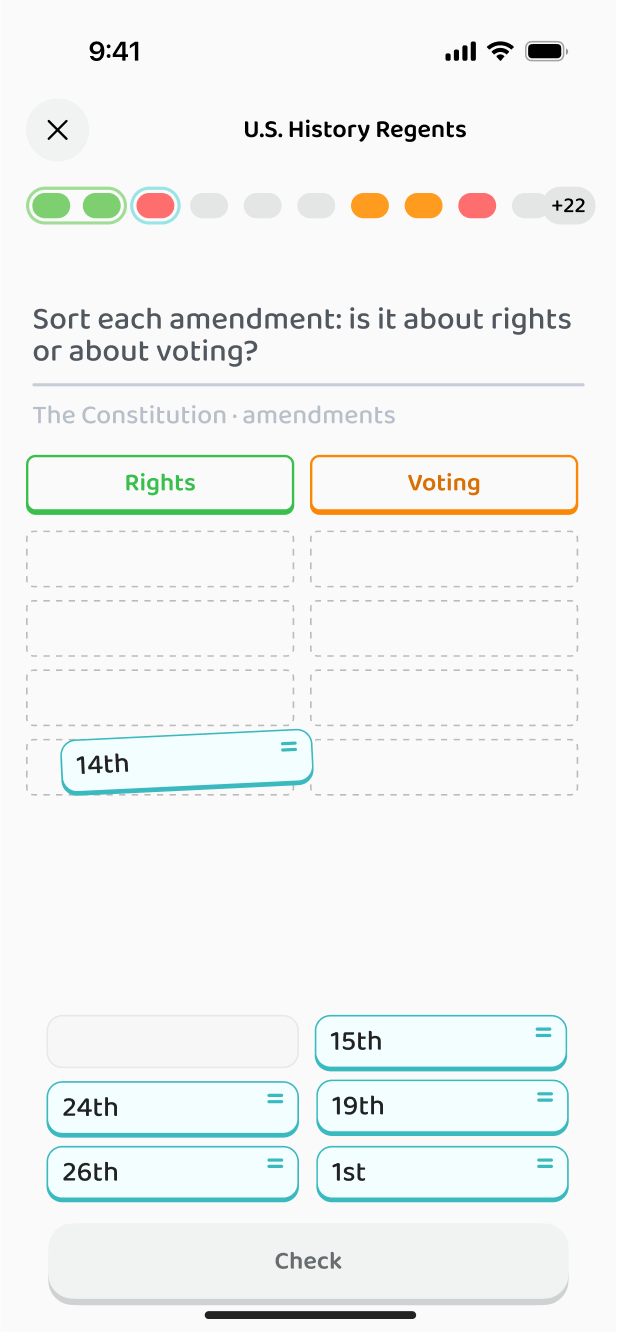
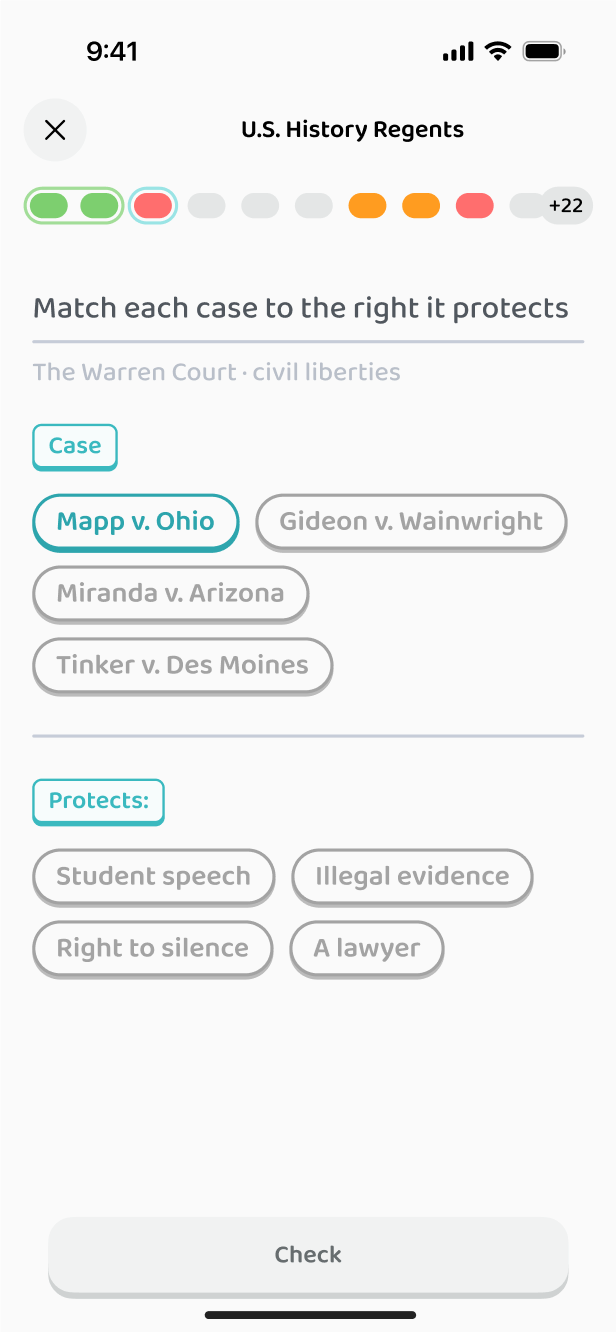
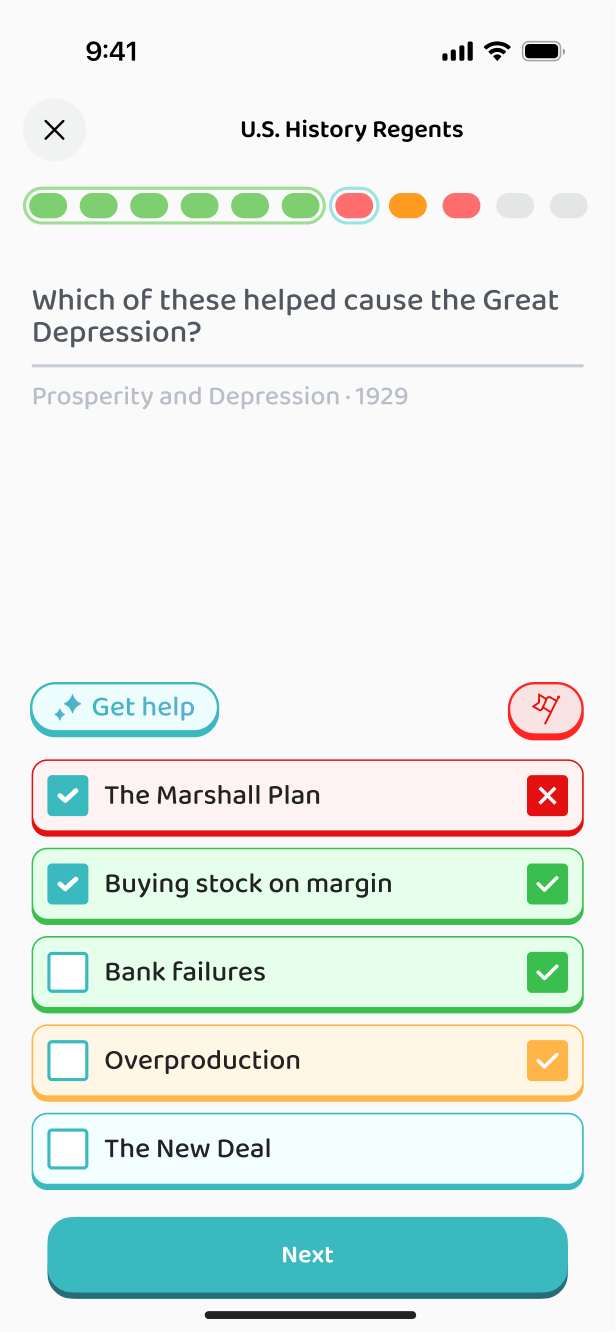
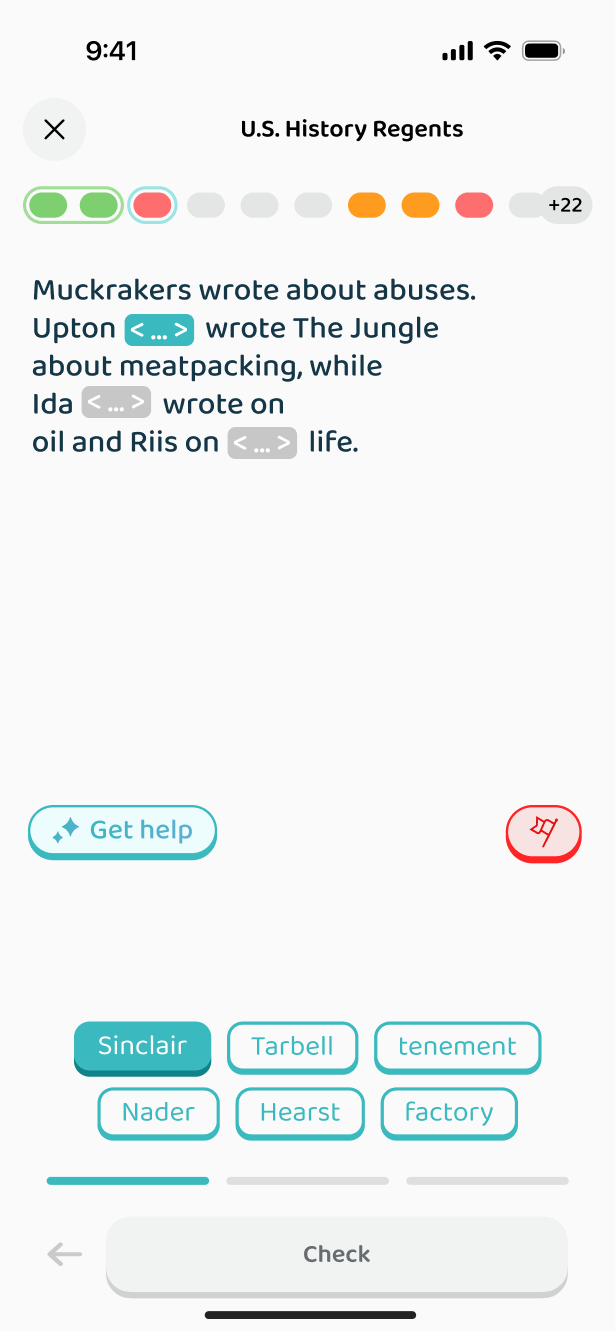
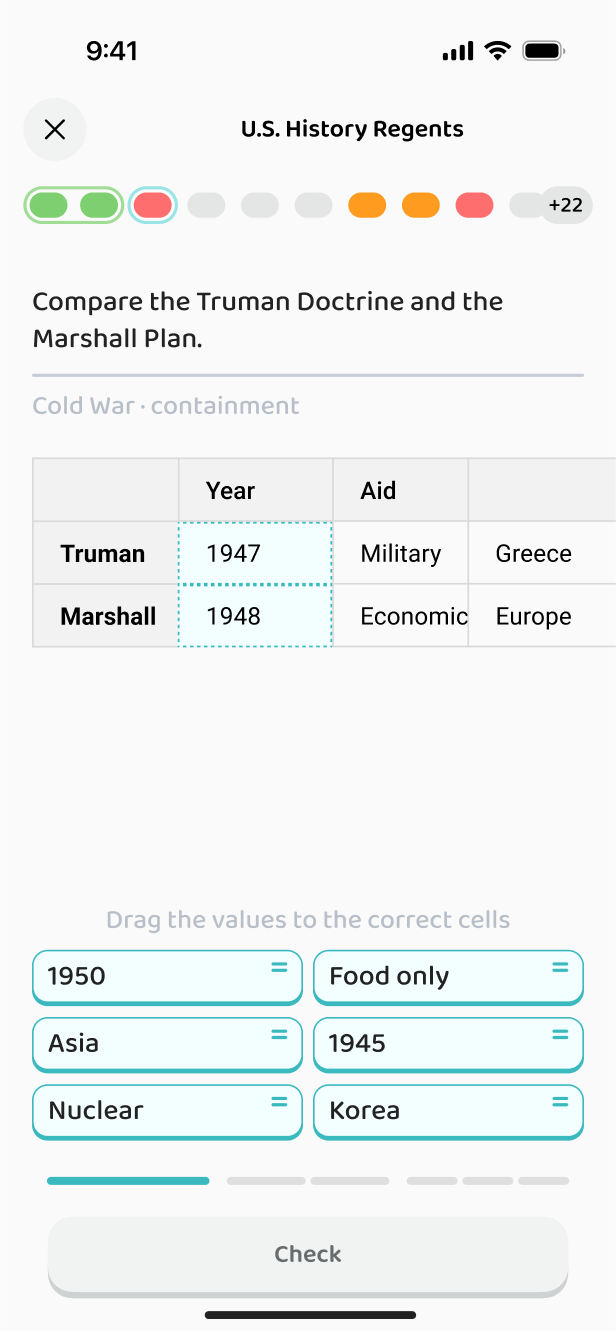
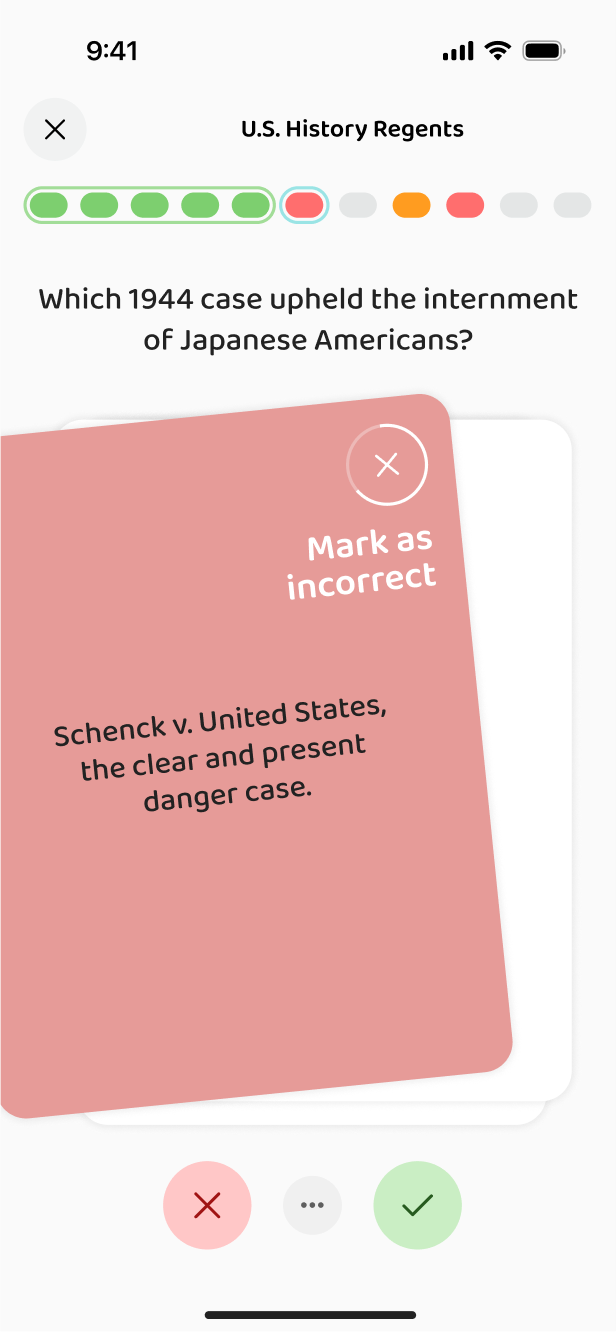
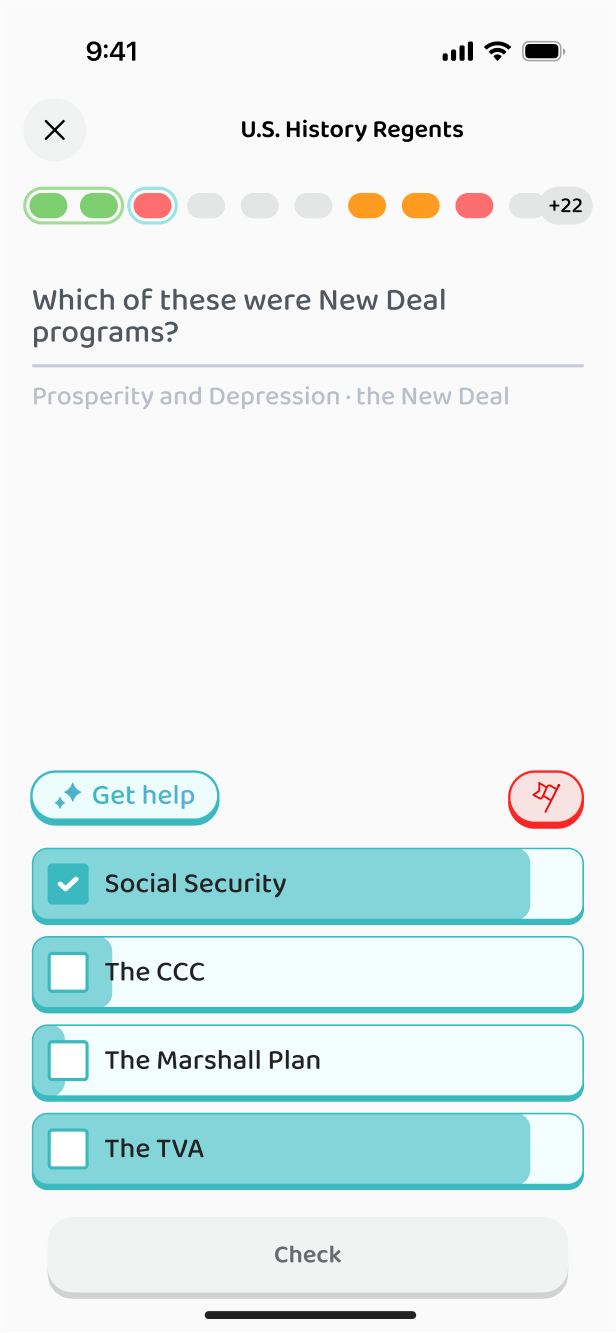
Put the civil rights events from Brown v. Board to the Voting Rights Act in order. Sort the amendments into rights and voting. Match each Warren Court case to the right it protects. Every answer is explained.
Ten question types
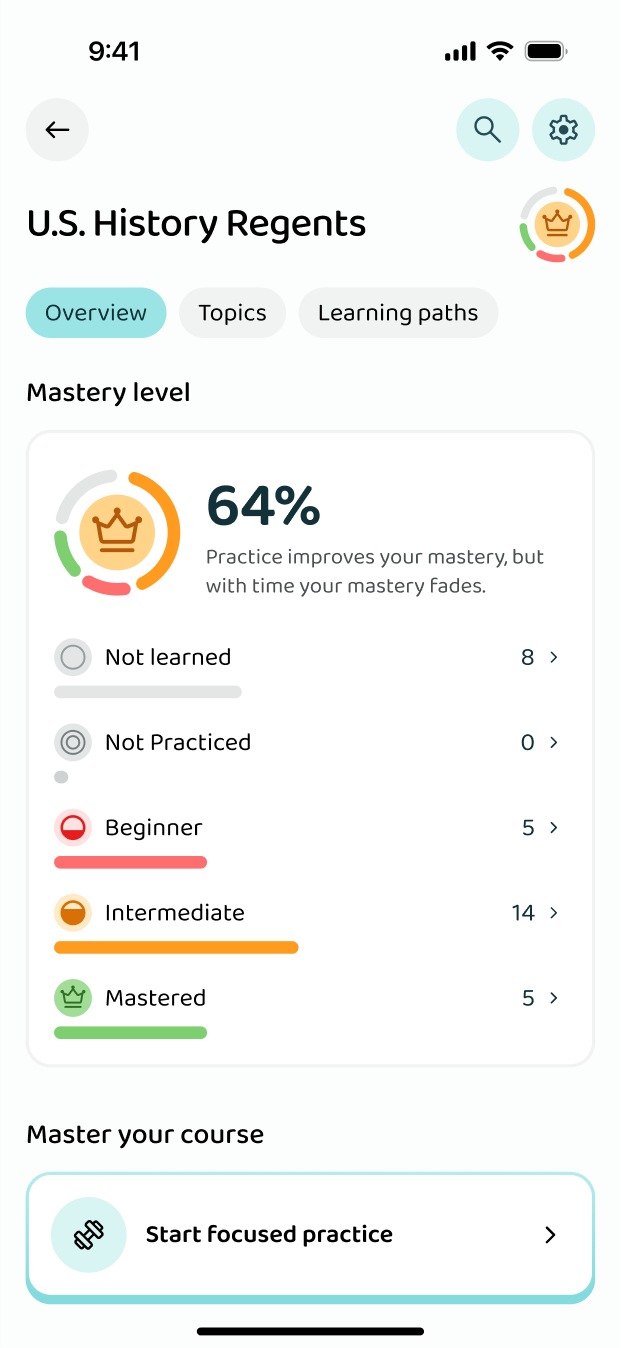
See where you stand
03Review
Older topics stay in rotation
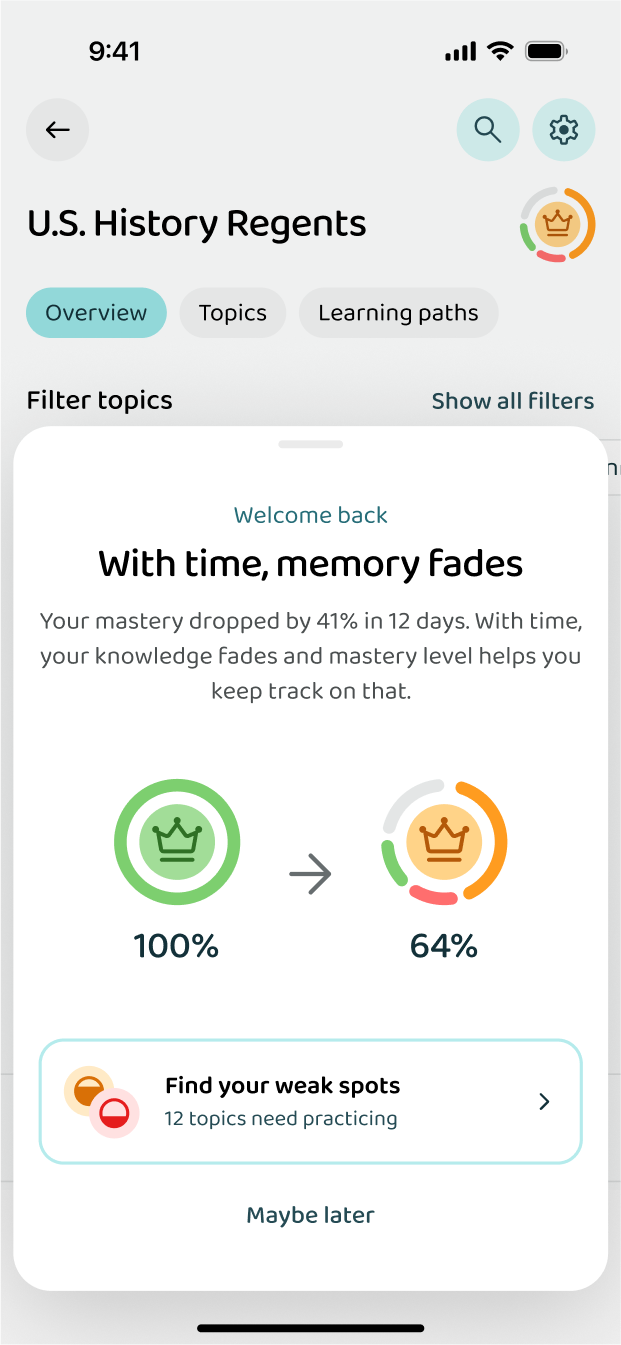
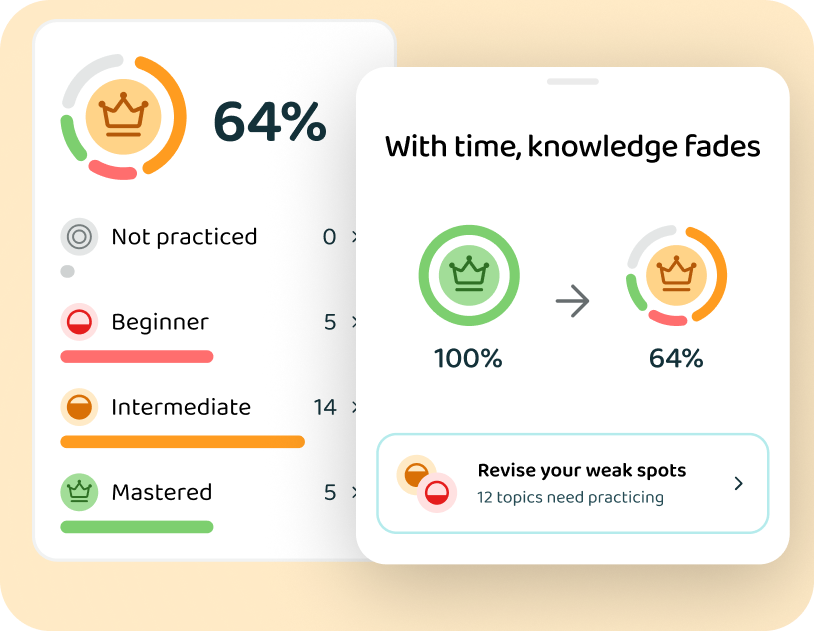
What you get wrong gets practiced again within days, and what you know comes back later. So the Constitution from the fall still makes sense in June.
Spaced practice
Nothing quietly fades
04Help
Ask when you’re stuck
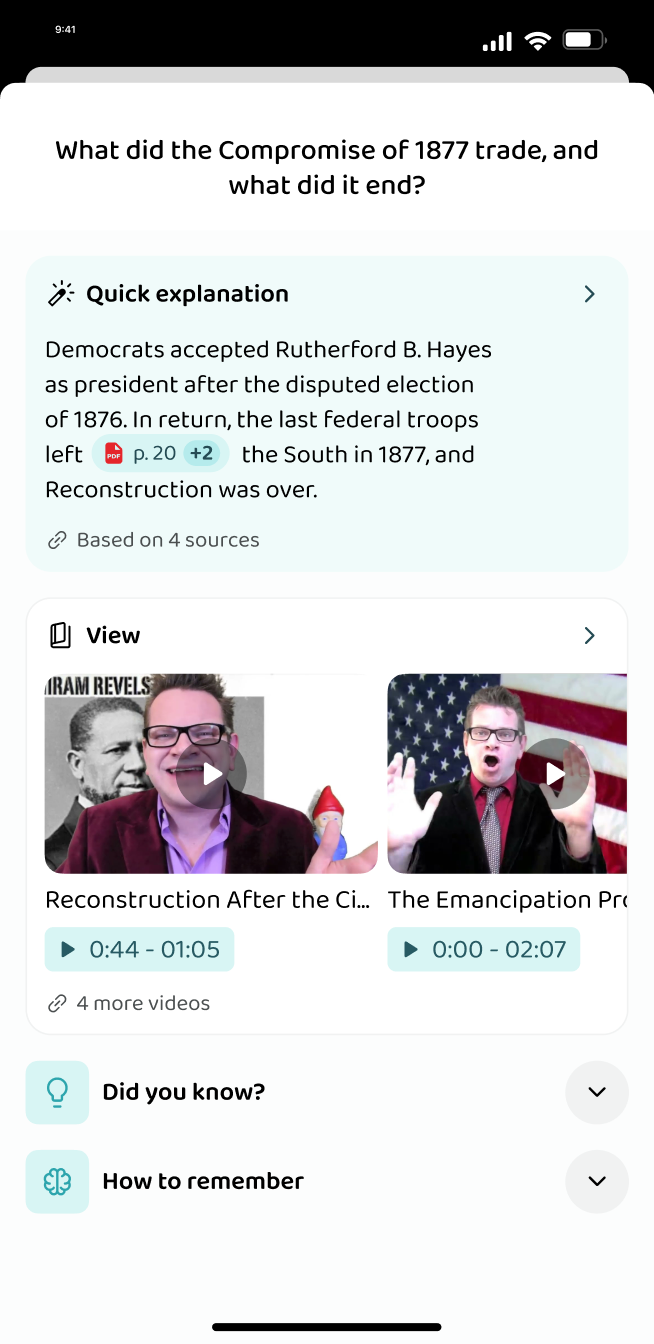
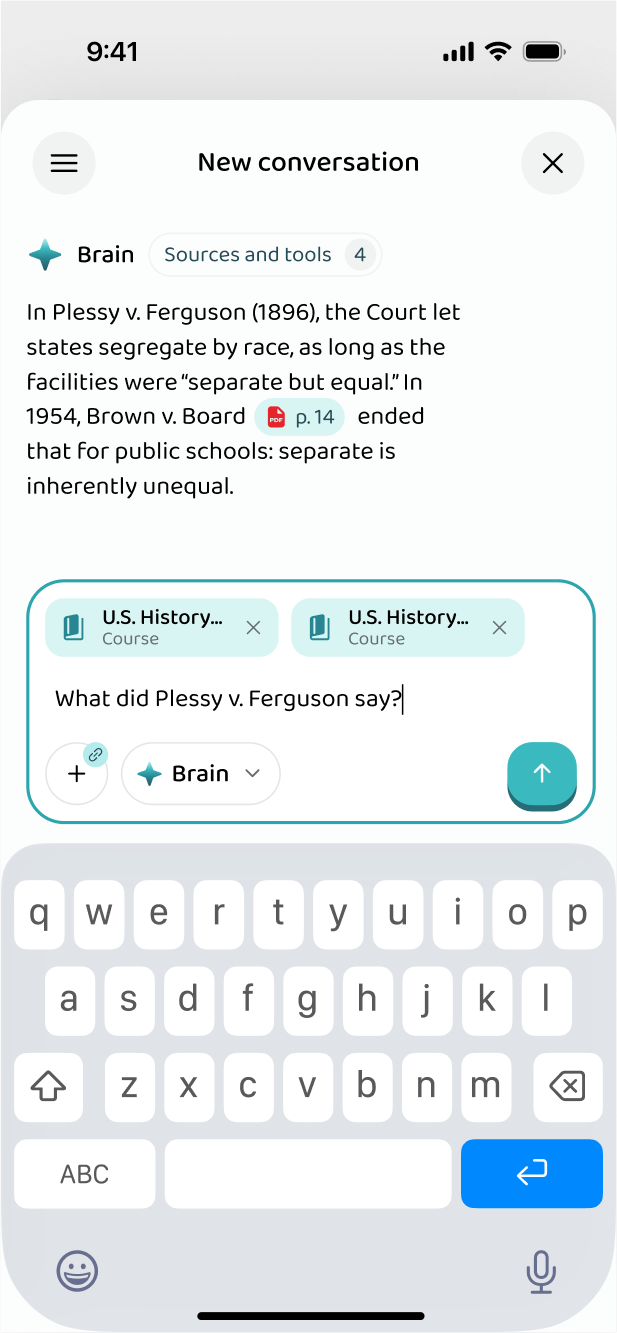
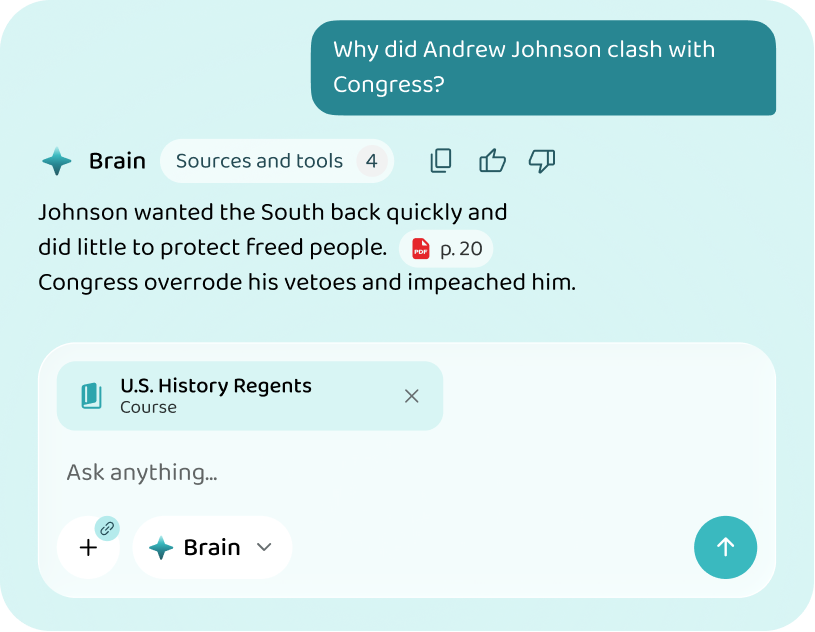
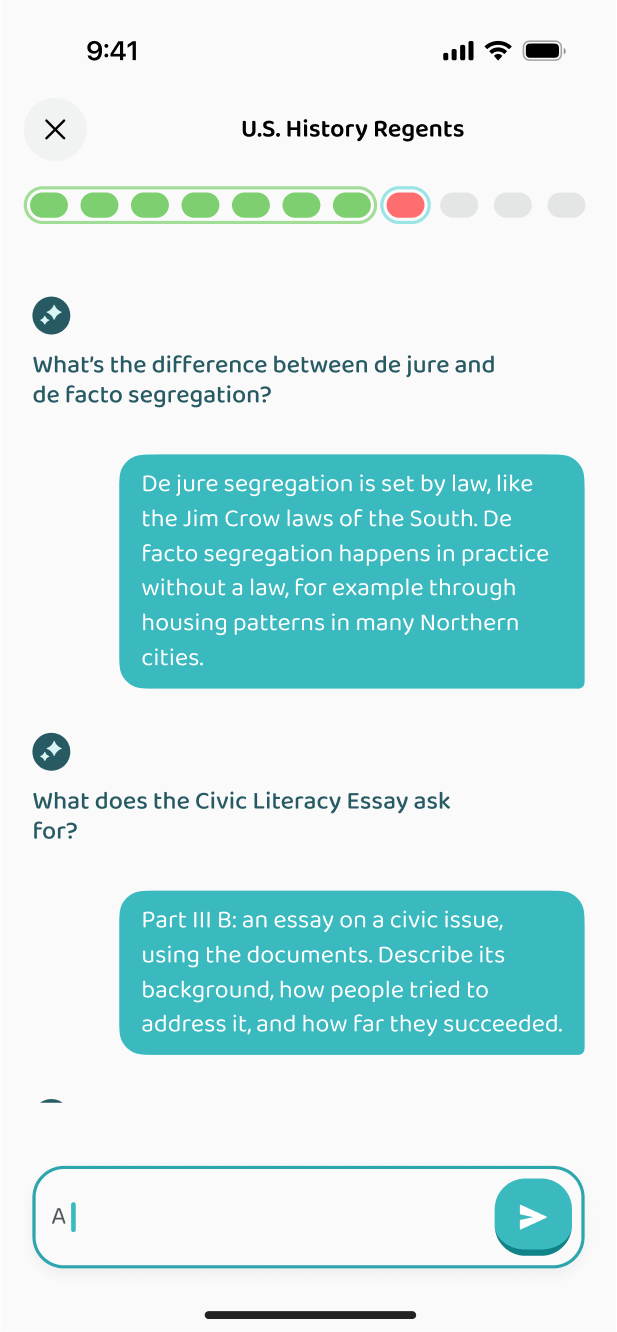
Ask what Plessy v. Ferguson said, or why Andrew Johnson clashed with Congress. Brain, the AI tutor, answers only from the course material and shows the lesson each answer comes from. No weak sources, no hallucinations.
Ask anything
Cites the course
What the course covers
The course follows the New York State framework’s 11 Key Ideas, in order, and covers all of them.
U.S. History and Government Regents
1Colonial and constitutional foundationsKey Ideas 11.1–11.2 · Jamestown · the Revolution · the Constitution · the Bill of Rights
2Expansion and the Civil WarKey Idea 11.3 · Jackson · Manifest Destiny · the sectional crisis · the Civil War
3Reconstruction and industryKey Ideas 11.4–11.5 · the Reconstruction amendments · Jim Crow · labor · the Progressives
4American power and the world warsKey Ideas 11.6–11.8 · imperialism · World War I · the 1920s · the New Deal · World War II
5Cold War and social changeKey Ideas 11.9–11.10 · containment · civil rights · the Warren Court · the Great Society
6A globalizing worldKey Idea 11.11 · the Gulf War · 9/11 · the 21st century
His method
A trick for every amendment
Keith made the Bill of Rights hand game for Regents students: a finger for each amendment the exam asks about. Most of his videos give the topic a trick like it, and the course’s explanations use them.
Five fingers, five freedoms
Religion, speech, press, assembly and petition: the First Amendment on one hand.
13, 14, 15: free, citizens, vote
The Reconstruction amendments in order: the 13th ended slavery, the 14th made freed people citizens, the 15th protected the vote.
Peanut butter and jelly
His rule for document essays: the documents are the peanut butter, the history you bring is the jelly. The course is where the jelly comes from.
Coming soon
The Regents course opens later
It’s being built from his videos now. Sign up and you’ll get an email the day it opens, with 10% off.
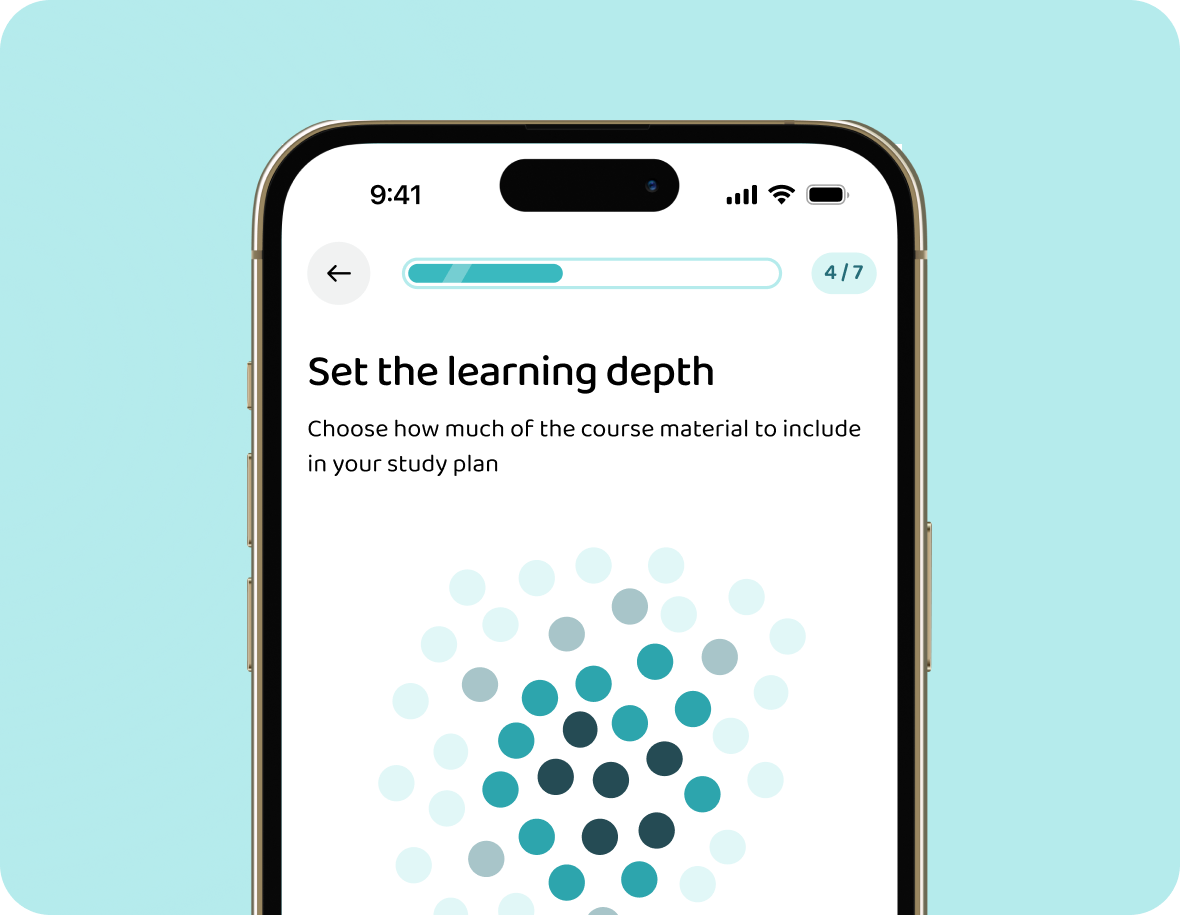
Everything in the course, or the essentials first. You decide how much goes into the plan.
2
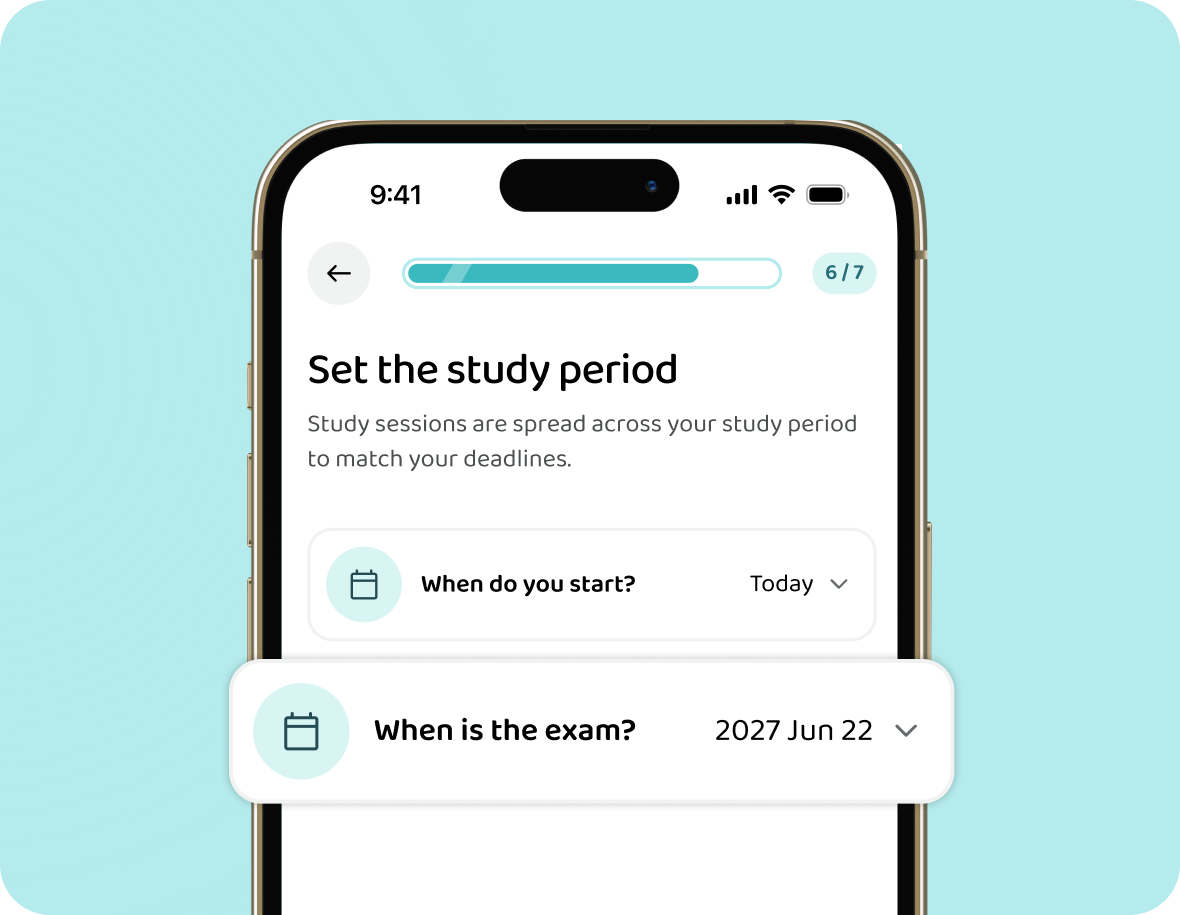
Set the date
January, June or August. The lessons are spread across the time you have left.
3
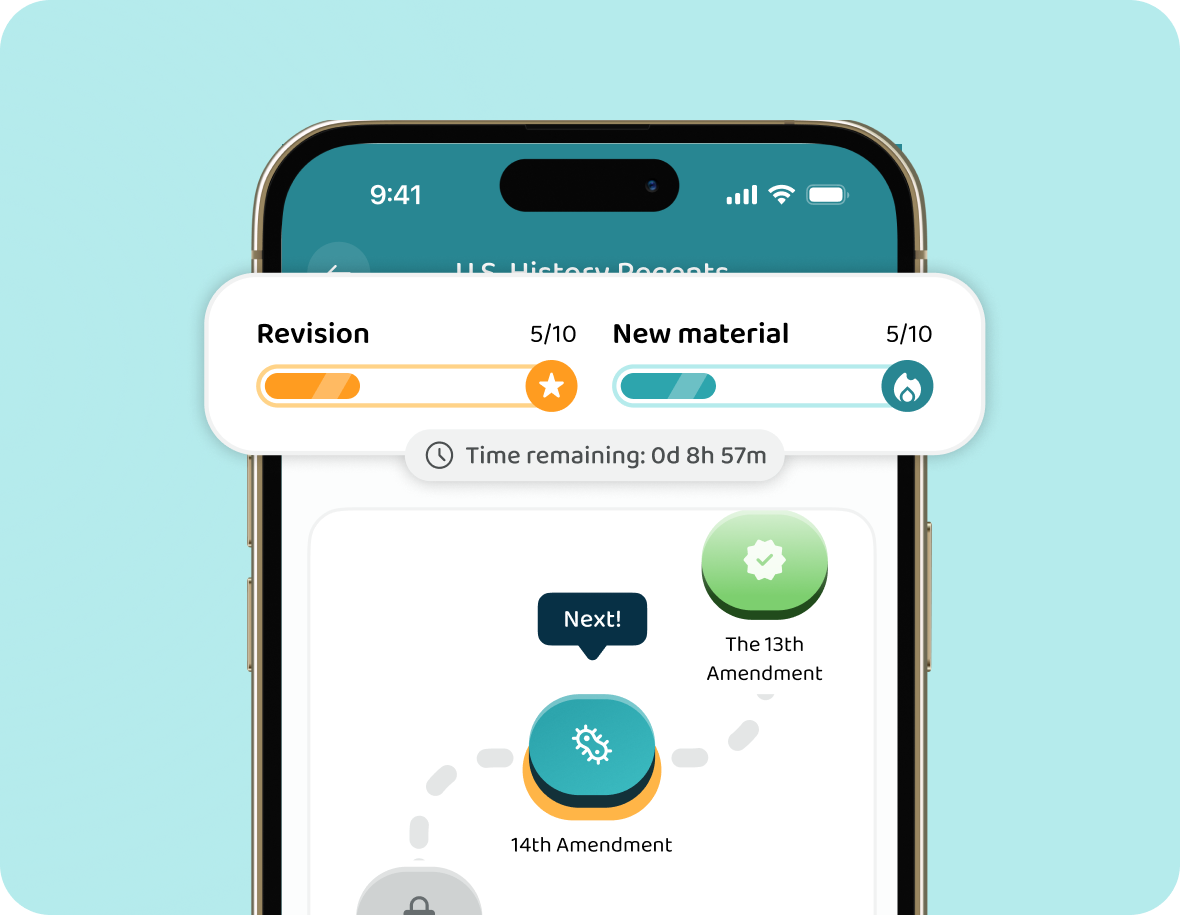
Follow your plan
Each day mixes new lessons with the topics you’re about to forget.
How you practice
Ten ways to practice
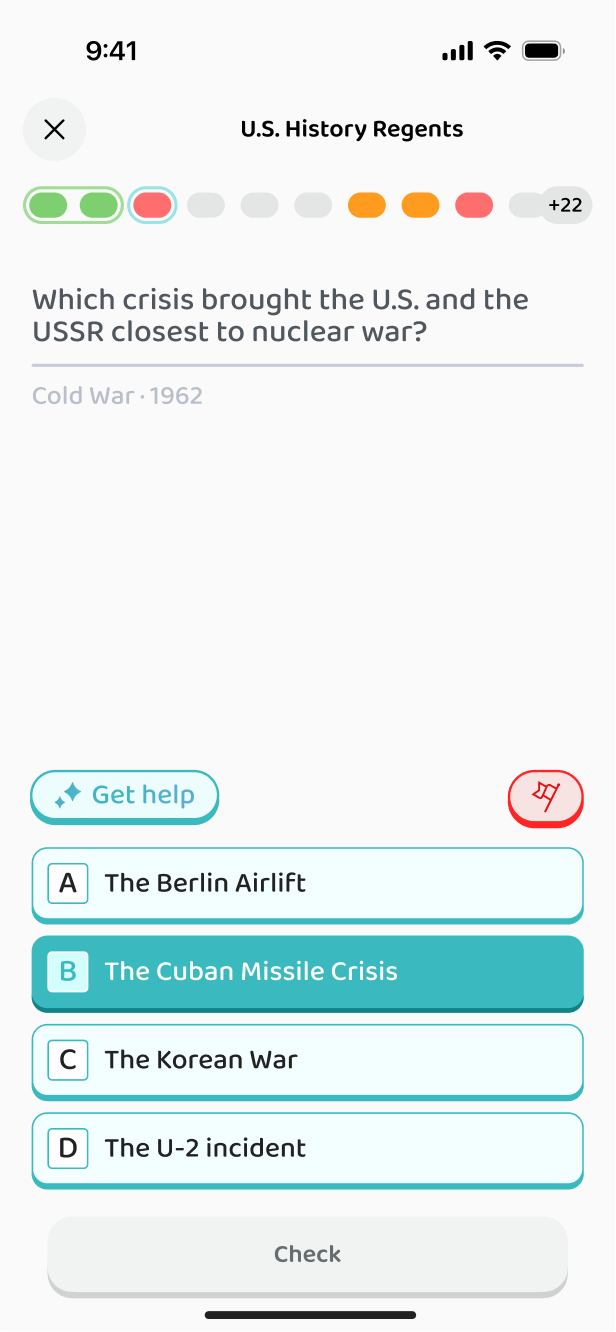
Ordering, sorting, matching, single answer, multiple choice, fill in the blank, tables, flashcards, ask-the-audience and an AI chat. Each idea gets asked several ways, so you learn the history, not just the shape of one answer.
Keith Hughes is the educator and creator behind HipHughes History, known for making history and government engaging and accessible. His work spans classroom teaching, educational video, professional development, and storytelling that amplifies teacher and student voices.
“I think a long time ago I figured out that kids are really smart. They just don't speak in academic kind of discourse. So I think that what my videos do is try to speak in student language.”
His students sat this exam every June, and he ran review sessions for it, live, the night before. This course gives you that review all year, one Key Idea at a time.
They are, and they stay free. What YouTube can’t do is ask you about each topic after the video, explain why an answer was wrong, and bring the early Key Ideas back before your exam. That’s what the course adds.
Is it for the current exam?
Yes. It follows the framework exam first given in June 2023: the document-based multiple choice, the short essays and the Civic Literacy Essay. Keith’s older Regents review videos on YouTube are for the exam before it.
Will it grade my essays?
No. The course teaches the history your essays draw on, the outside information the rubric gives points for. Writing practice and feedback stay with your teacher.
Is this from New York State?
No. Keith’s course is built with Voovo. The New York State Education Department does not make or endorse it.
Who writes the questions?
Voovo’s team writes them from his videos, and experts review every question before it goes into the course.
When does it open, and what does it cost?
The course is being built now. Sign up and you’ll get an email the day it opens, with 10% off. The price is set when it opens.
AP® is a trademark registered by the College Board, which is not affiliated with, and does not endorse, this site.
U.S. History and Government Regents
Be ready the day it opens.
Sign up now, and you’ll hear the day the course opens, with 10% off and time to go through all 11 Key Ideas.