HipHughes History & VoovoAP® U.S. History · AP® U.S. GovernmentHipHughes History × Voovo
Ace APUSH and AP® Gov
Short video lessons, each followed by practice questions, with a study plan to your May exam. Taught by Keith Hughes, who taught U.S. History and AP® Government for 14 years.
From May 2027, all three APUSH short-answer questions are required, each on a different period from 1491 to 2001. A unit your class rushed in October can still decide a question.
13 documents, 14 cases
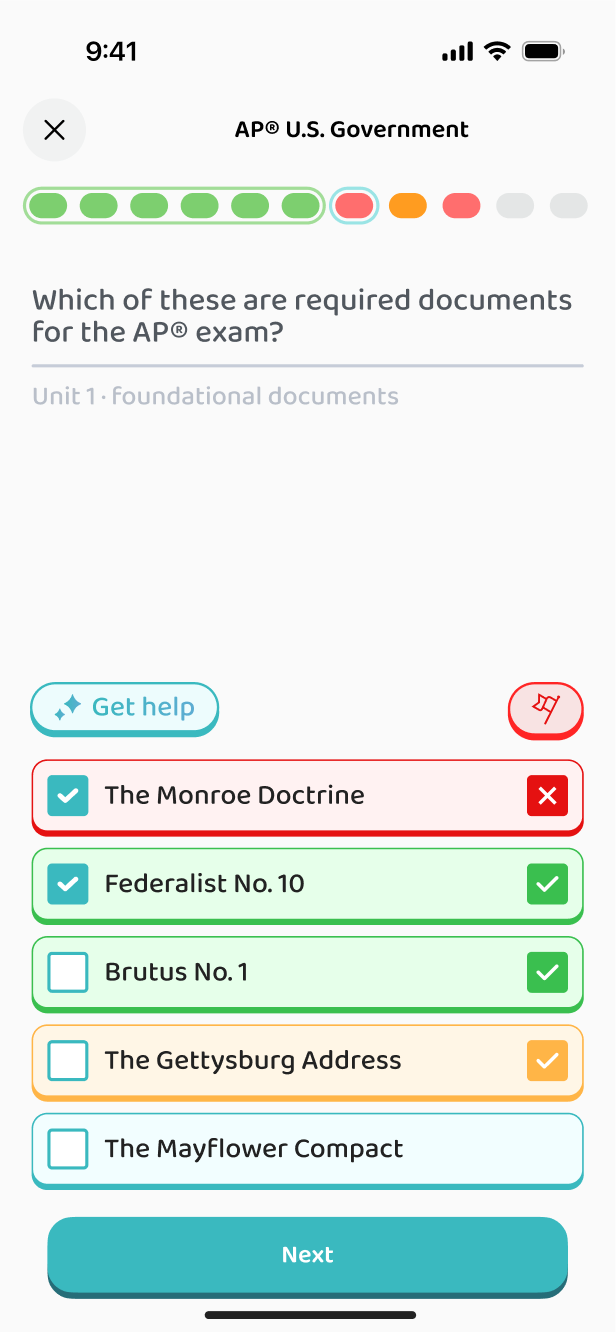
AP® Gov asks you to know 13 foundational documents and 14 Supreme Court cases, four of the documents new this year. One essay compares a required case with one you have never seen.
55 questions in 55 minutes
Every APUSH multiple-choice question starts from a source: a speech, a cartoon, a chart. There is about a minute for each, so the names and dates have to come quickly.
What’s in it
Inside the course
AP® U.S. History runs from 1491 to today, and AP® U.S. Government follows the College Board’s five units. Each topic is a run of short video lessons, and every lesson ends in questions. Targeted practice takes you back to your weakest topics.
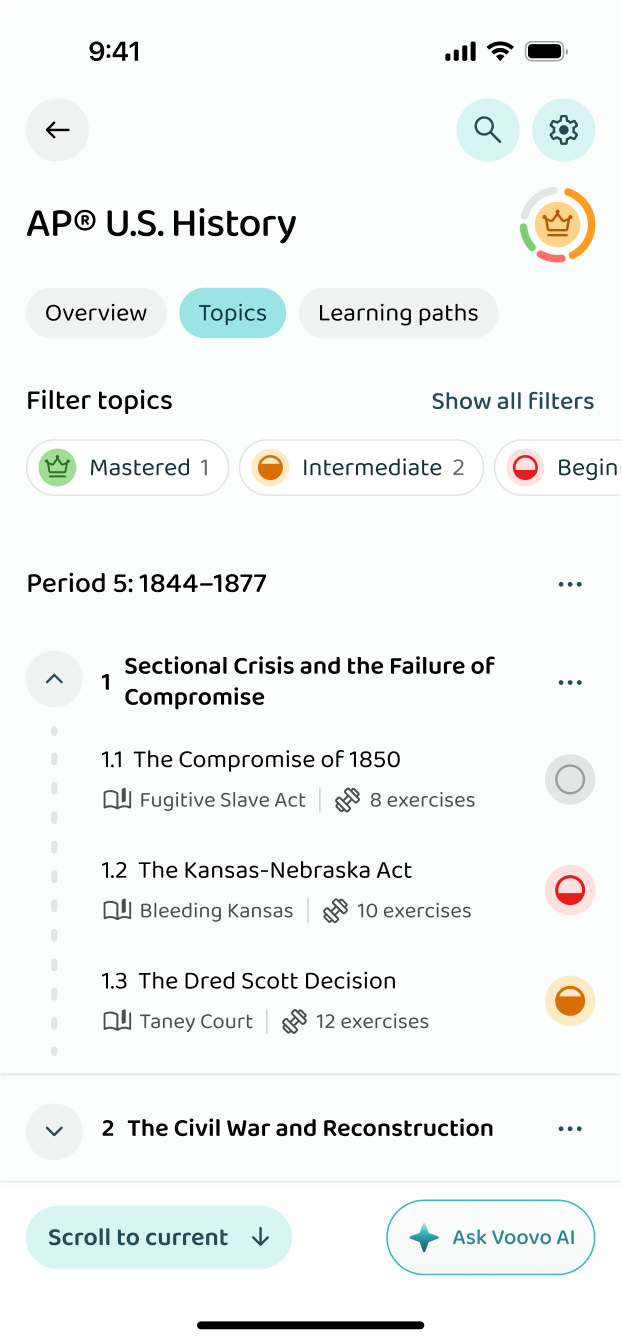
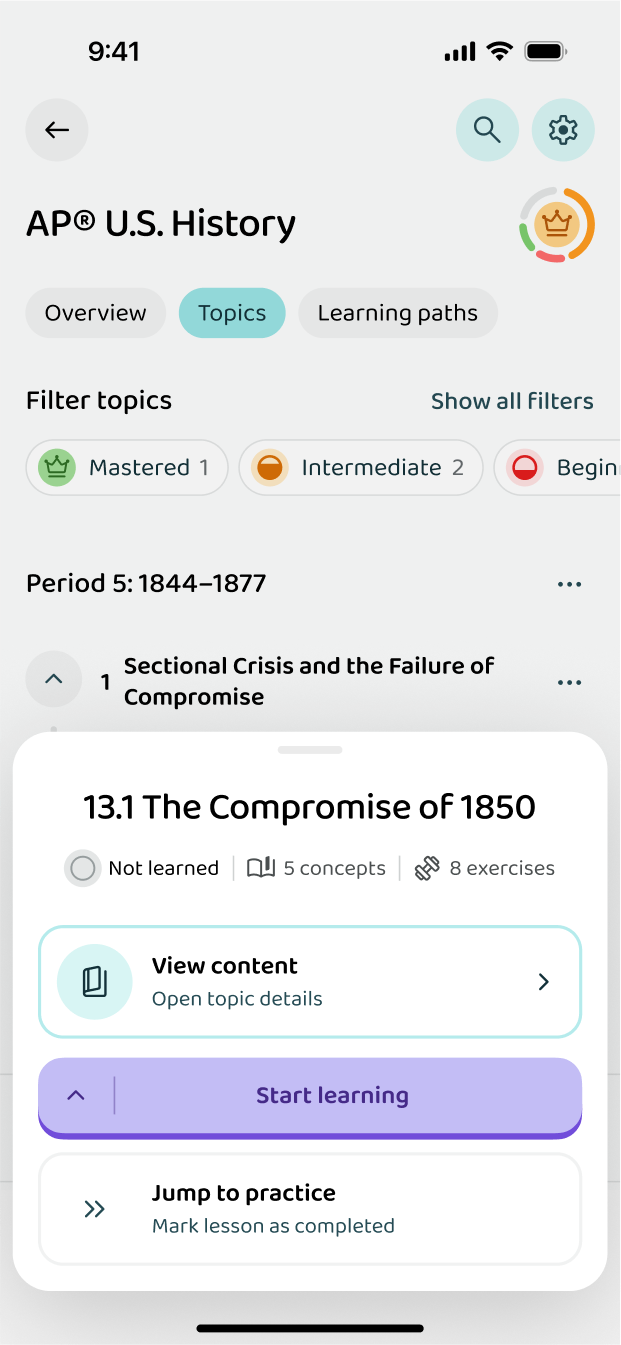
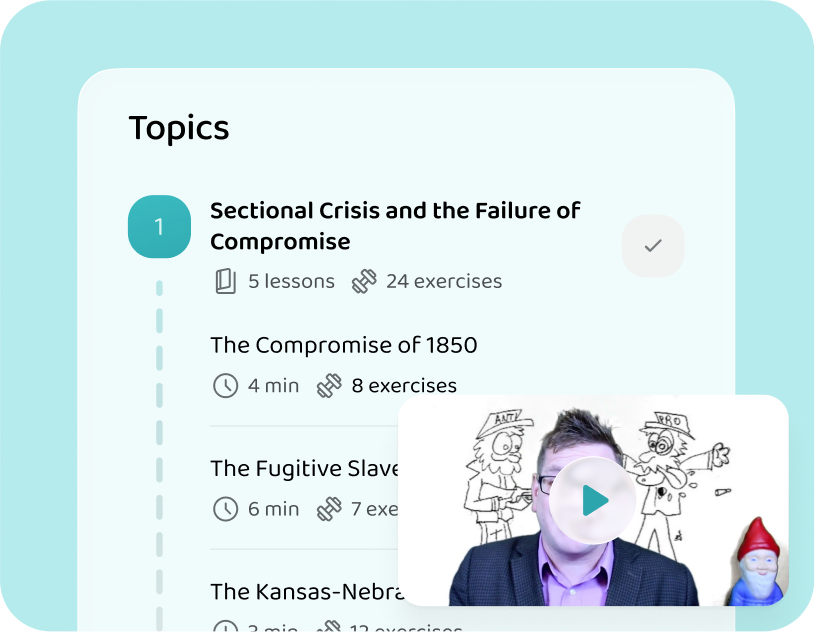
Topics and lessons follow the College Board’s periods and units, so you always know which part you’re on and what’s left.
You answer instead of rewatching
Each lesson ends in questions, so you find out what you can recall without the video.
Early units stay fresh
The periods you learned in the fall keep coming up in practice, so they still feel fresh in May.
How the courses work
Learn it, practice it, master it
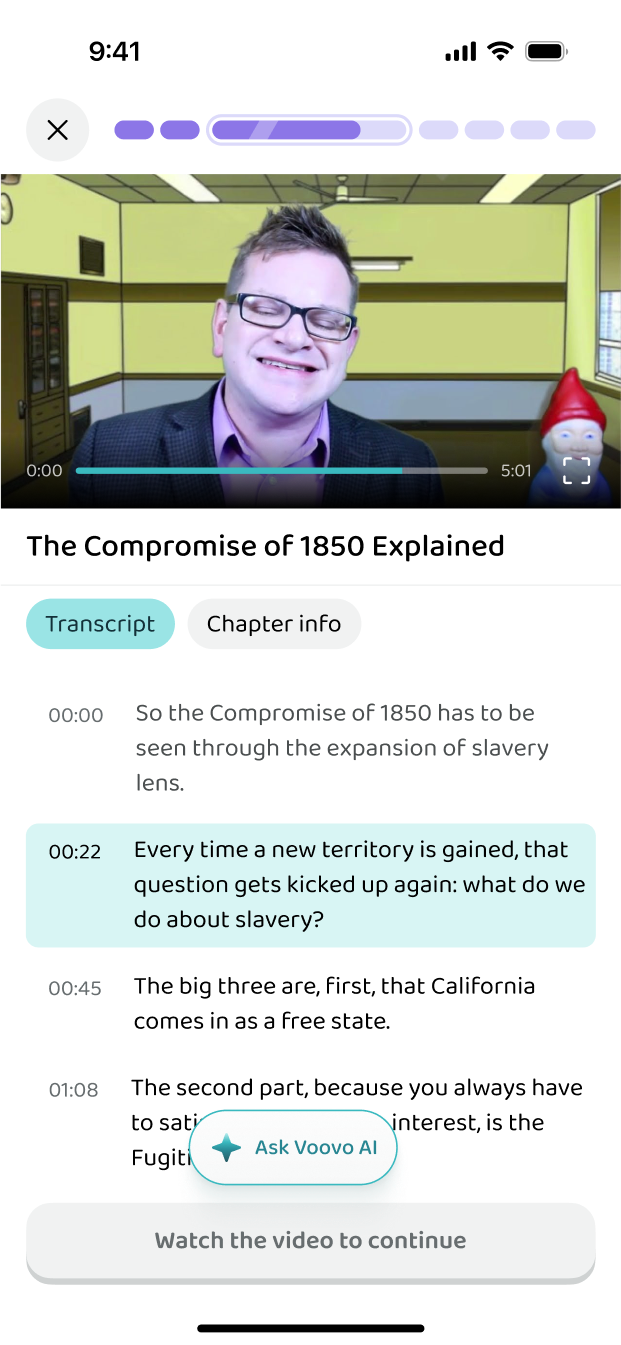
Keith’s rule for teaching history: start with a way of explaining it, or it turns into a list of meaningless facts. Each lesson starts with his explanation, then asks you about it.
01Lessons
Every topic explained first
Each lesson is built from his videos, period by period and unit by unit: the idea in plain words, then the names, dates and cases you need. The questions use the terms the exam uses.
Both AP® courses
From his videos
02Practice
Then you answer it yourself
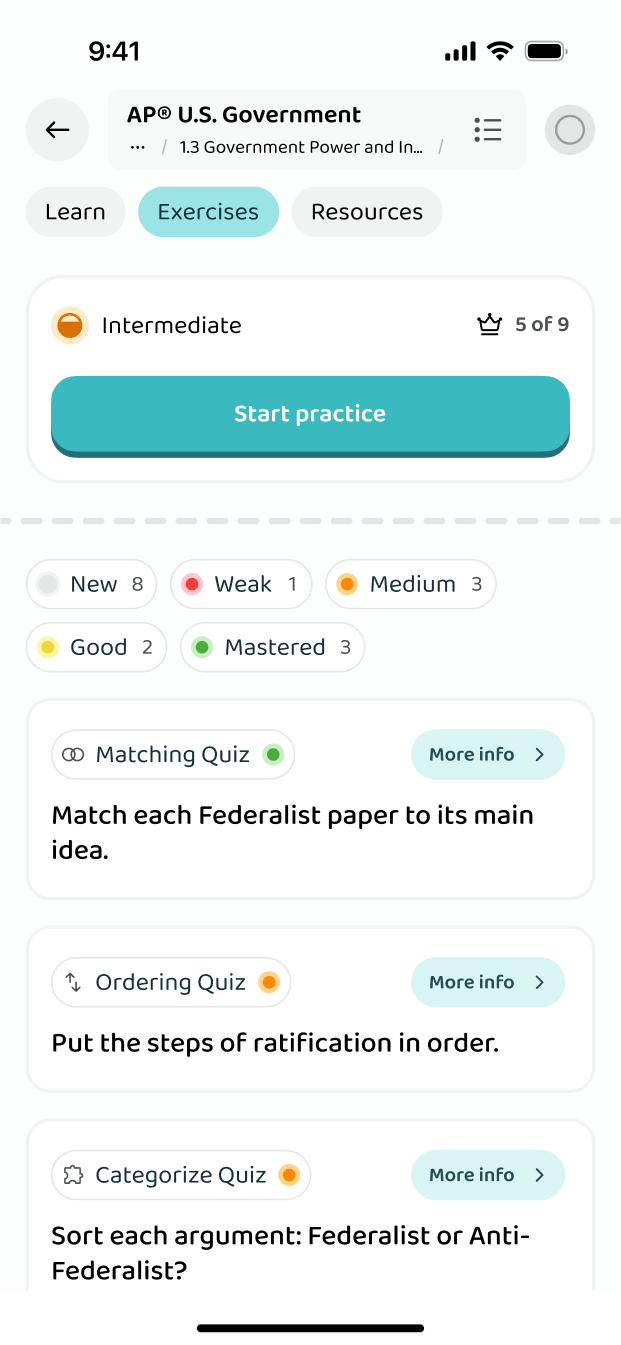
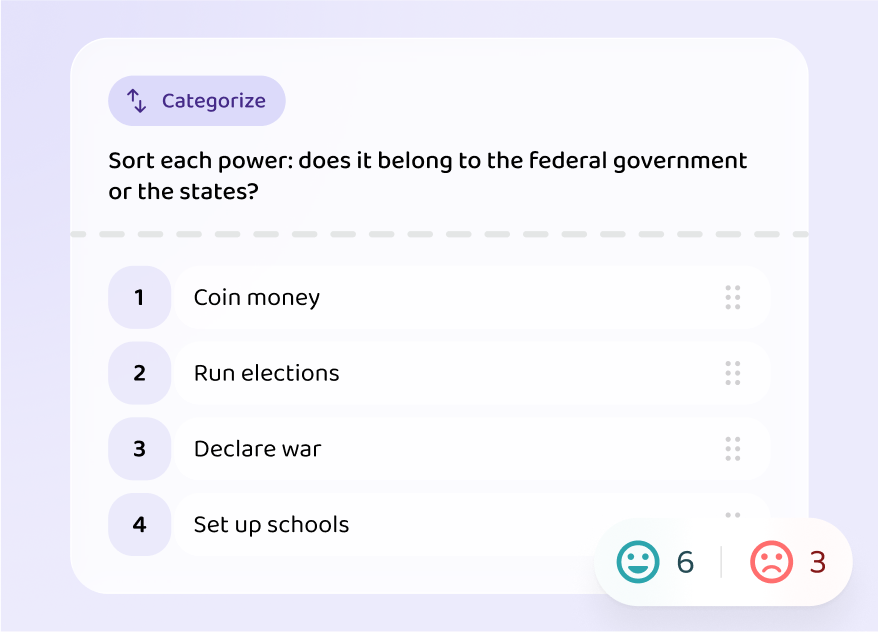
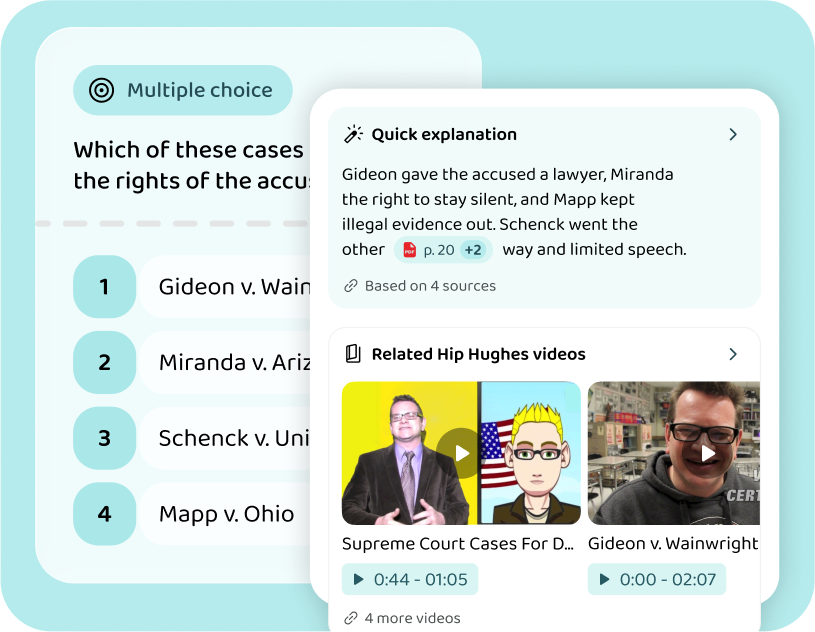
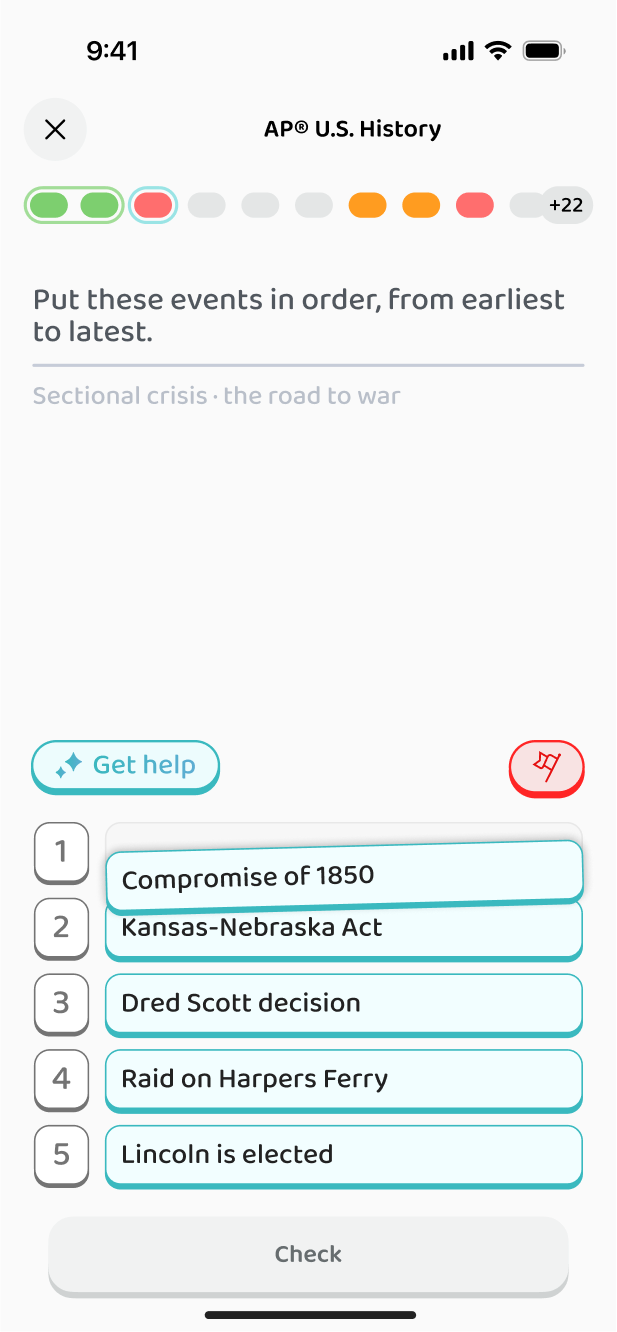
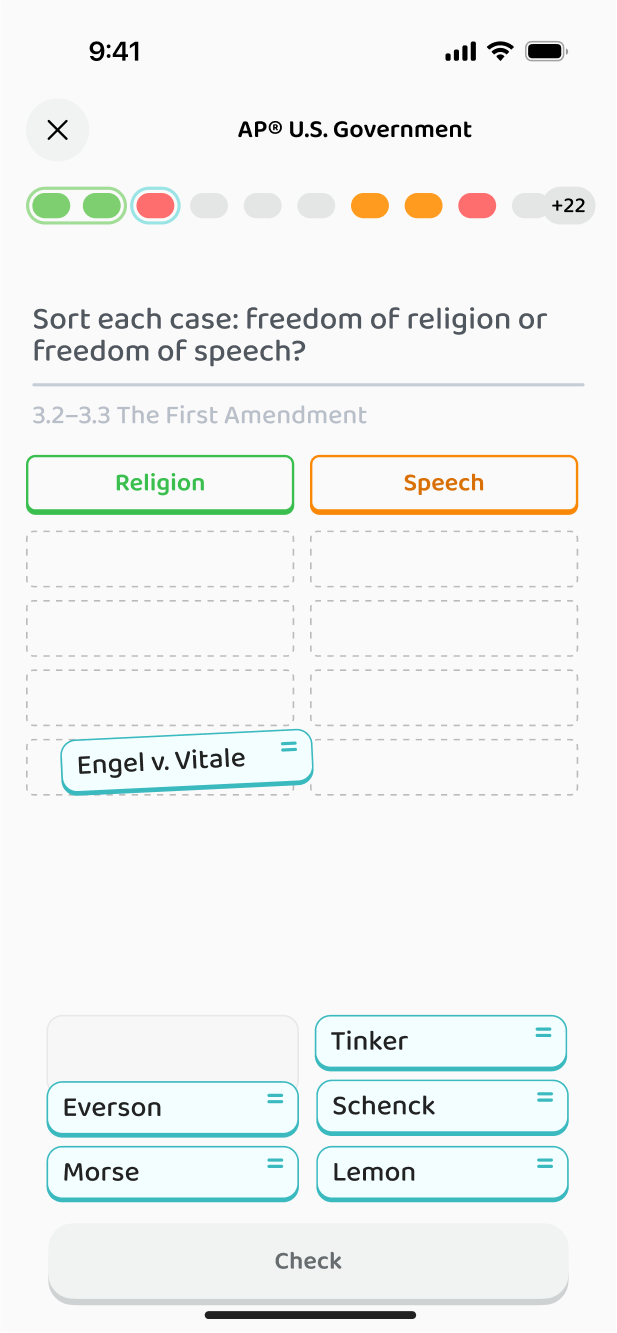
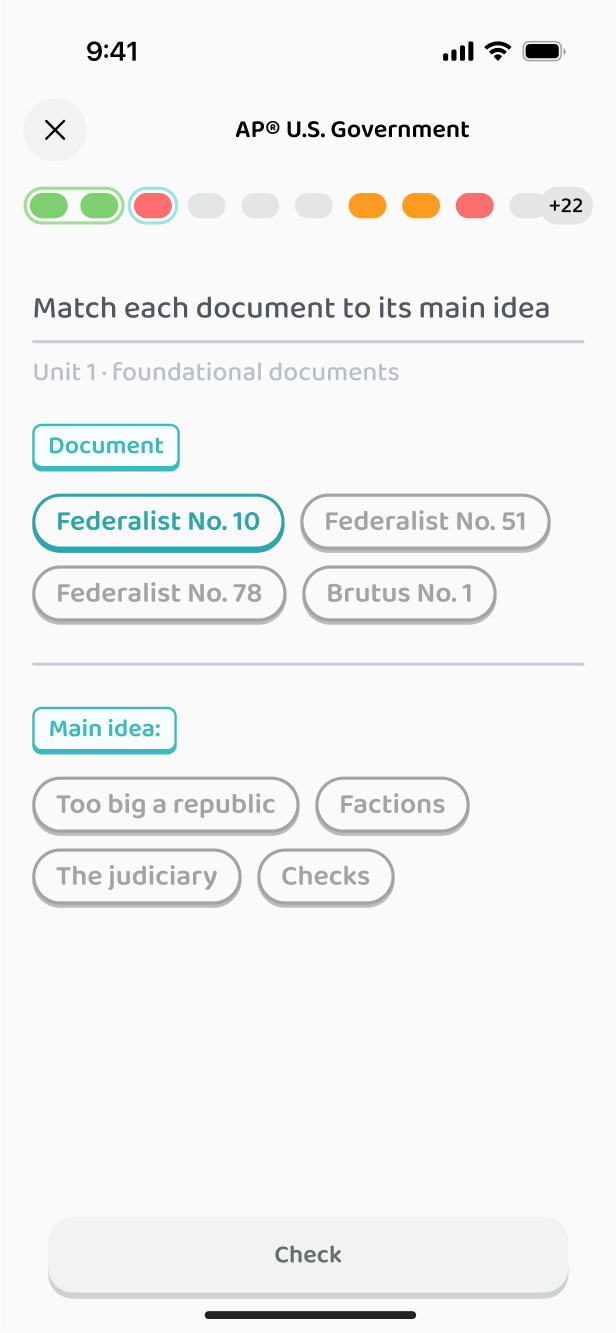
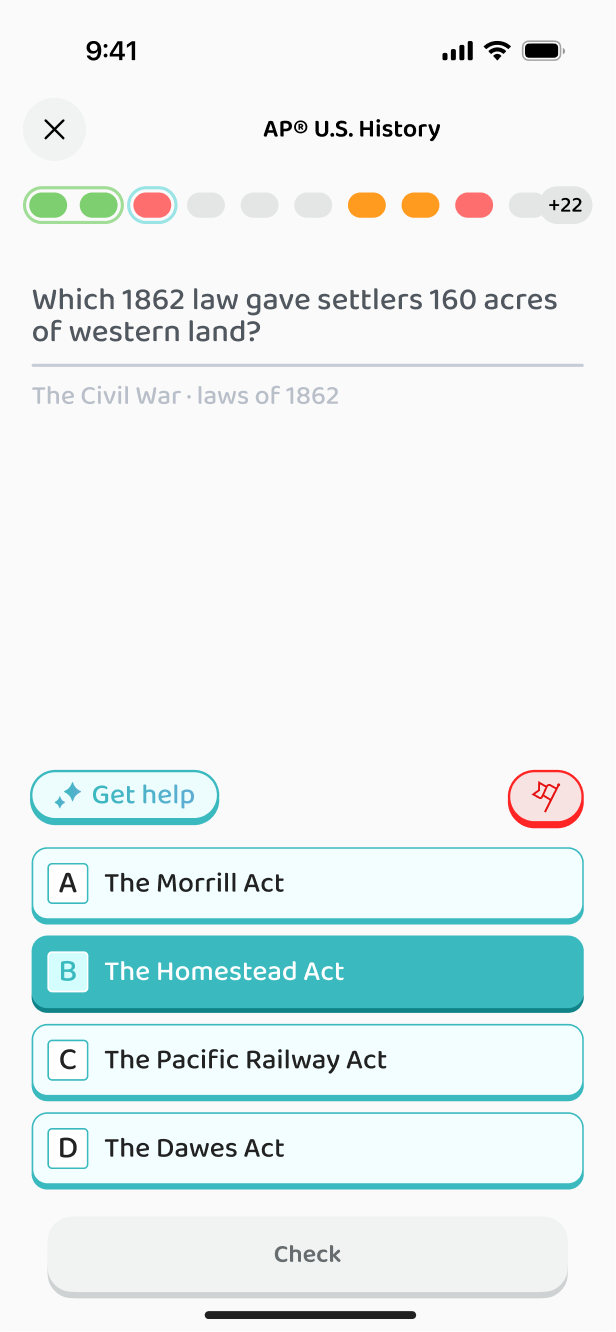
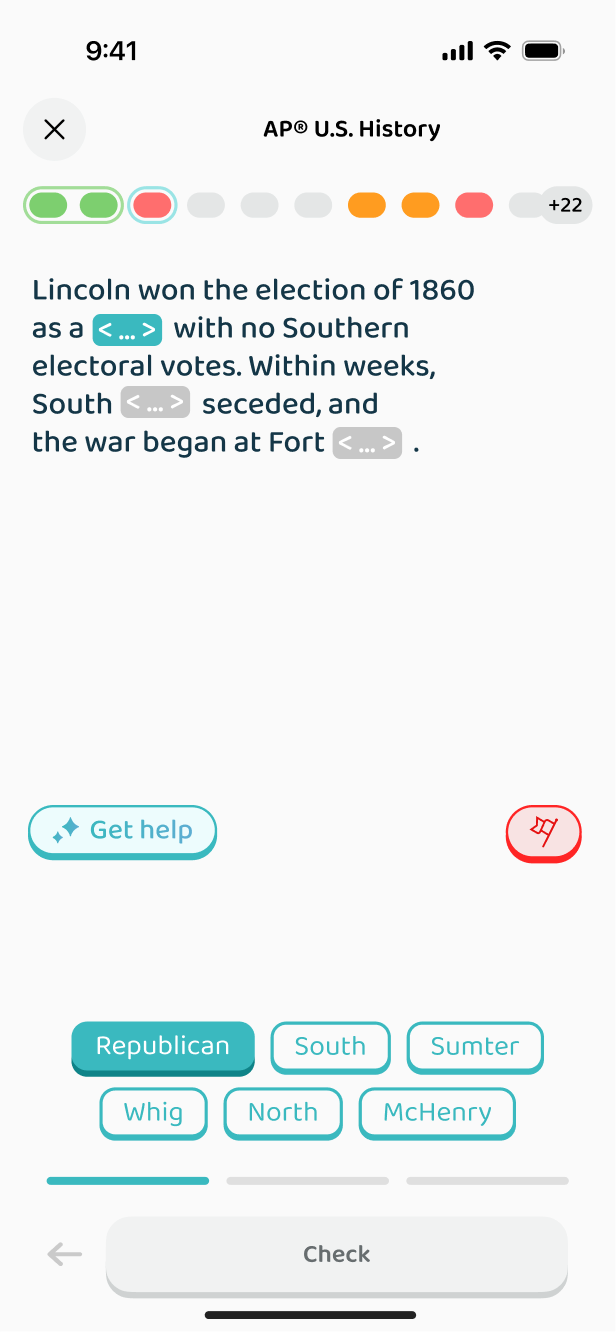
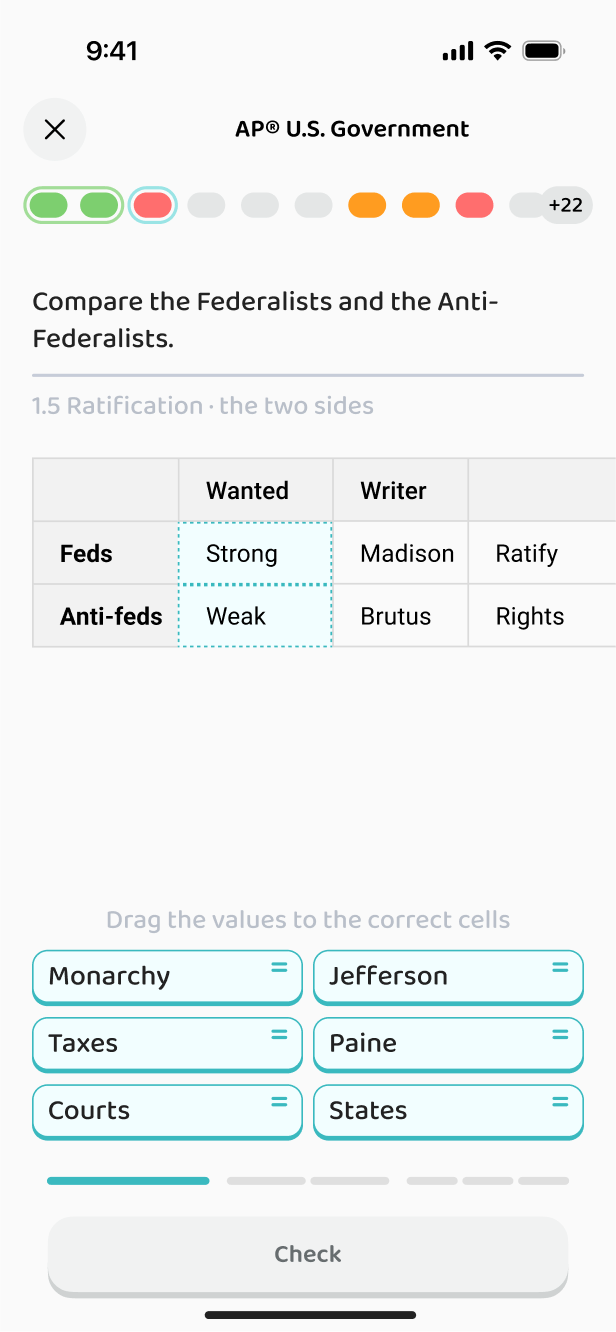
Put the events of the 1850s in order. Sort powers between the federal government and the states. Pick the cases that expanded the rights of the accused. Every answer is explained.
Ten question types
See where you stand
03Review
Older units stay in rotation
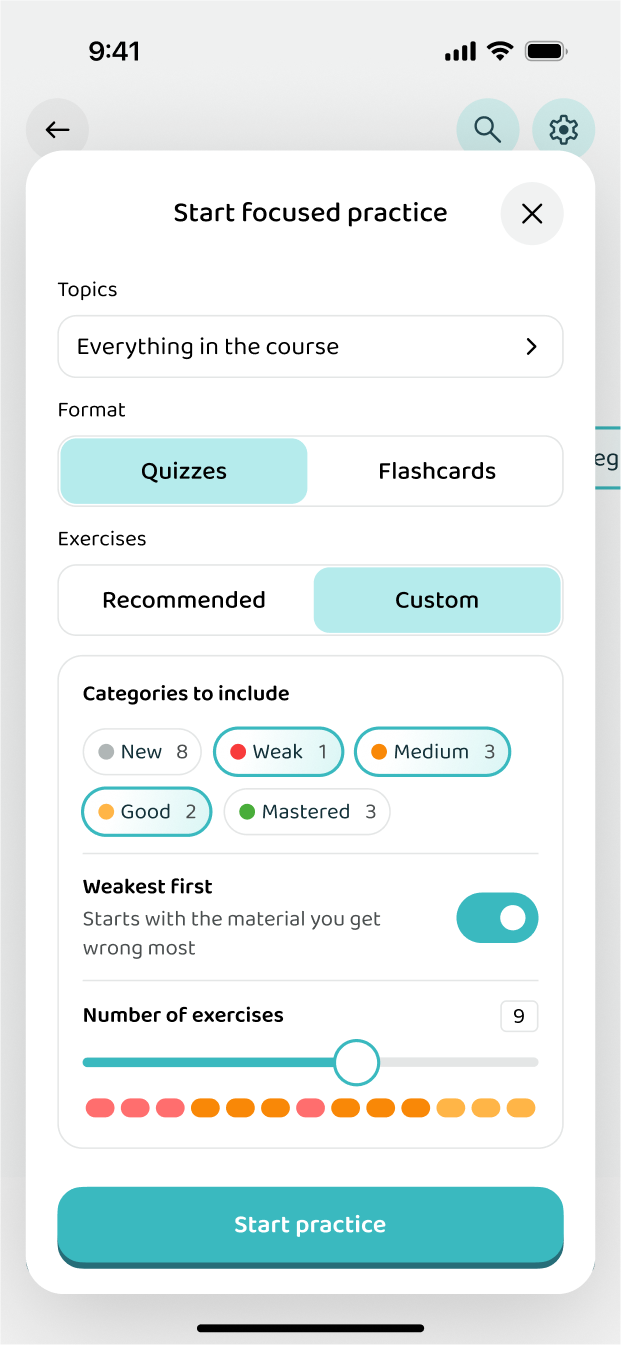
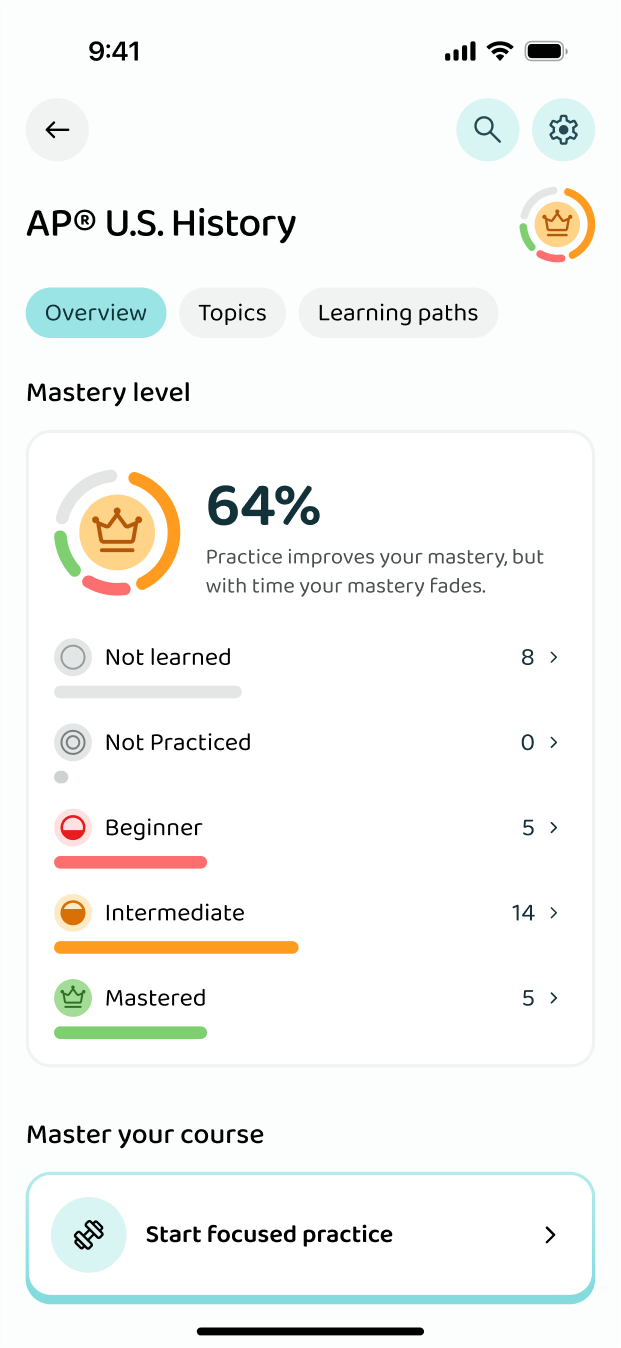
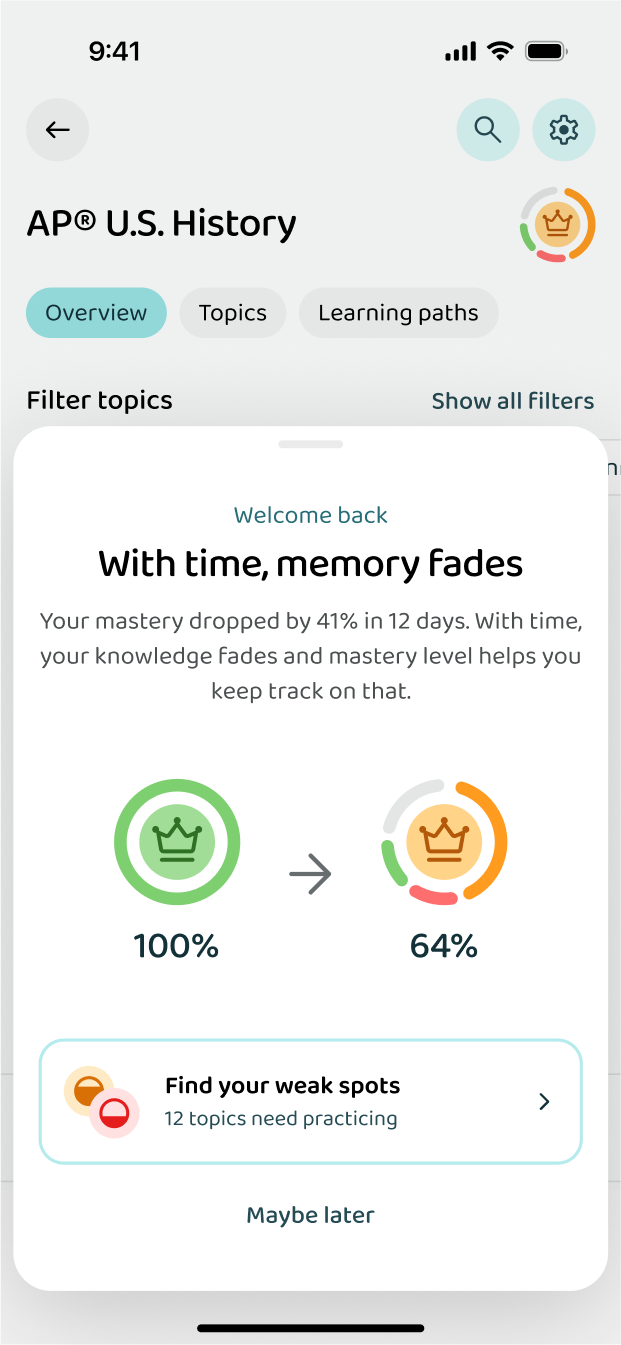
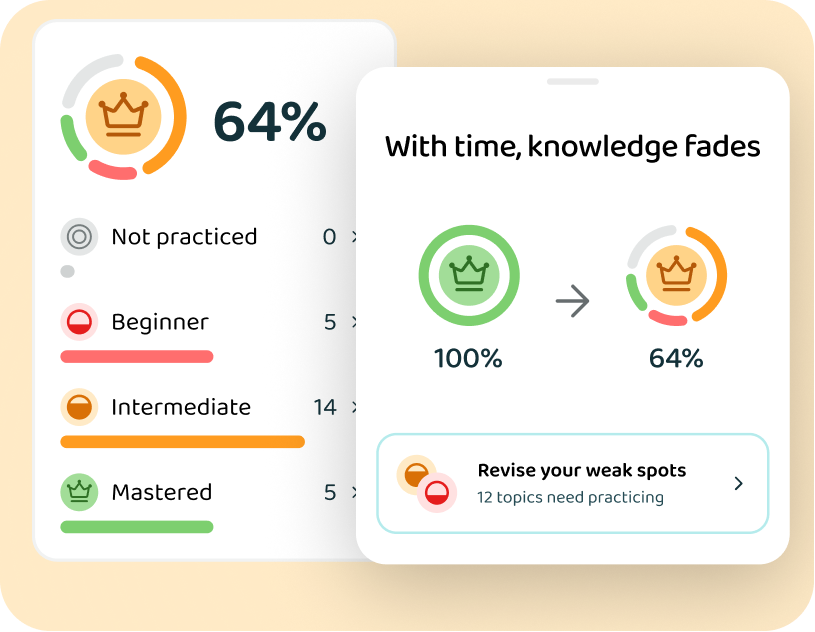
What you get wrong gets practiced again within days, and what you know comes back later. So the Constitution from September still makes sense in May.
Spaced practice
Nothing quietly fades
04Help
Ask when you’re stuck
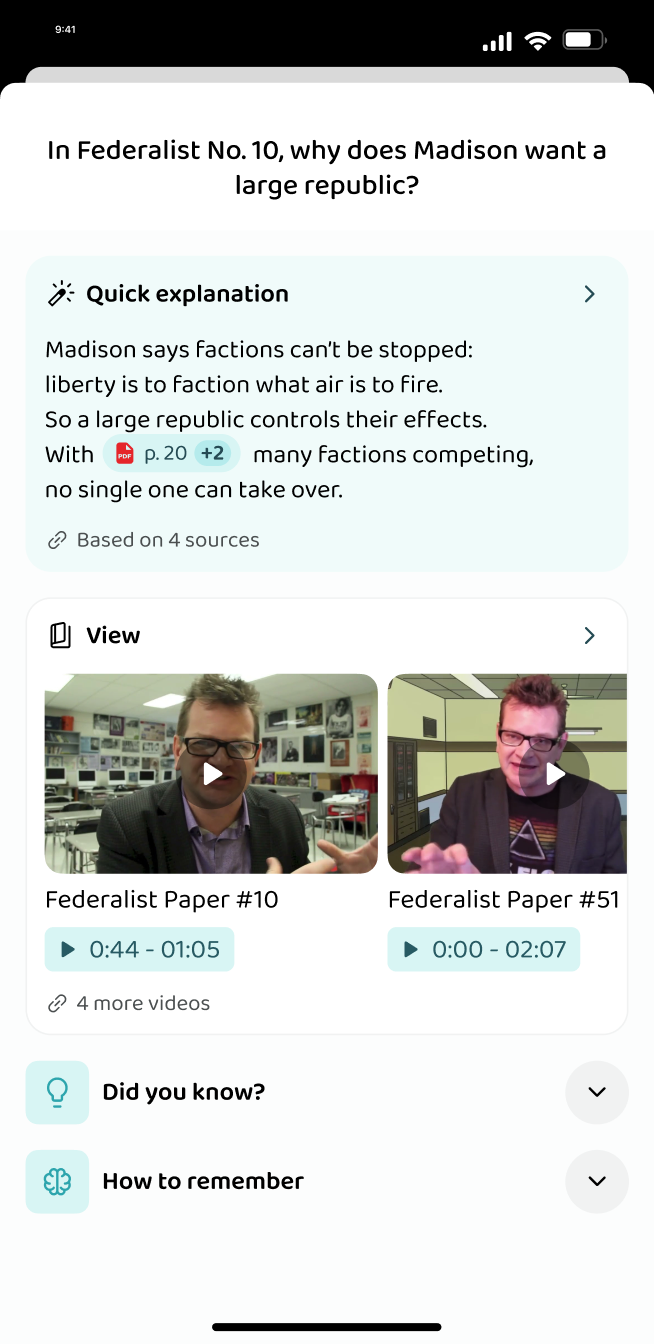
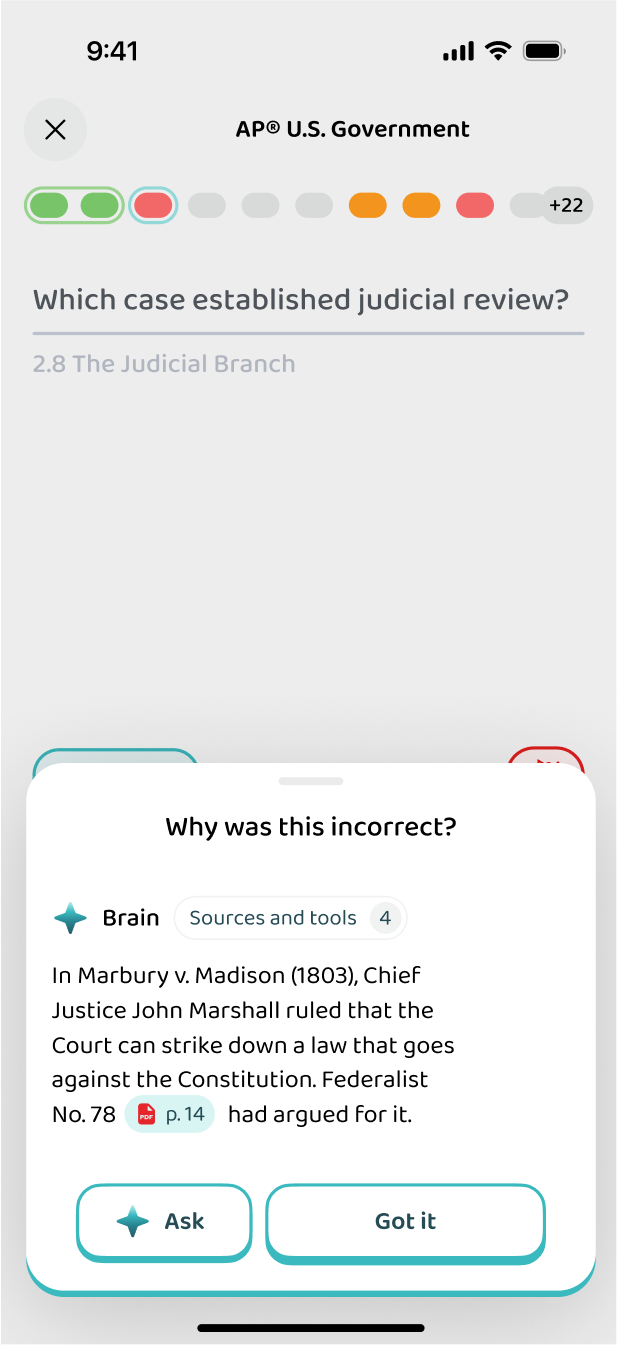
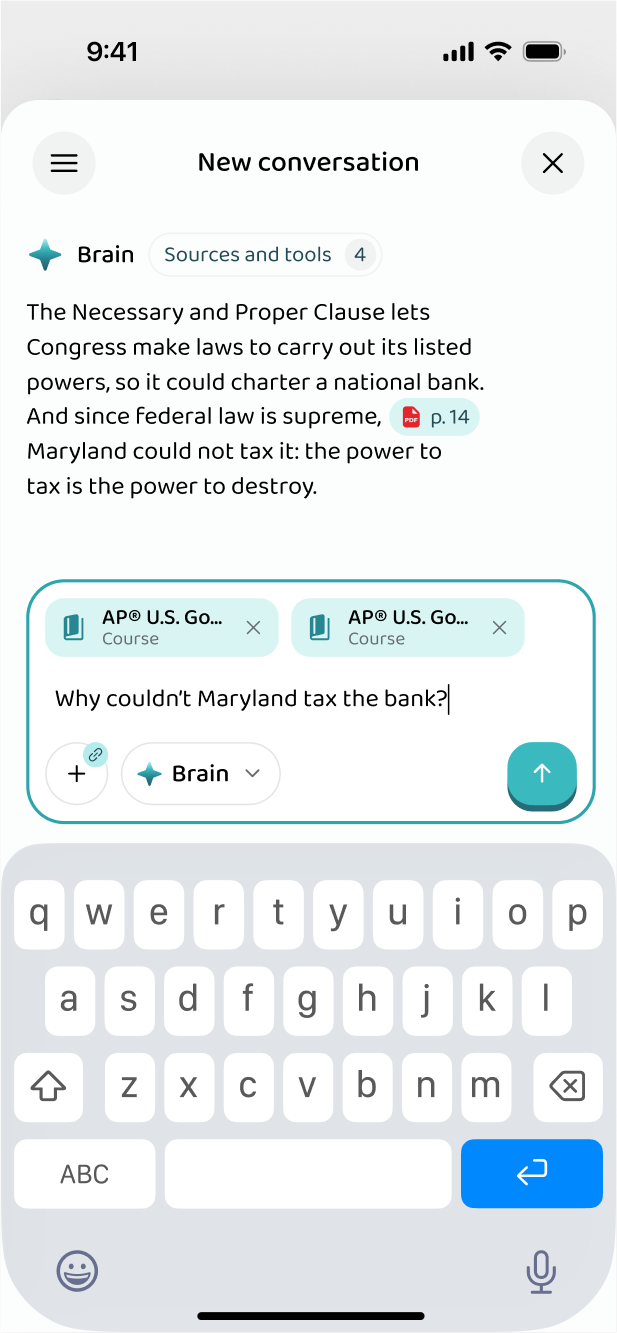
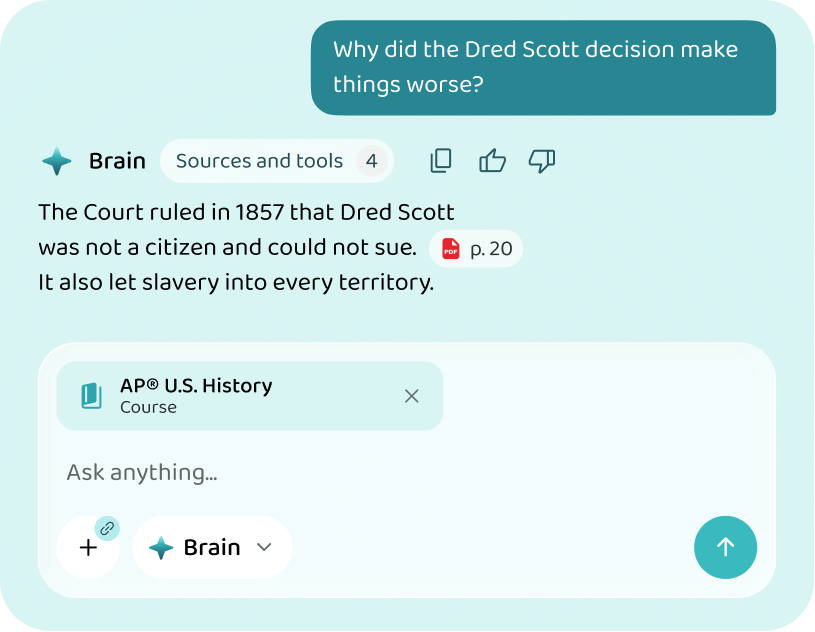
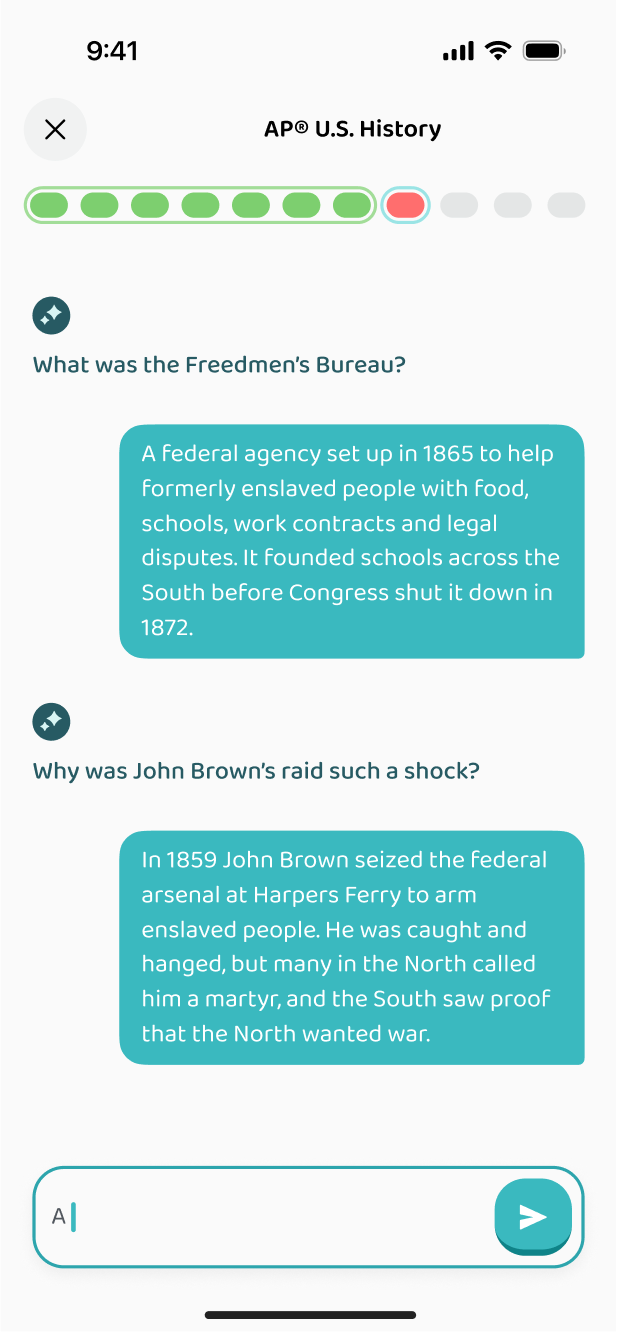
Ask why the Dred Scott decision made things worse, or what Brutus No. 1 warned about. Brain, the AI tutor, answers only from the course material and shows the lesson each answer comes from. No weak sources, no hallucinations.
Ask anything
Cites the course
What the course covers
Both courses follow the College Board’s own structure, topic by topic, and cover all of it.
AP® U.S. History
1Periods 1–2 · 1491–1754The Columbian Exchange · Jamestown · the colonial regions · Bacon’s Rebellion
2Period 3 · 1754–1800The Seven Years’ War · the Revolution · the Articles · the Constitution
3Period 4 · 1800–1848Jefferson · the Market Revolution · Jackson · reform movements
4Period 5 · 1844–1877Manifest Destiny · the sectional crisis · the Civil War · Reconstruction
5Periods 6–7 · 1865–1945The Gilded Age · the Progressives · World War I · the New Deal · World War II
6Periods 8–9 · 1945–todayThe Cold War · civil rights · the Great Society · Reagan · the 21st century
AP® U.S. Government and Politics
1Foundations of American DemocracyThe Declaration · the Articles · Federalist No. 10 and 51 · Brutus No. 1 · federalism
2Interactions Among BranchesCongress · the presidency · Federalist No. 70 and 78 · the courts · the bureaucracy
3Civil Liberties and Civil RightsThe Bill of Rights · incorporation · the required cases · Brown v. Board
4Political Ideologies and BeliefsPublic opinion · ideology · economic and social policy
5Political ParticipationVoting · parties · interest groups · elections · campaign finance · the media
His method
A trick for every case and document
Keith gives each idea a short way to hold it: a sorting bin, a five-word line, a plain-words summary. The course’s explanations use the same tricks, so you can recall them in the exam room.
Three bins for the cases
Cases that strengthened federal power, cases that limited rights, cases that expanded them. Put a case in its bin first, and its precedent is easier to recall.
Five words for the Articles
Why the Articles of Confederation failed: “the feds were too weak.” No power to tax, no president, no national courts.
The documents in plain words
Federalist No. 10 is about factions; Brutus No. 1 fears one powerful national government. Each document comes down to the argument you use in an essay.
Coming soon
Both AP® courses open later
AP® U.S. History and AP® U.S. Government are being built from his videos now. Sign up and you’ll get an email the day yours opens, with 10% off.
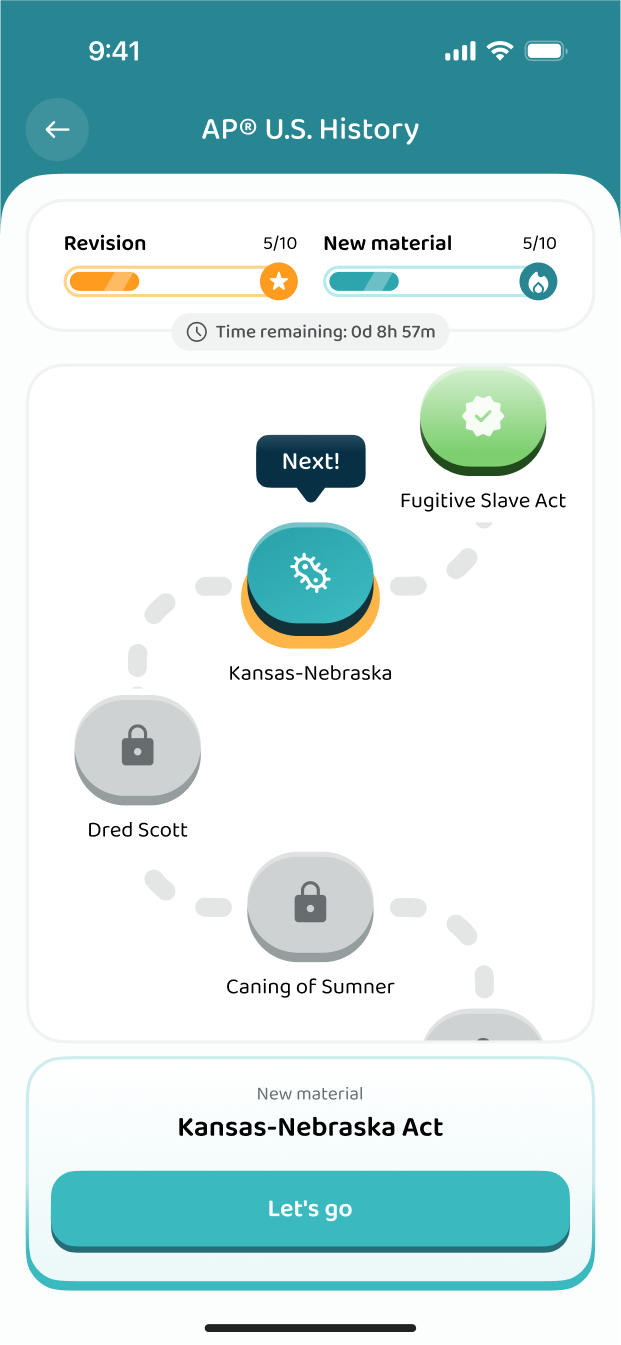
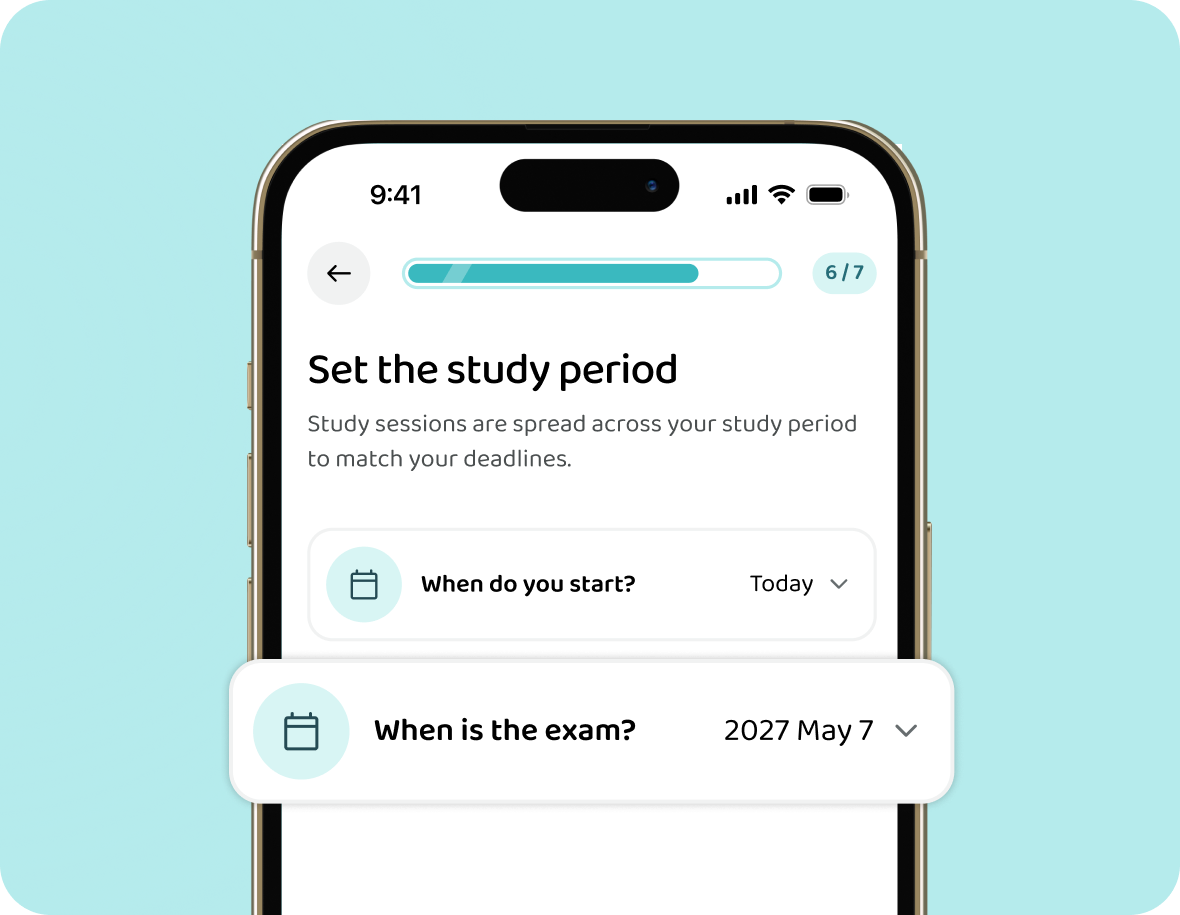
Put in your exam date, and the app spreads the course across the weeks before it. In 2027, AP® U.S. Government is on May 4 and AP® U.S. History on May 7.
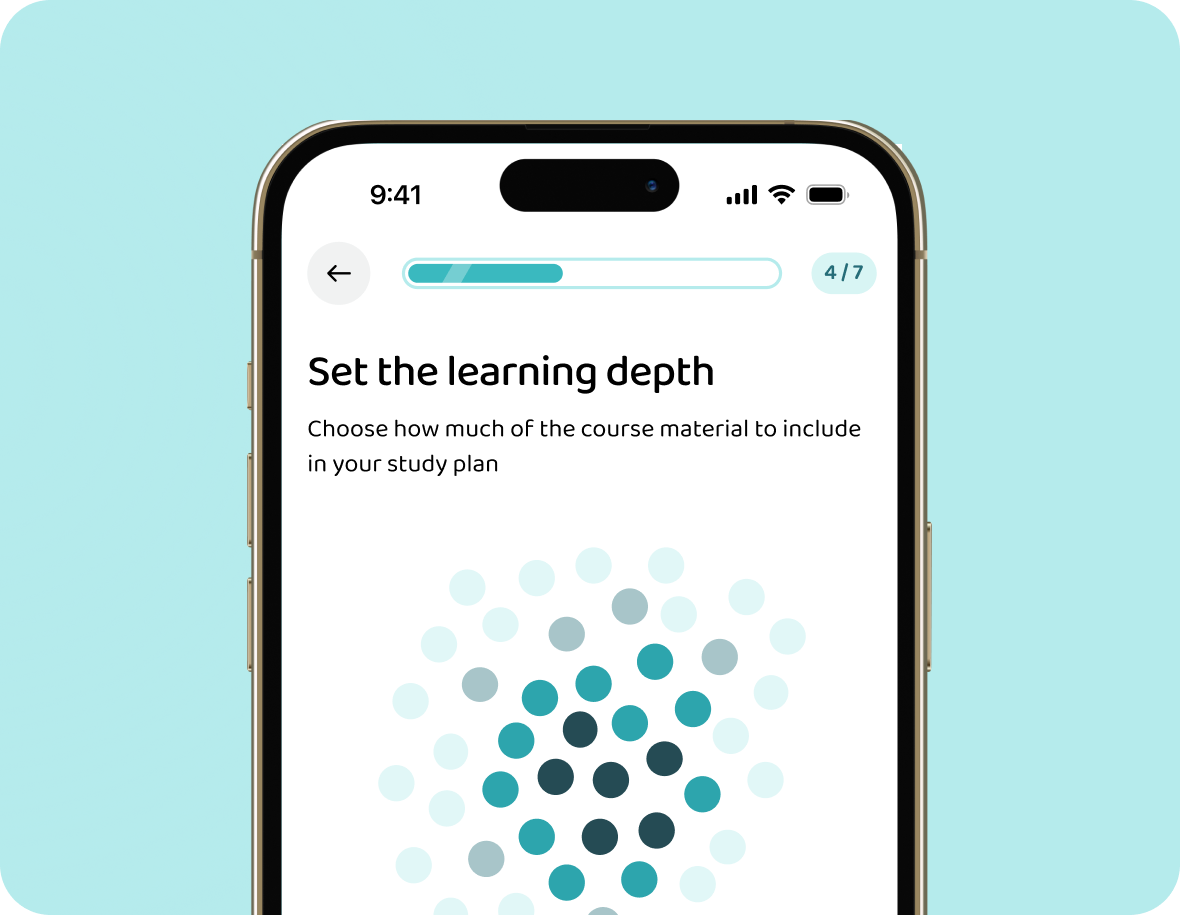
Everything in the course, or the essentials first. You decide how much goes into the plan.
2
Set the date
May 4 for AP® Gov, May 7 for APUSH. The lessons are spread across the time you have left.
3
Follow your plan
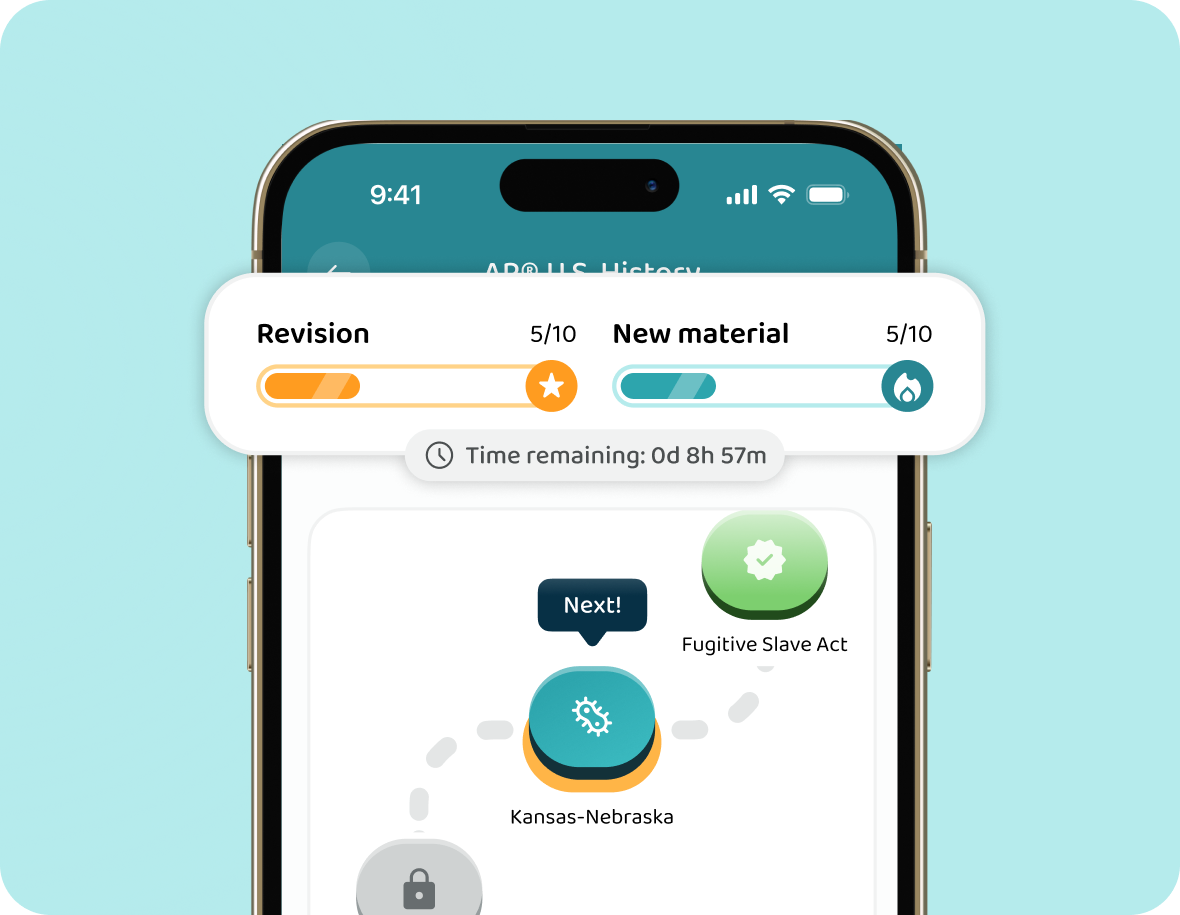
Each day mixes new lessons with the topics you’re about to forget.
How you practice
Ten ways to practice
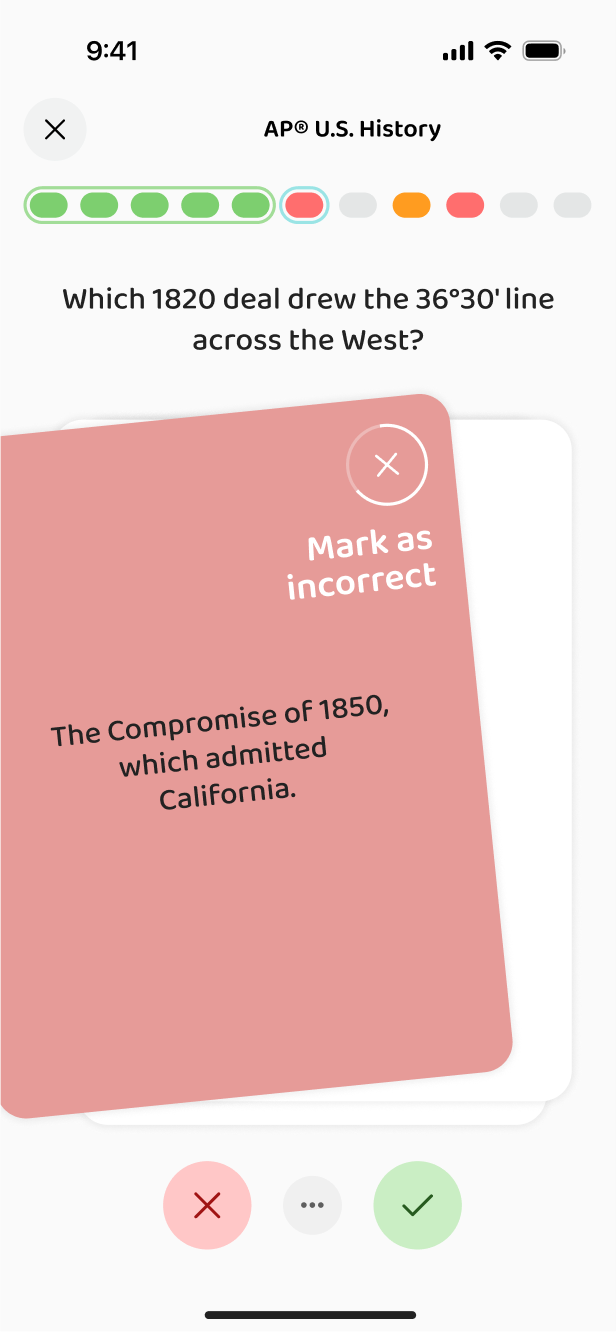
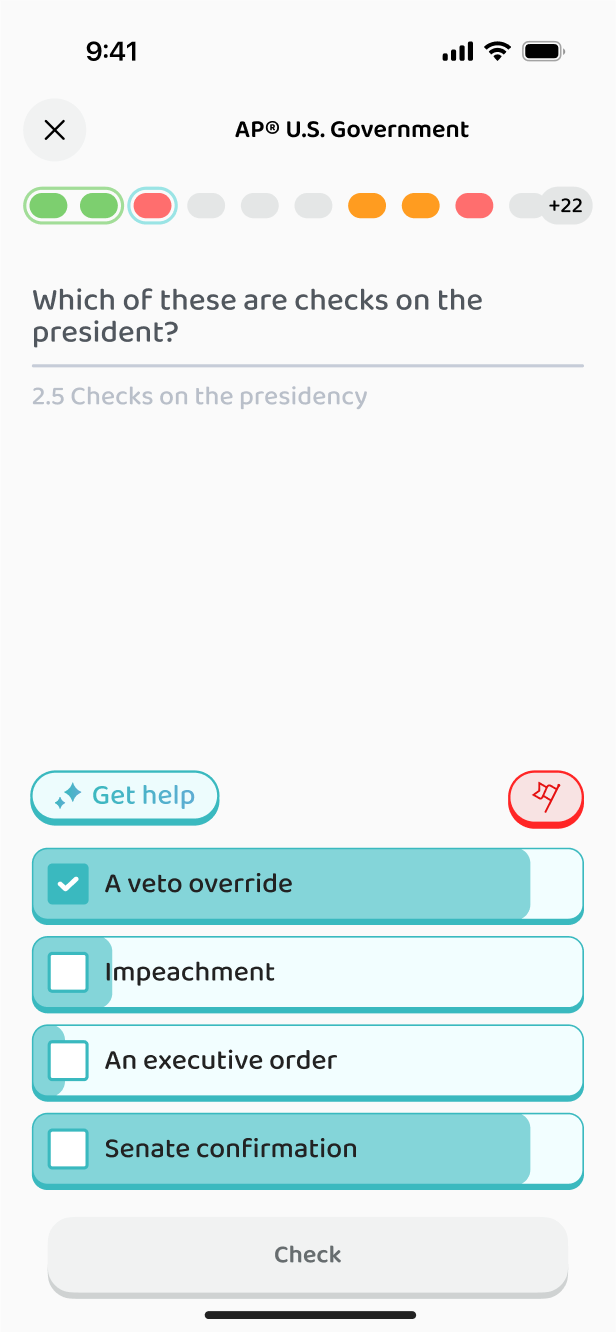
Ordering, sorting, matching, single answer, multiple choice, fill in the blank, tables, flashcards, ask-the-audience and an AI chat. Each idea gets asked several ways, so you learn the history, not just the shape of one answer.
Keith Hughes is the educator and creator behind HipHughes History, known for making history and government engaging and accessible. His work spans classroom teaching, educational video, professional development, and storytelling that amplifies teacher and student voices.
“I think a long time ago I figured out that kids are really smart. They just don't speak in academic kind of discourse. So I think that what my videos do is try to speak in student language.”
AP® Government was his own class at McKinley. The cases, the clauses, the Federalist papers: he taught them with the same tricks you see in his videos, and they’re all in this course.
They are, and they stay free. What YouTube can’t do is ask you about each topic after the video, explain why an answer was wrong, and bring the early units back before May. That’s what the course adds.
Do I need both courses?
Only if you take both classes. APUSH is usually a junior-year class and AP® Gov a senior-year one, and each course works on its own.
Is it up to date for the 2027 exams?
Yes. From May 2027 APUSH has no choice on the short answers or the long essay, so the course covers every period. AP® Gov follows the current required documents and cases.
Will it grade my DBQ and essays?
No. The course teaches the history your essays draw on, the outside knowledge the rubrics give points for. Writing practice and feedback stay with your teacher.
Who writes the questions?
Voovo’s team writes them from his videos, and experts review every question before it goes into the course.
When does it open, and what does it cost?
Both AP® courses are being built now. Sign up and you’ll get an email the day yours opens, with 10% off. The price is set when it opens.
AP® is a trademark registered by the College Board, which is not affiliated with, and does not endorse, this site.
AP® U.S. History · AP® U.S. Government
Be ready the day it opens.
Sign up now, and you’ll hear the day your course opens, with 10% off and months to go before May.