You can recite “the independent variable is what you change,” but a paragraph about a real experiment still makes you hesitate. The problem is usually not the definition. It is finding the deliberate comparison and separating it from the outcome, the controls and the details that merely describe the setting.
Use three questions: What did the investigator deliberately vary? What response was measured? What else needed to stay comparable? The ten fictional experiments below let you practise that reading process. They are paper exercises, not instructions to conduct research on people without appropriate approval.
Read the design before naming the variables
In a simple experiment, the independent variable is the manipulated factor; the dependent variable is the measured response. An operational definition specifies how a quantity is manipulated or measured. “Memory” is broad; “number of target words recalled after ten minutes” is a defined outcome. OpenStax, Psychology 2e, Analyzing Findings
A factor can have more than two levels. Comparing three font sizes still gives one manipulated factor, not three independent variables. Experimental design should follow the research objective and the factors under investigation; real designs can be more complex than these single-factor exercises. NIST, Selecting an Experimental Design
Cover each answer before attempting it. Name the factor and its levels, then the exact response. Finally, suggest one relevant control. Do not identify the dependent variable simply by looking for the last noun in the sentence.
Ten original practice experiments
1. Light and seedlings
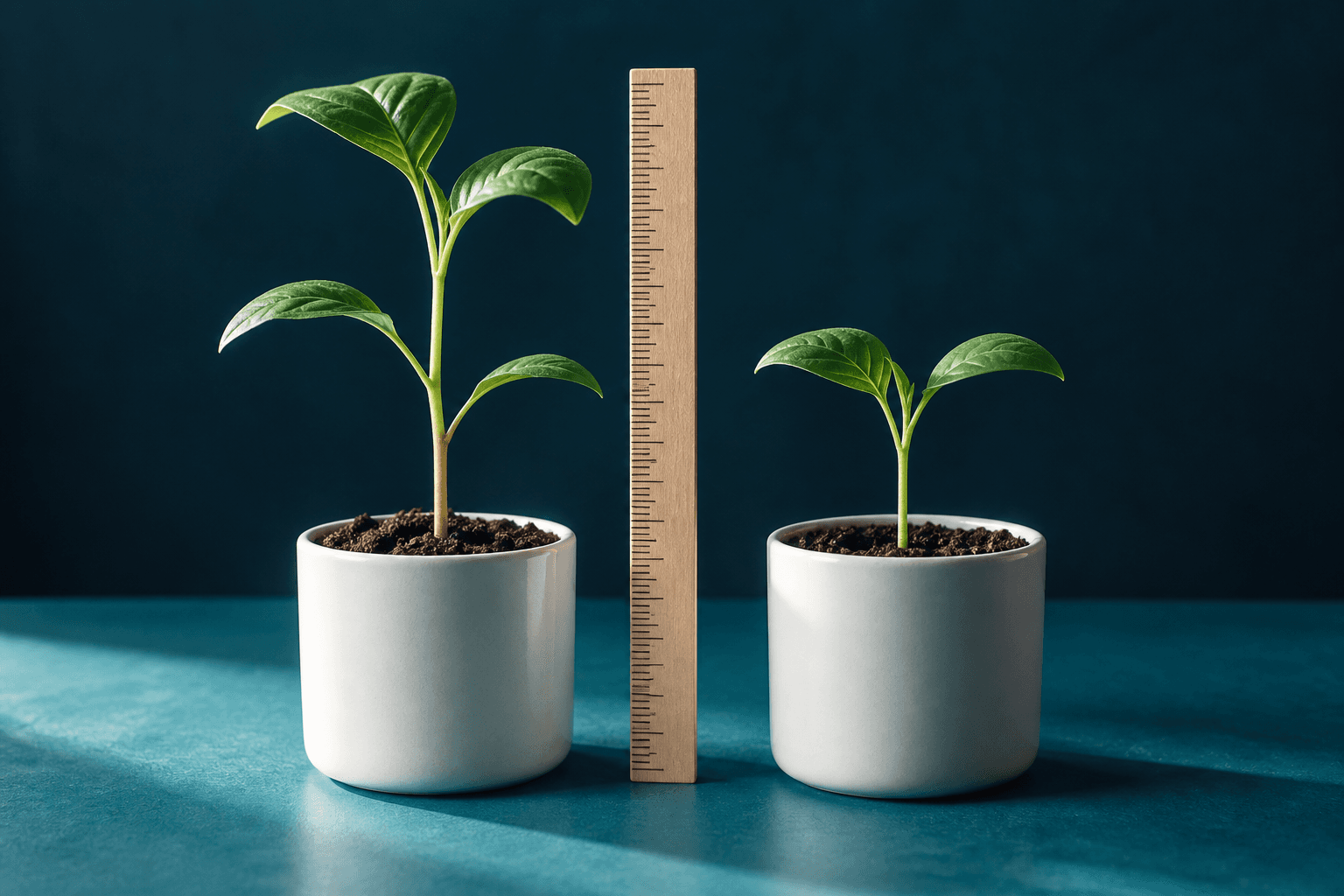
Identical seedlings are assigned to four or eight hours of light daily. After fourteen days, the investigator measures the increase in height in centimetres.
Answer: The independent variable is daily light duration, with two levels. The dependent variable is height increase after fourteen days. Plant variety, starting size, water and growing medium should be comparable. “Fourteen days” is the measurement interval here, not the manipulated variable.
2. Font size and reading speed
Participants are randomly assigned the same passage in 12-point or 18-point text. The time taken to read it is recorded.
Answer: Font size is the independent variable; reading time is the dependent variable. Keep the passage and instructions comparable. The number of participants is not the outcome. If comprehension matters to the research question, it needs its own measurement rather than an assumption that faster reading means better reading.
3. Practice format and later recall
Learners are assigned either a written retrieval exercise or another reading of a short passage, for equal time. The next day they answer ten content questions.
Answer: Practice format is the manipulated factor. The number of questions answered correctly is the response. Equal study time is a control. This fictional design identifies variables; it does not establish which format actually produced the better result.
4. Water temperature and dissolving time
Equal masses of the same soluble material are stirred into equal water volumes at 20°C or 40°C. Time until a predefined endpoint is measured.
Answer: Starting water temperature is the independent variable; dissolving time is the dependent variable. Stirring rate and the endpoint definition matter. “Solubility” would not be an accurate replacement for dissolving time: the exercise measures how long the process takes, not the maximum amount that can dissolve.
5. Notification sounds and proofreading
Participants proofread the same text either in silence or with a standard notification sound every minute. Researchers count correctly identified errors.
Answer: Sound condition is the factor; correctly identified errors are the outcome. Keep the text, available time and scoring rule consistent. The claim “sounds reduce concentration” is a hypothesis, not an observed result supplied by this description.
6. Ramp surface and toy-car travel
The same toy car is released from the same marked position on ramps covered with either material A or material B. Its travel distance beyond the ramp is recorded.
Answer: Surface material is the independent variable. Travel distance is the dependent variable. Release height and method should be controlled. If the investigator also changes the height between groups, the comparison no longer isolates the intended surface difference cleanly.
7. Label wording and choice
Volunteers are randomly shown one of two descriptions of an otherwise identical imaginary product. They indicate whether they would choose it.
Answer: Description wording is manipulated; the yes-or-no choice is measured. A dependent variable does not have to be a continuous number. Group percentages can summarise these responses, but the outcome should still be defined at the participant level.
8. Three rehearsal intervals
Participants practise a symbol-matching task with one, five or ten minutes between practice rounds. Accuracy is measured on a common later test.
Answer: The interval is one independent variable with three levels. Test accuracy is the dependent variable. Keep the amount of practice comparable. Do not confuse the three conditions with three separate manipulated factors.
9. Screen contrast and target detection
Participants view targets at low or high contrast. The investigator records both response time and the proportion of targets correctly detected.
Answer: Contrast is the independent variable, while response time and detection accuracy are two dependent variables. One experiment can measure more than one outcome. Deciding beforehand which is primary helps prevent choosing whichever result looks most interesting afterwards.
10. Feedback timing and revision quality
Students working on an invented writing task receive the same feedback immediately or after a day. A scorer unaware of group allocation rates the revised work using a predefined rubric.
Answer: Feedback timing is manipulated; rubric score is measured. The feedback content and scoring criteria should match. Keeping the scorer unaware of allocation helps separate assessment from expectations about the groups.
The important non-example
A survey asks students how long they usually sleep and records their existing examination scores. The investigator did not assign sleep duration. This is an observational association, not the same design as a randomised experiment. Calling sleep a predictor may be appropriate, but do not silently convert a correlation into a demonstrated causal effect. OpenStax, Approaches to Research
Final self-test
What changes if a study measures two outcomes? You have two dependent variables, not automatically two experiments.
Can “learning” be a complete operational definition? No. State the task, scoring rule and timing.
Does naming the variables prove the design is fair? No. You must still examine assignment, controls, measurement and alternative explanations.
Rewrite two experiments so the measured outcome changes while the manipulated factor stays the same. For a future study option, get notified about Psych Explained’s upcoming Psych 101 course. It is not available yet; check the course page for current launch information.
Sources and further reading
- Spielman, R. M., Jenkins, W. J., and Lovett, M. D. (2020). Psychology 2e, section 2.3, Analyzing Findings. OpenStax.
- The same authors (2020). Section 2.2, Approaches to Research. OpenStax.
- NIST/SEMATECH (online handbook). How do you select an experimental design? Engineering Statistics Handbook.