Organic Chemistry 1 is open now, as lessons and questions built with Matt from chemistrystudent.com, so you're ready for each exam and the final. Organic Chemistry 2 is coming: sign up below and you'll hear the day it opens.
Organic Chemistry 1, from bonding and stereochemistry to SN1, SN2 and spectroscopy
It's the course pre-med, pharmacy and chemistry students hear about first. Not because each idea is hard, but because there are so many of them, and they all build on each other.
Every chapter builds on the last
Carbocations, nucleophiles and leaving groups come back in every reaction after the first few weeks. If a mechanism didn't stick in week three, week six stops making sense.
A final that covers everything
Many schools end the semester with a standardized ACS exam: multiple choice across the whole course. The first mechanisms still have to be fresh in December.
What's in it
Organic Chem on your phone, mechanism by mechanism
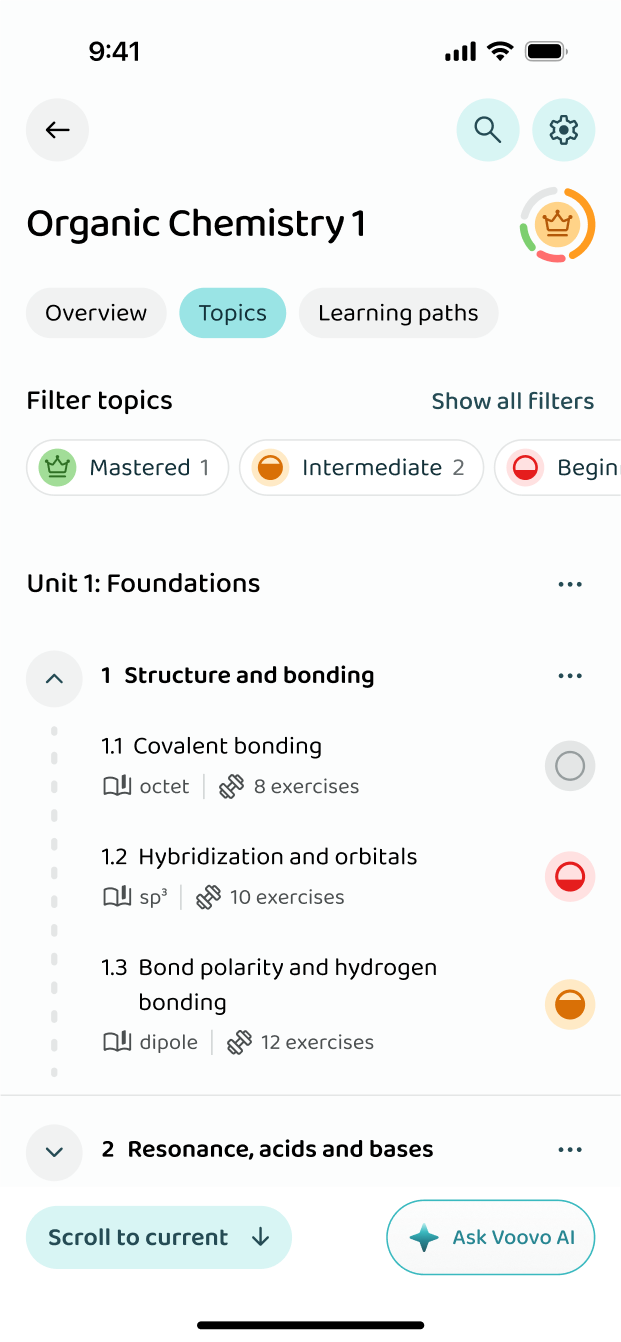
Organic Chemistry 1 from bonding and stereochemistry to substitution, elimination and spectroscopy, each topic with its lessons and questions. Organic Chemistry 2 comes next.
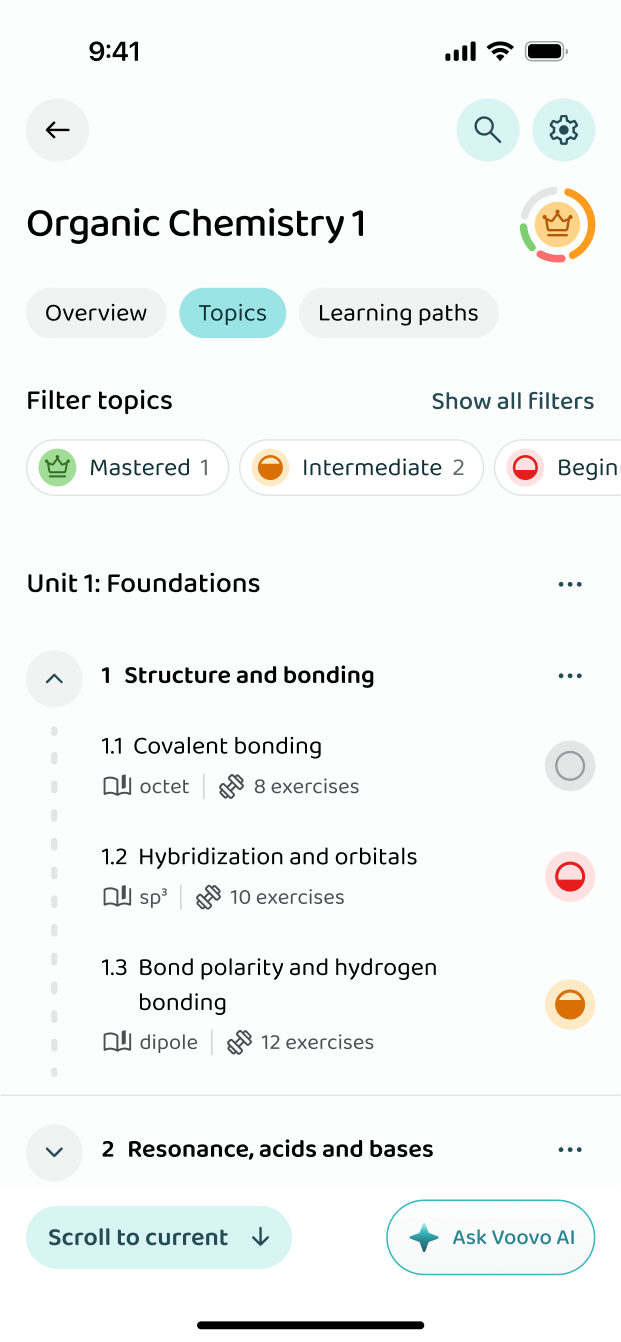
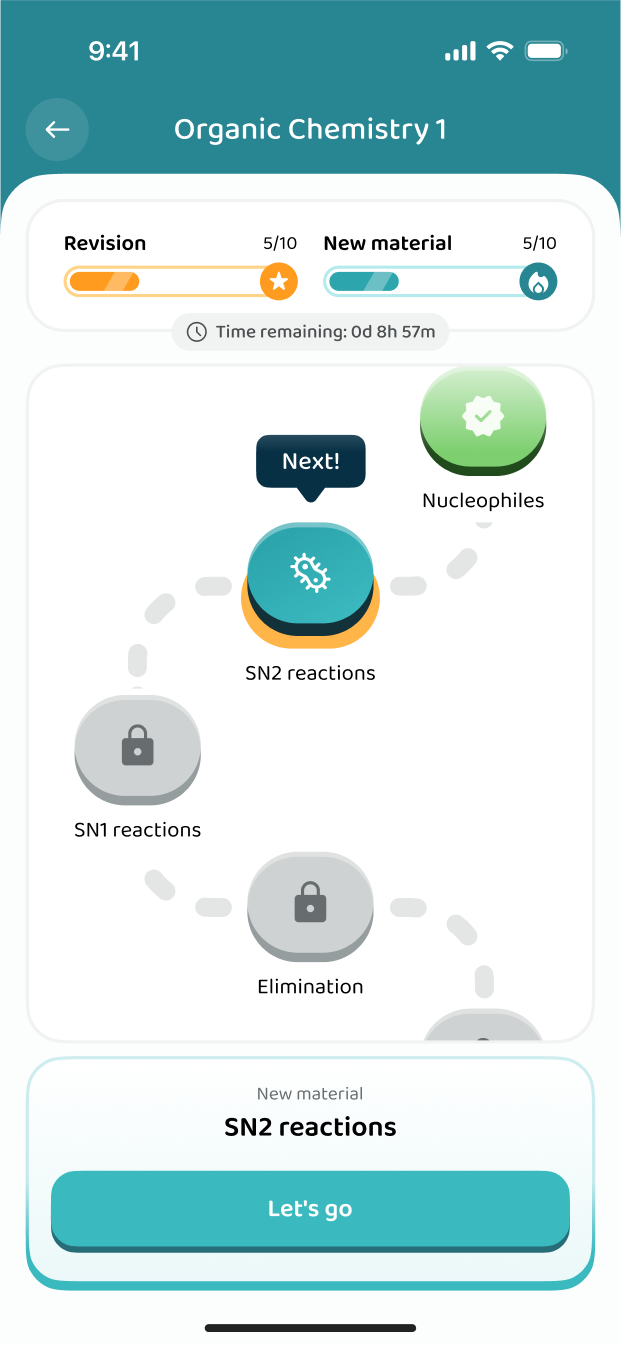
The course follows the Organic Chem specification in order, so you always know which part you are on and what is left.
You answer instead of rereading
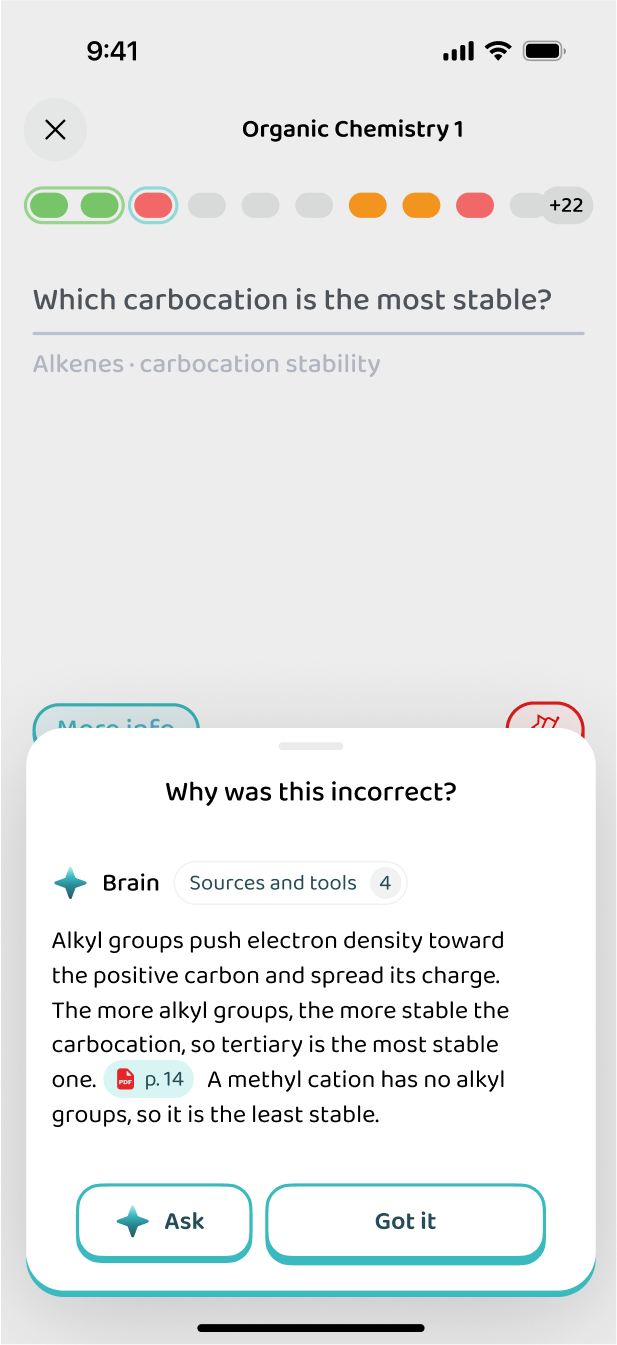
Each lesson ends in questions, so you find out what you actually know before the exam does.
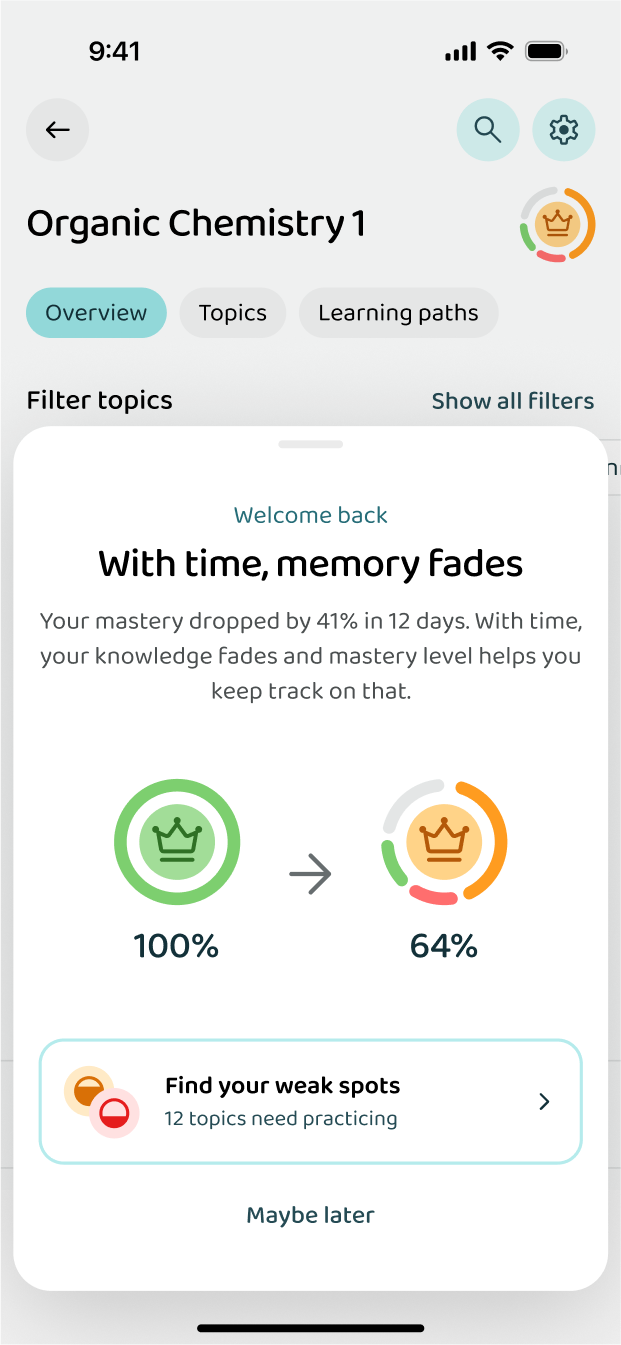
The app doesn't let you forget things
September's SN1 and SN2 keep coming up in practice, so you still know them for the final.
How it works
Learn it, answer it, practice it
Matt tells his own students to study by answering questions, not by rereading notes. The course is built that way: a lesson, then questions, then practice on what you missed.
01Lessons
Every point explained first
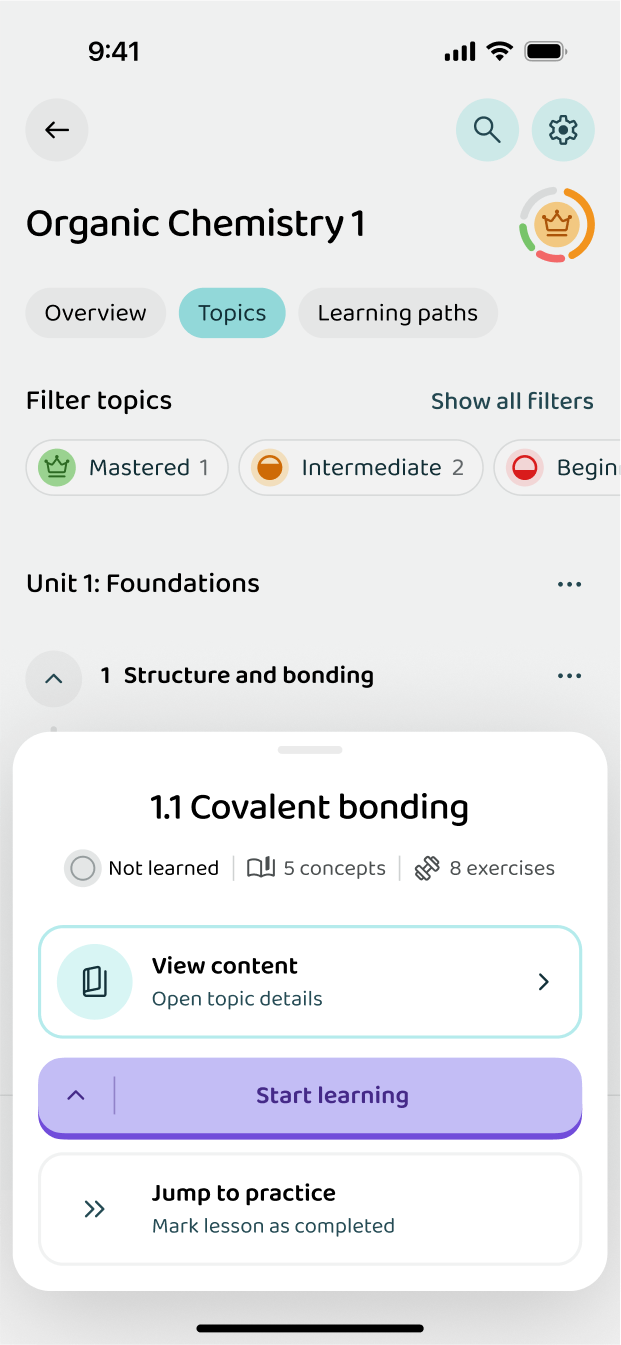
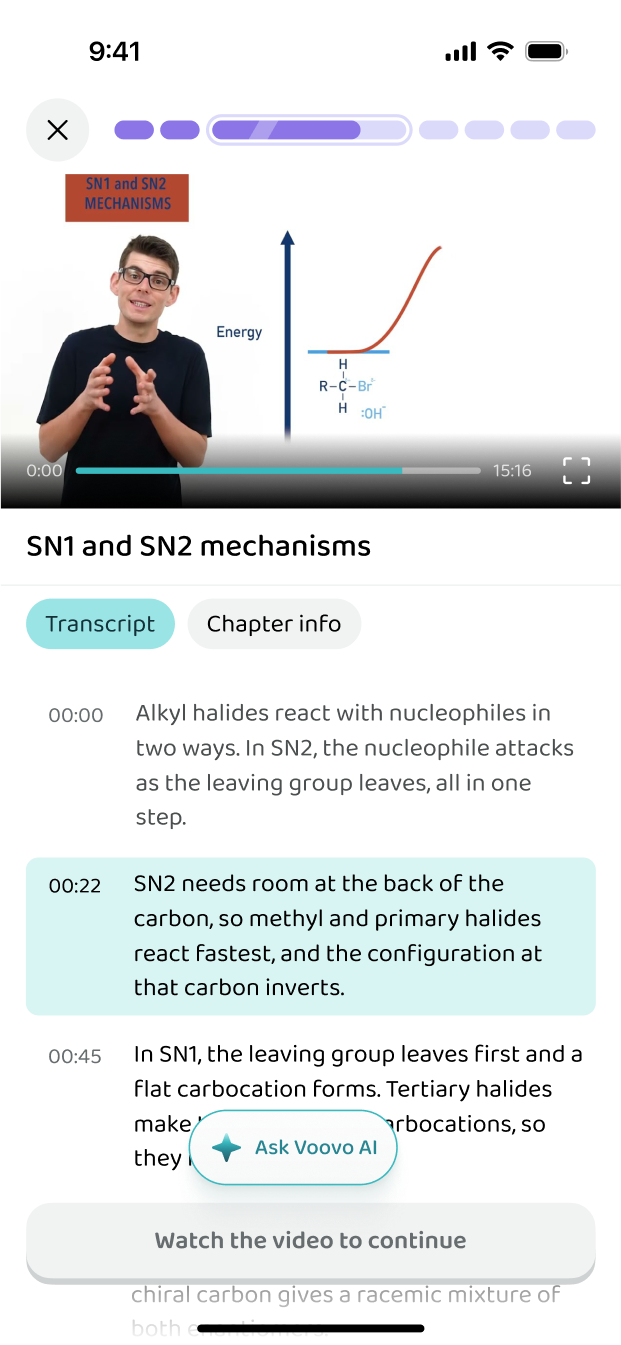
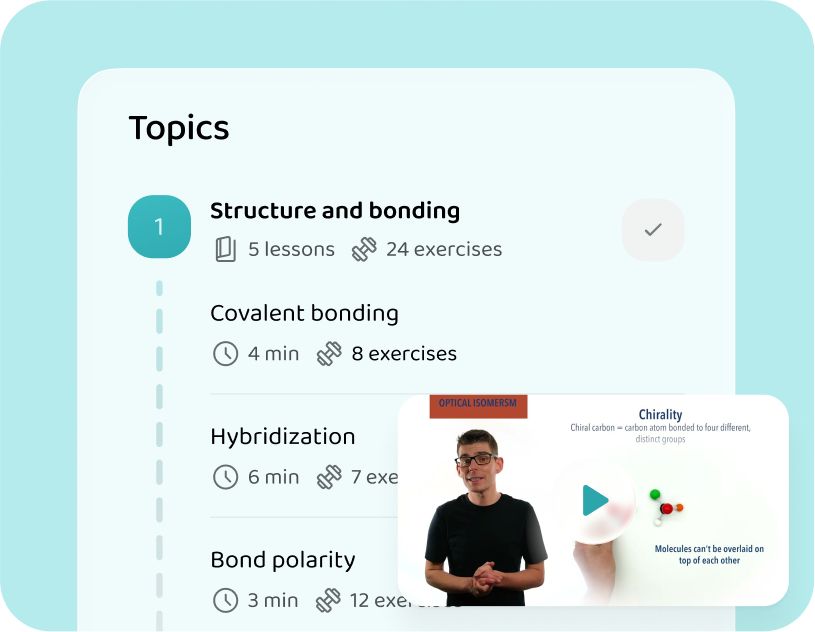
Organic Chemistry 1 from bonding and stereochemistry to substitution, elimination and spectroscopy, topic by topic. Each lesson explains the idea before it asks you anything about it.
9 topics
33 lessons
02Practice
Then the app asks you
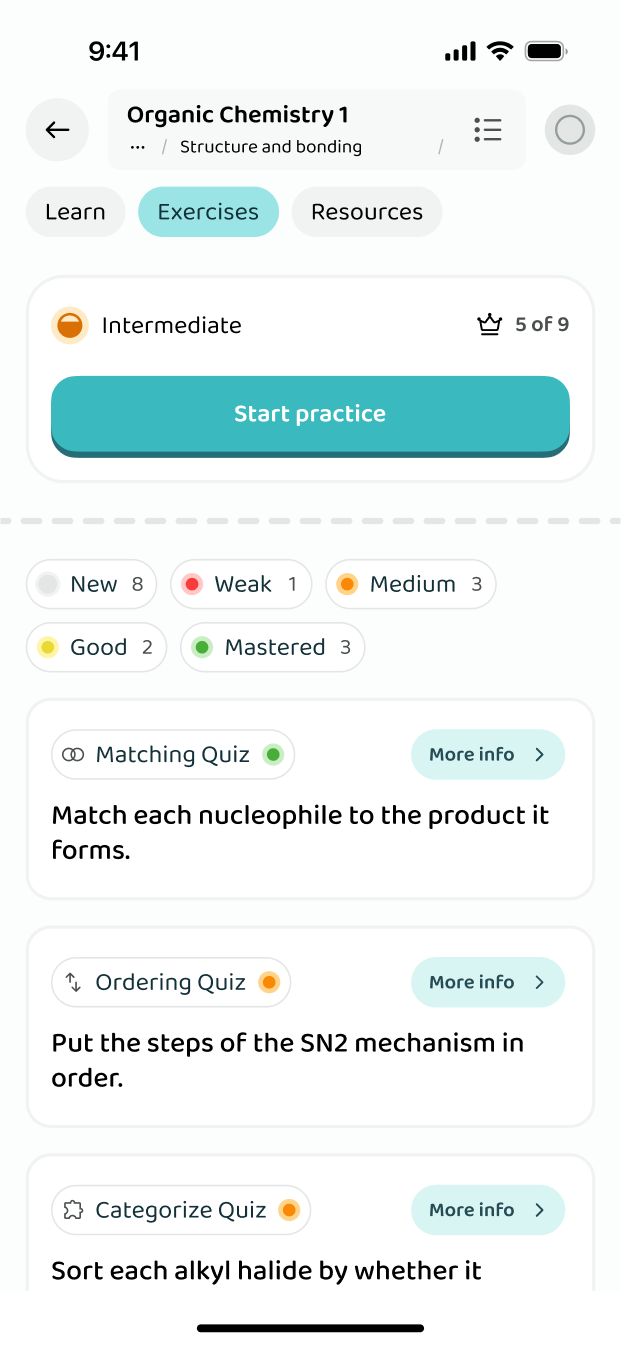
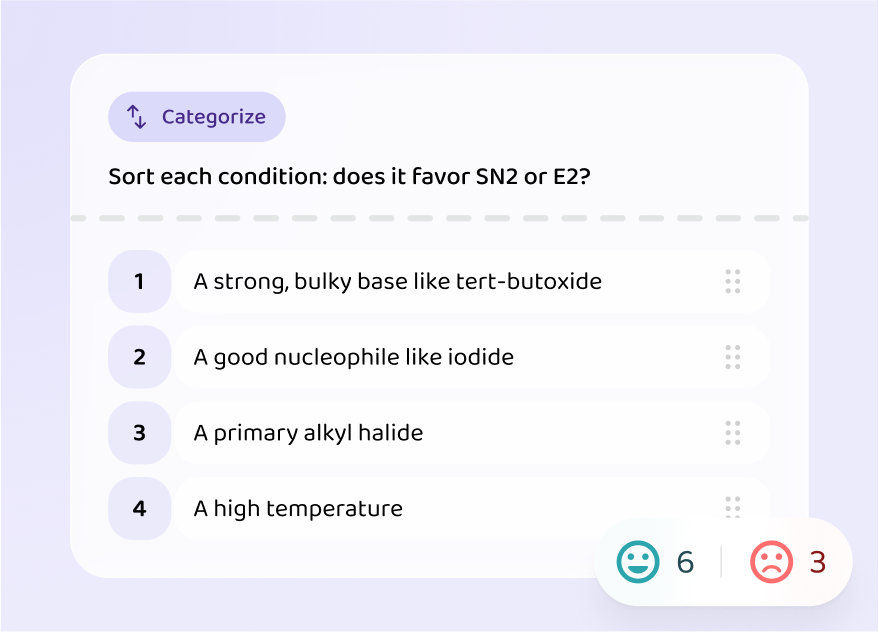
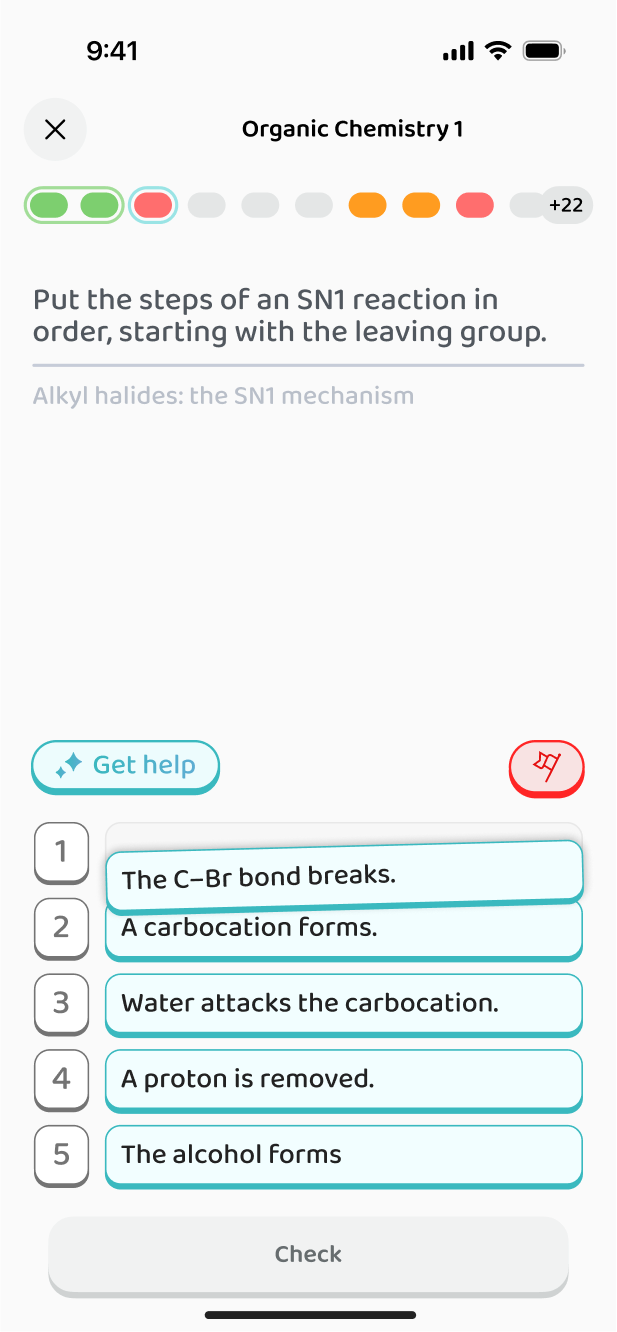
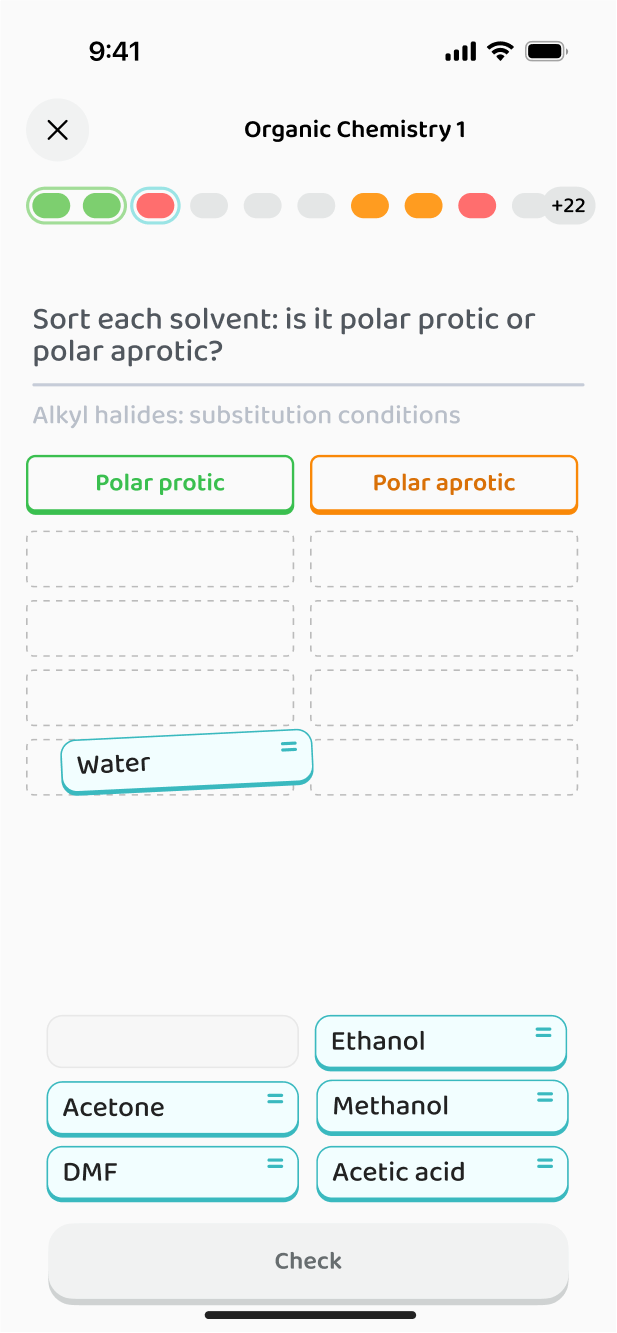
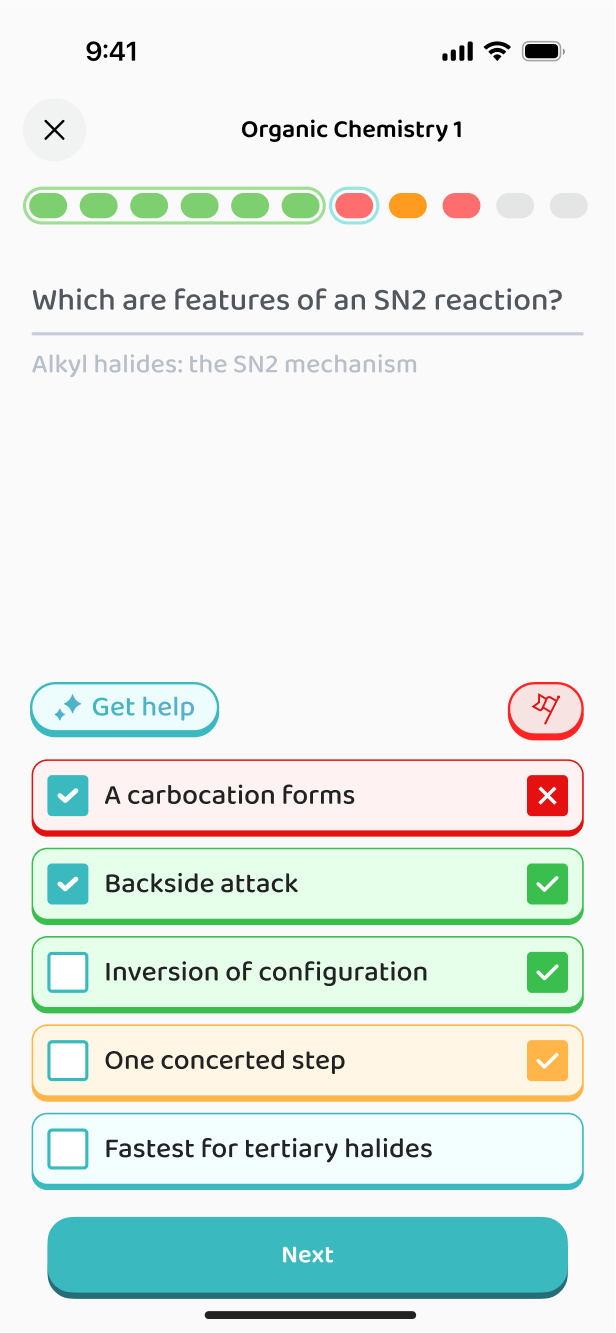
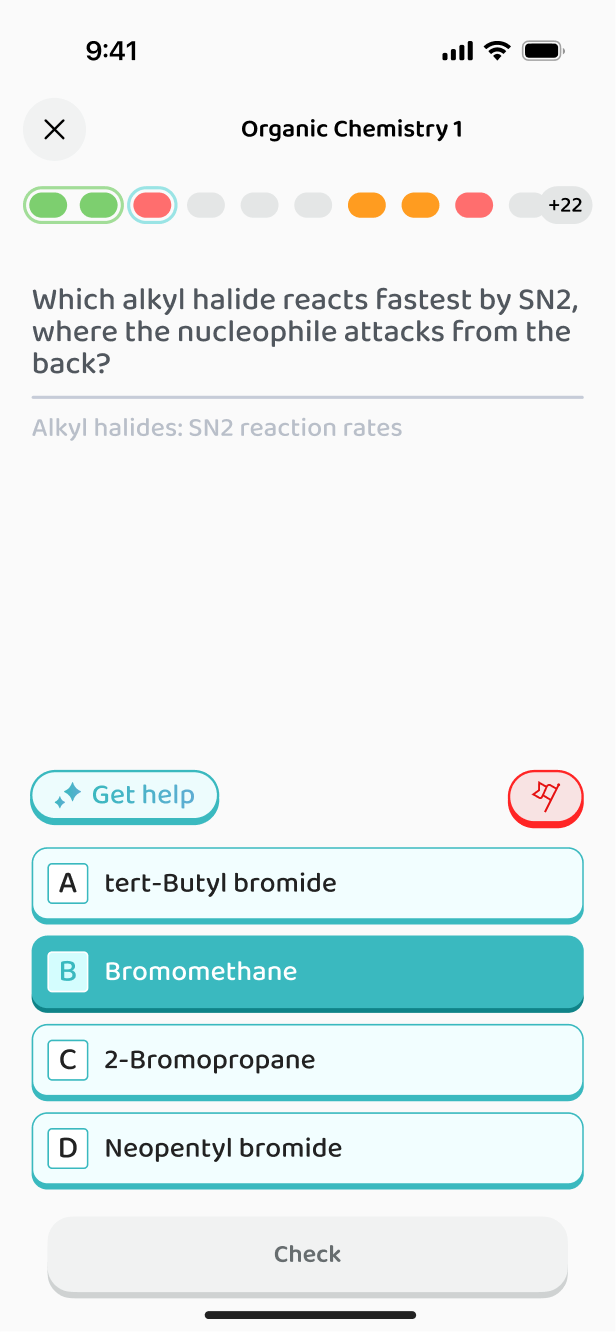
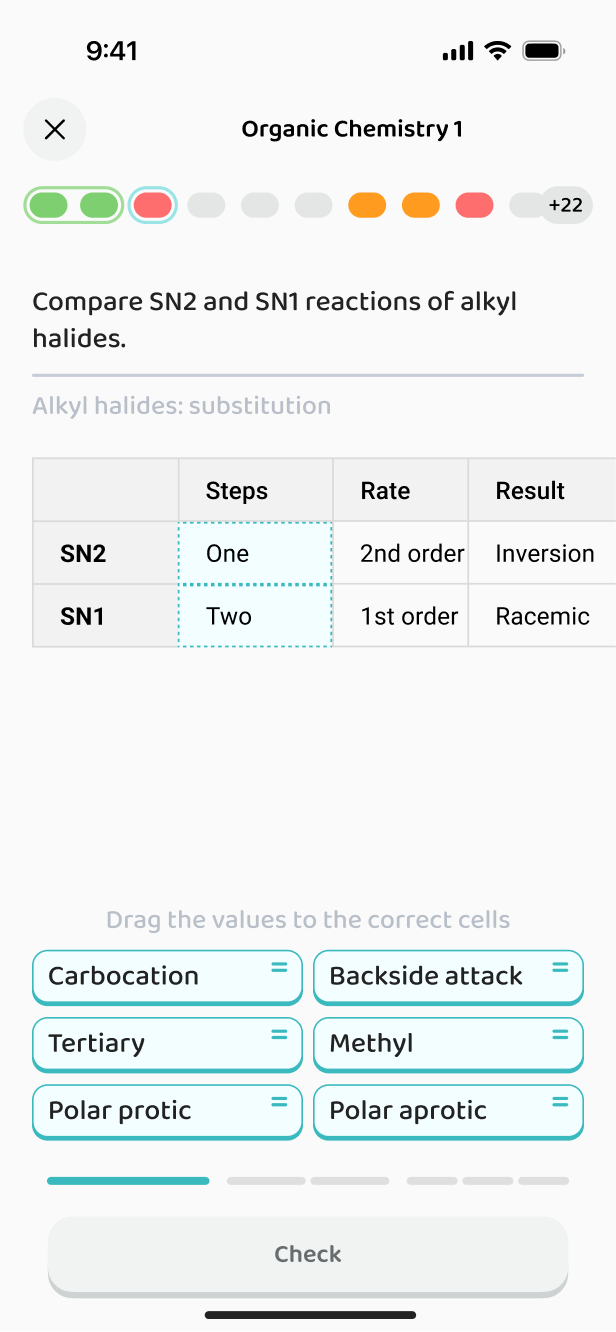
Put the steps of an SN1 reaction in order. Pick the alkyl halide that reacts fastest by SN2. Sort solvents into polar protic and polar aprotic.
Twelve question formats
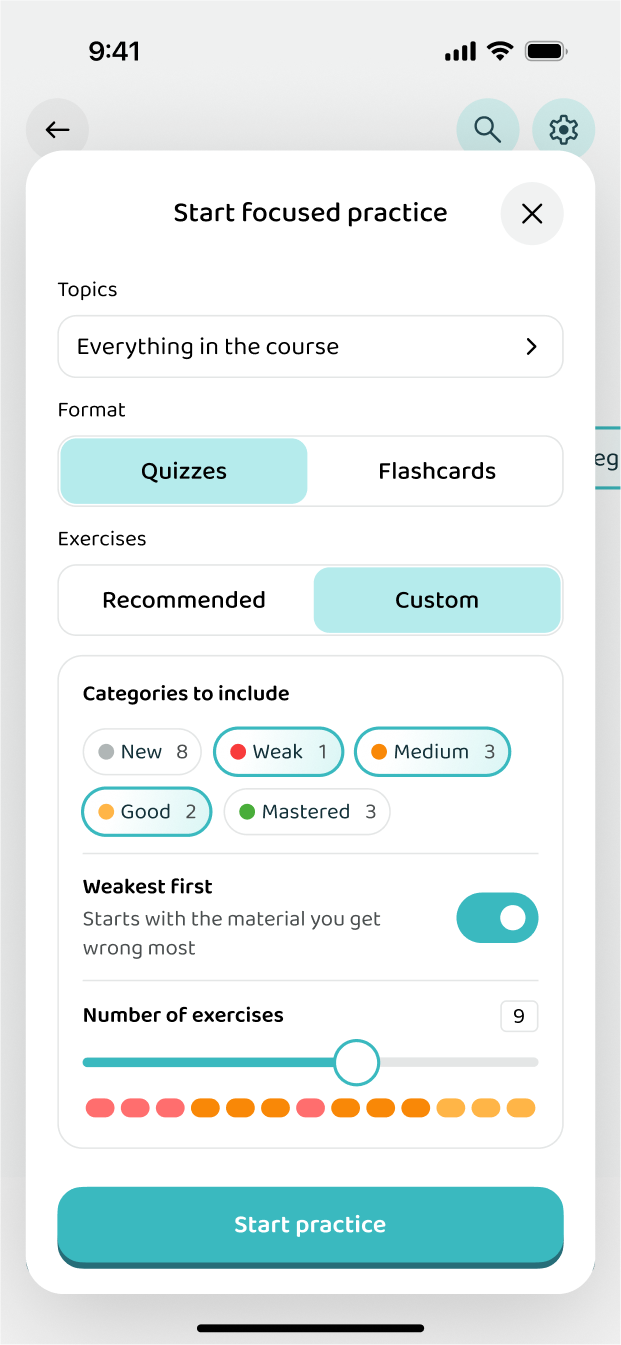
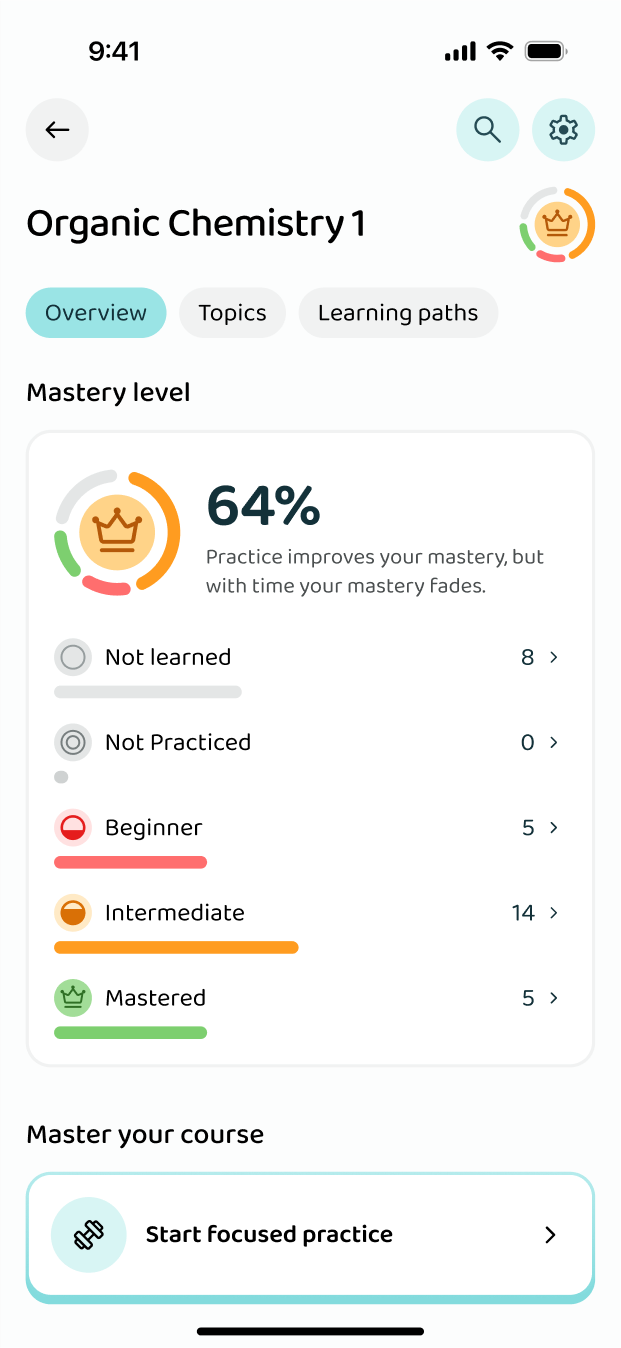
You see where you stand
03Repetition
Older topics come back
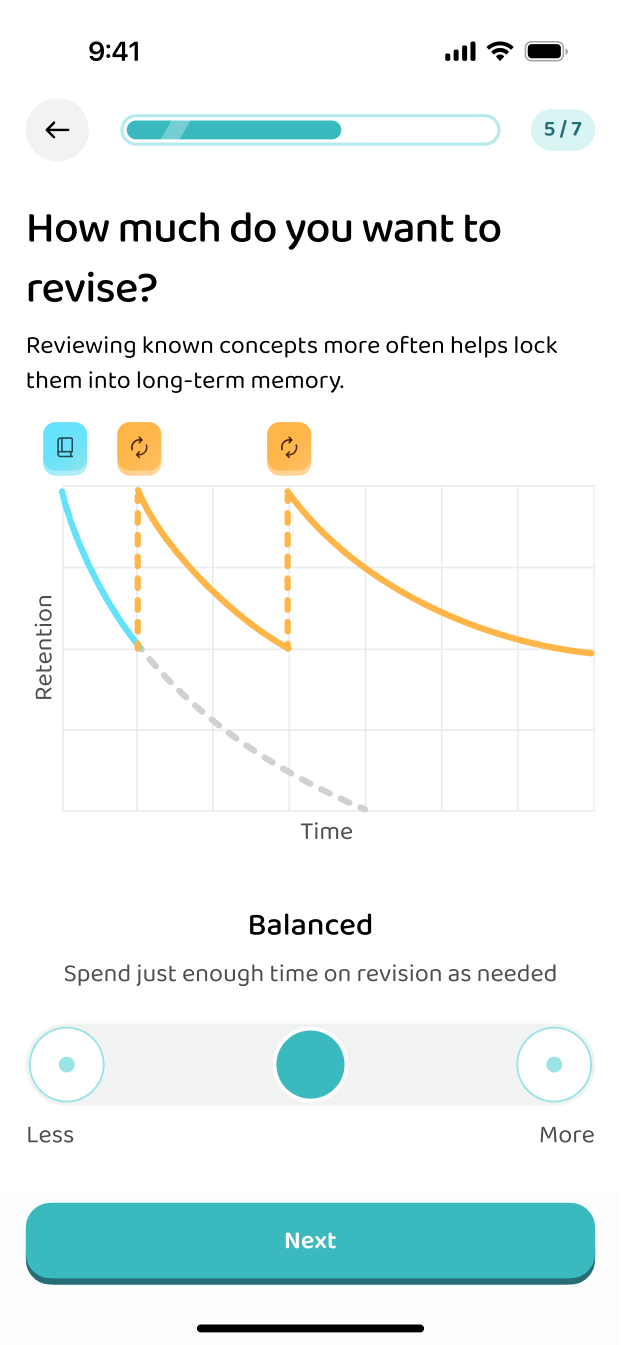
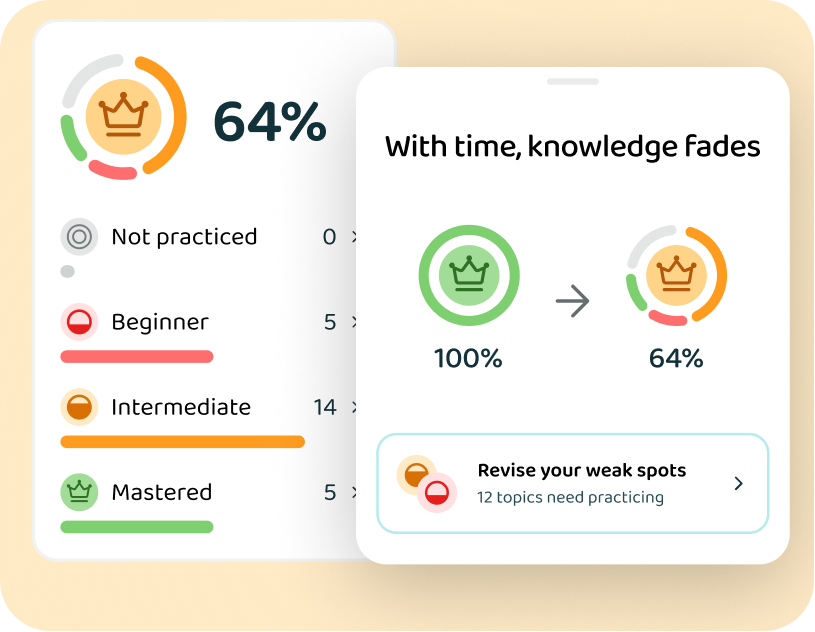
What you miss comes back within days, what you know comes back much later. So you still know September's mechanisms at the final.
Spaced practice
Nothing quietly fades
04Help
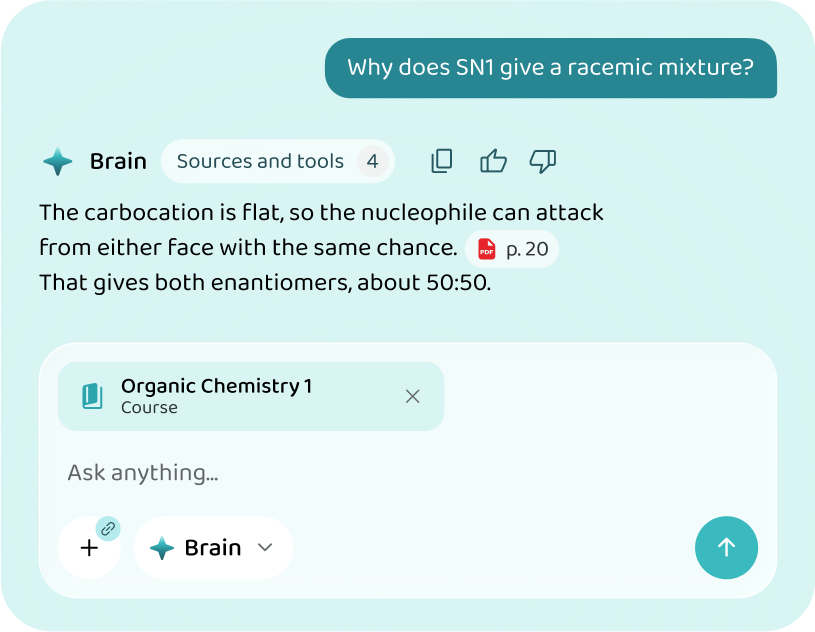
Ask when you're stuck
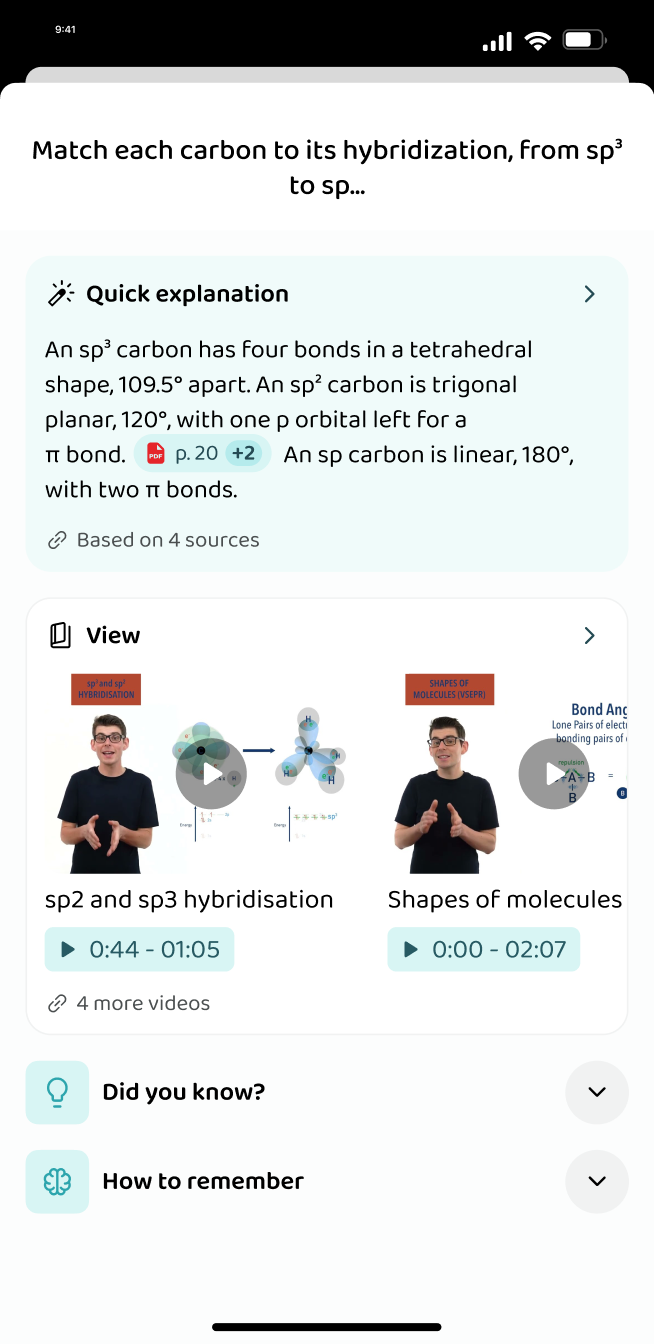
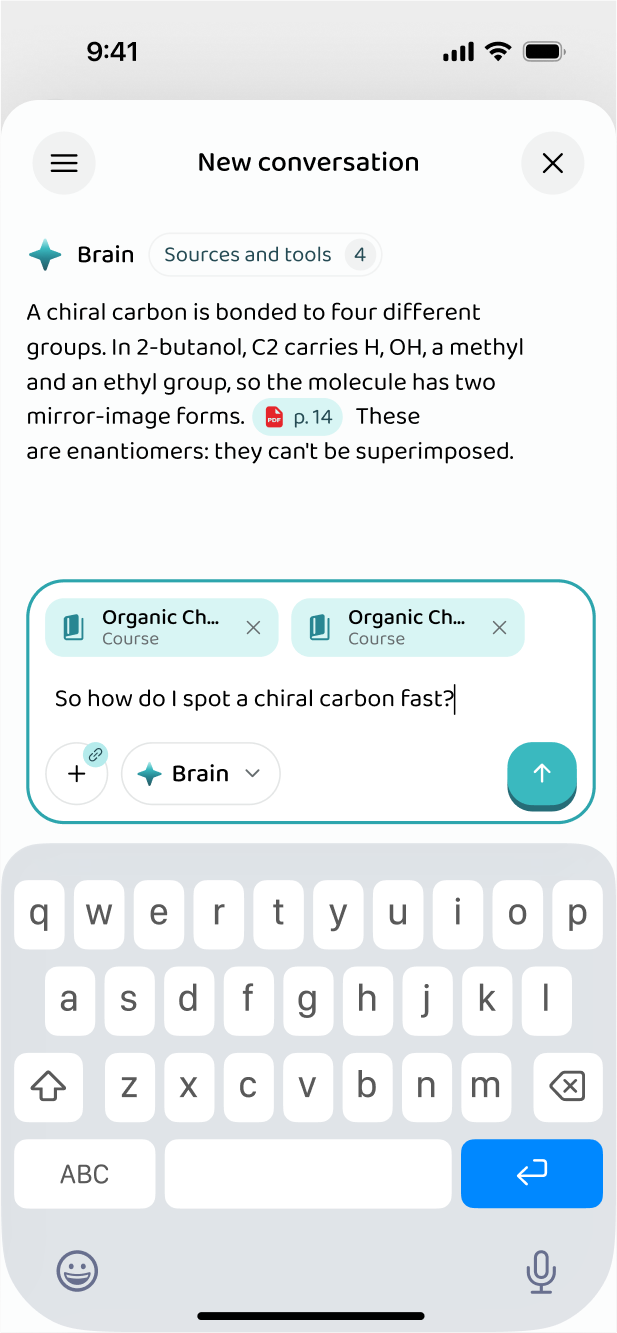
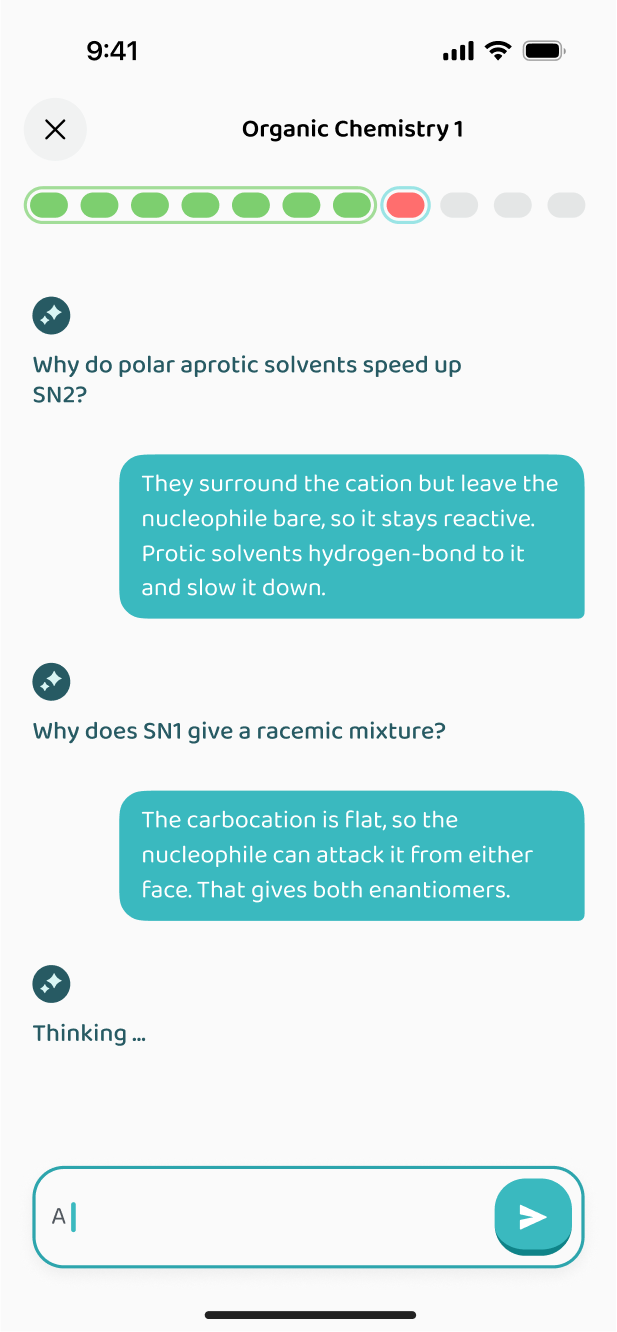
Type a question about any topic and the answer is drawn from this course's own lessons, with a link back to where it is explained. No weak sources, no AI hallucination.
Ask anything
Answers from the course
What's covered
What's in Organic Chemistry 1
The first semester of the sequence most US universities teach. Your professor's order may differ a little; you can take the topics in any order. Organic Chemistry 2 is being built now: its topics are below so you can see what comes next.
Organic Chemistry 1
01Structure and chemical bonding
02Resonance, acids and bases
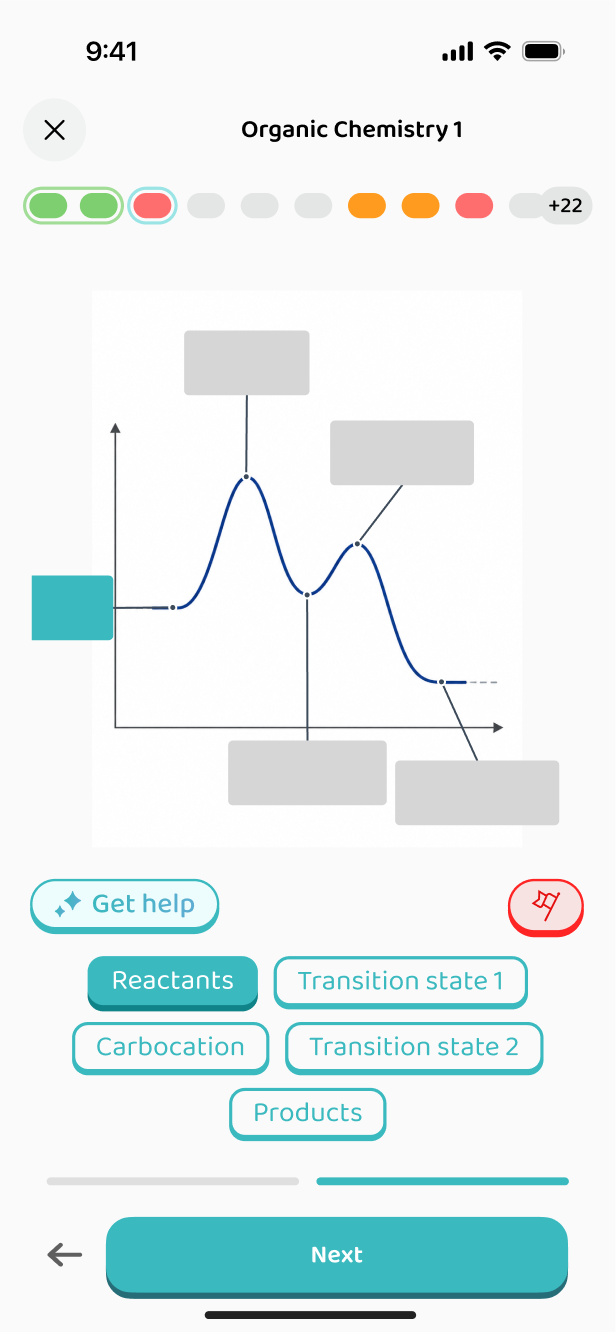
03Reaction mechanisms and energy diagrams
04Alkanes: naming and isomers
05Stereochemistry and chirality
06Alkenes and electrophilic addition
07Alkyl halides: SN1, SN2 and elimination
08Alcohols
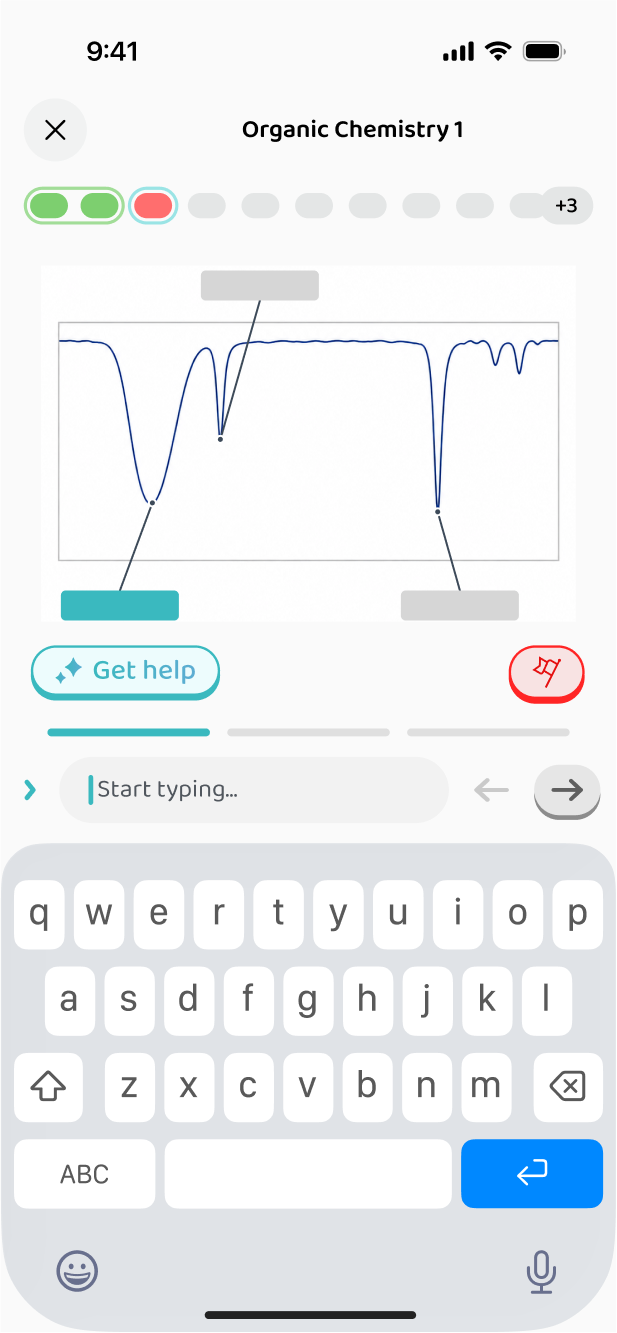
09IR, NMR and mass spectrometry
Organic Chemistry 2 (not open yet)
01Mass spectrometry, IR and NMR
02Alcohols, phenols and acidity
03Aromatic compounds
04Aldehydes and ketones
05Carboxylic acids and derivatives
06Amines
07Polymers
08Multistep synthesis
My Courses
Find your perfect course
Courses from Chemistry Student, organized into focused paths so you can start with the right next lesson.
Loading marketplace courses...Pulling live offerings from the marketplace.
Not open yet
Get 10% off Organic Chemistry 2
Organic Chemistry 2 is being built now. Leave your email and you'll hear the day it opens, with 10% off.
Planning
Set your next exam and plan back from it
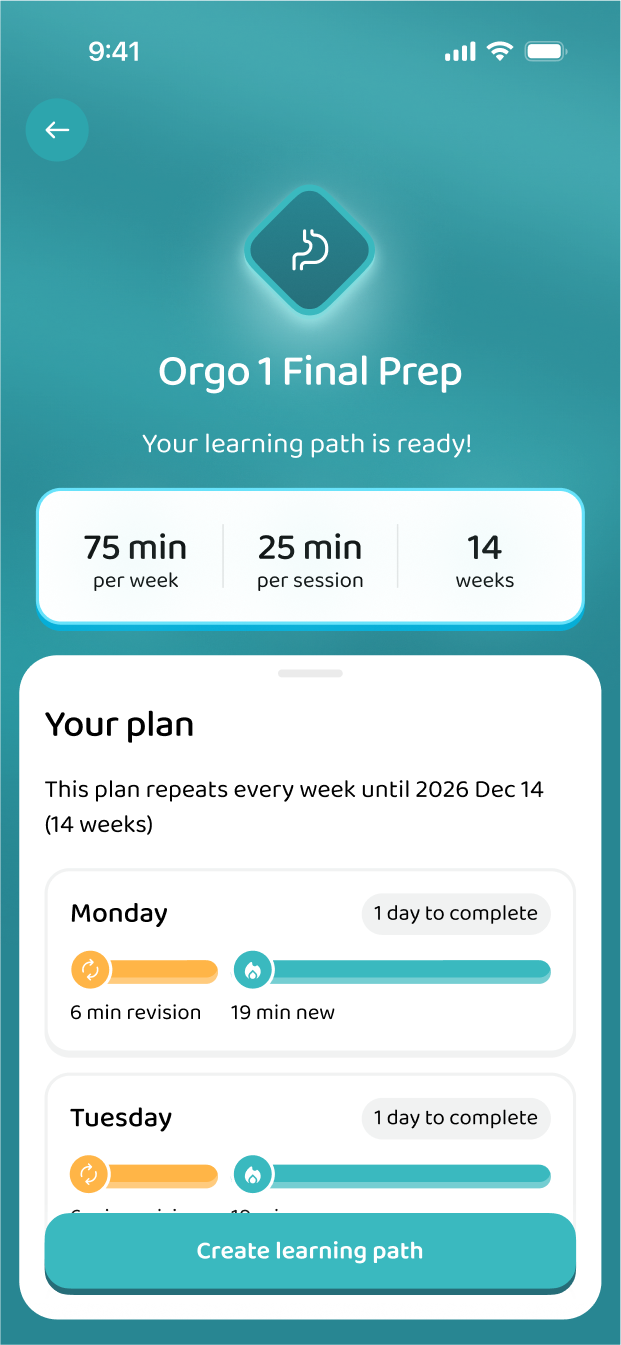
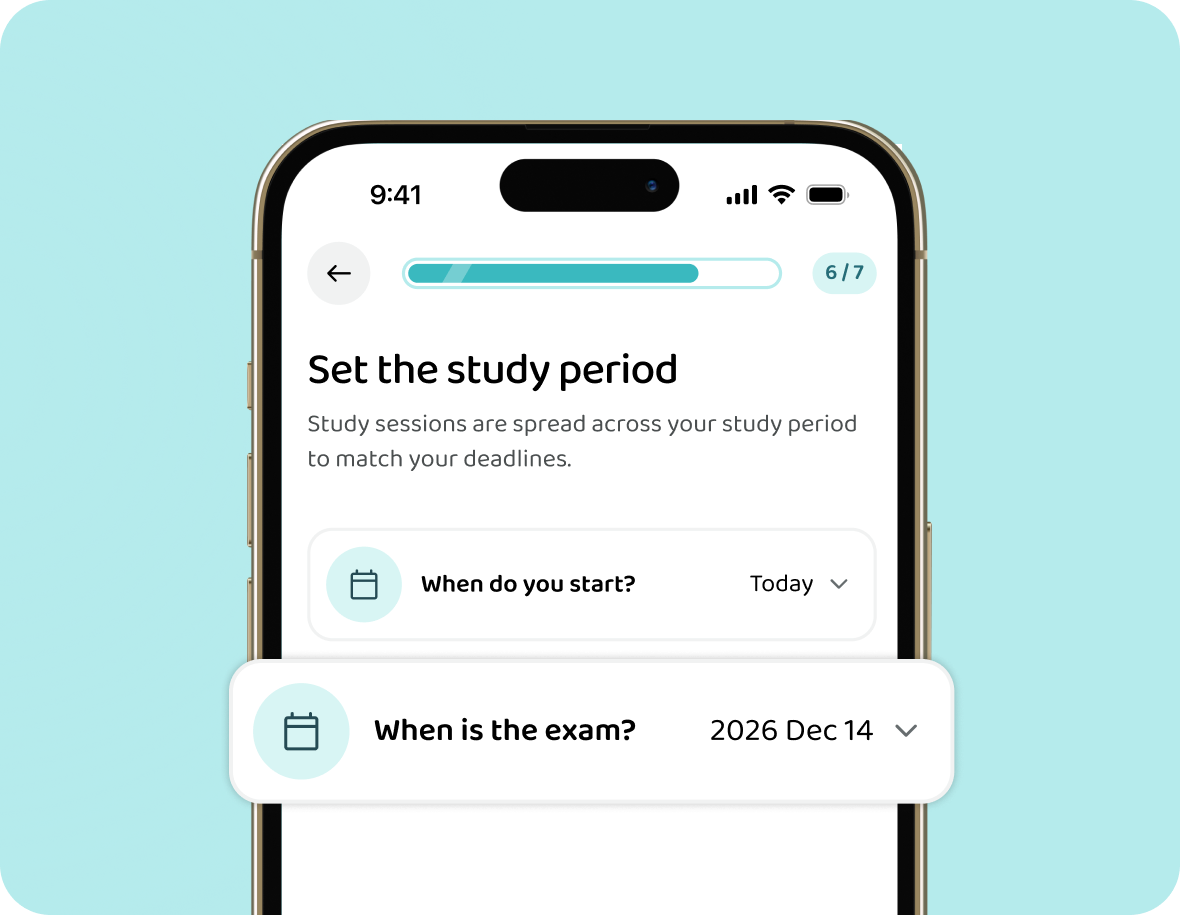
Your next midterm or the final: put in the date and the app spreads the topics across the days you have.
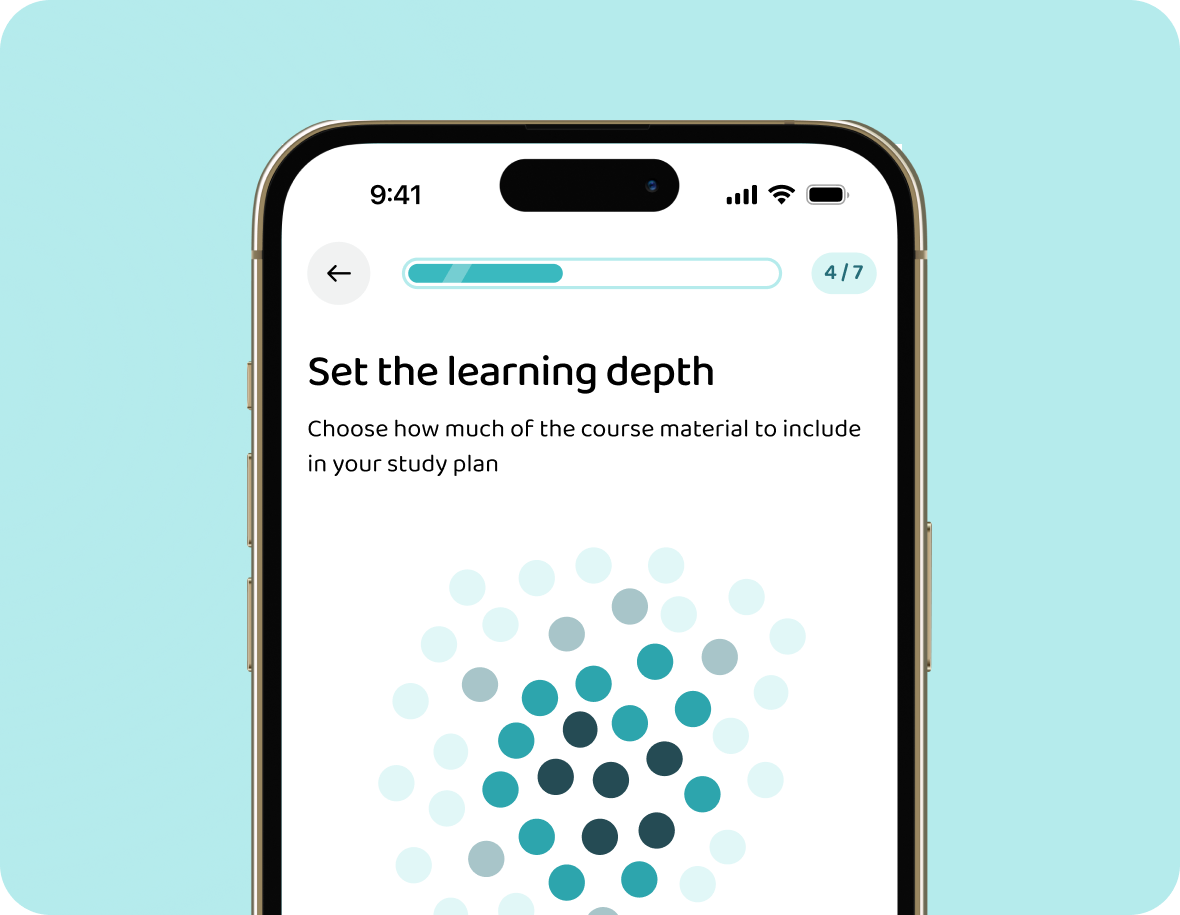
Everything in the course, or the essentials first. You decide how much goes into the plan.
2
Set the date
Set your exam date. The course is spread across the time you have until then.
3
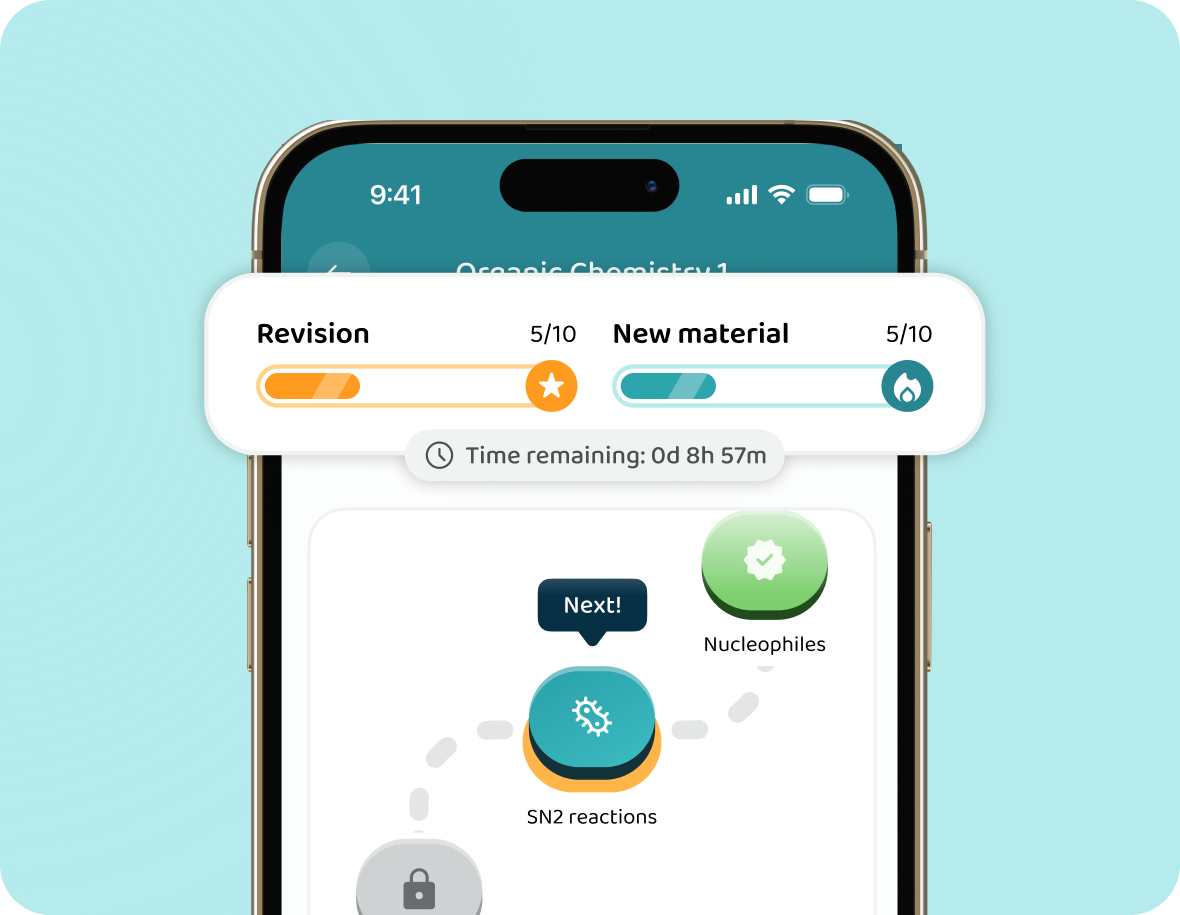
Follow the plan
Each day mixes new lessons with the topics you are about to forget, so you never have to decide what to do next.
How you practise
Twelve ways you can practice
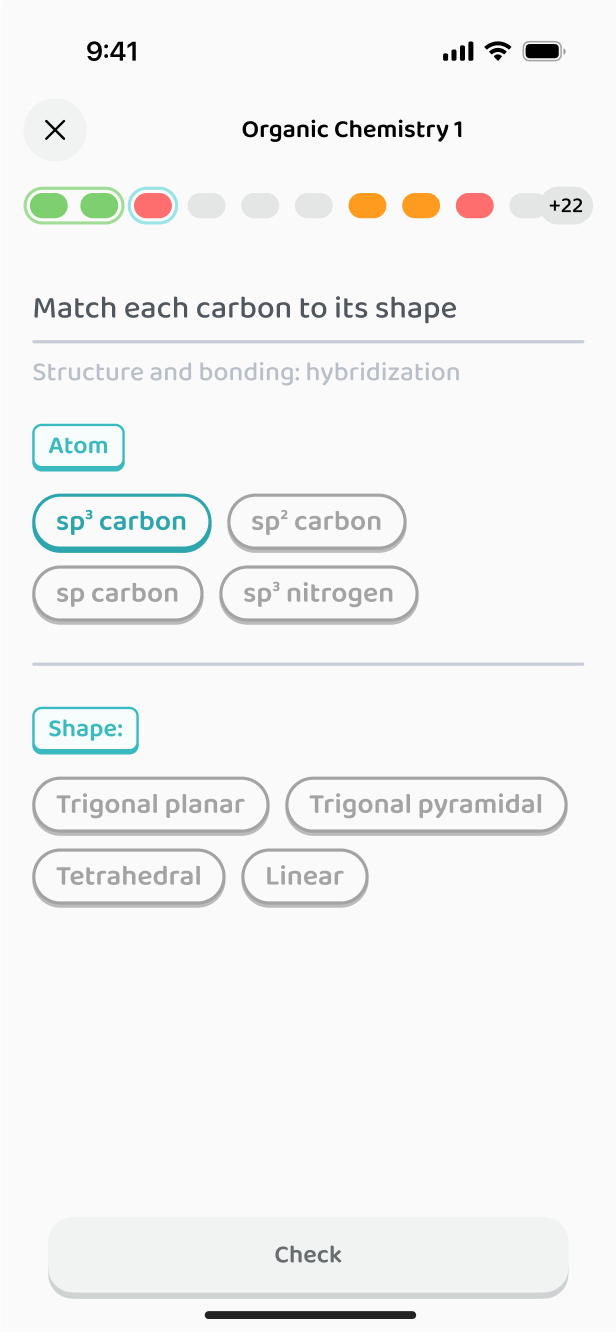
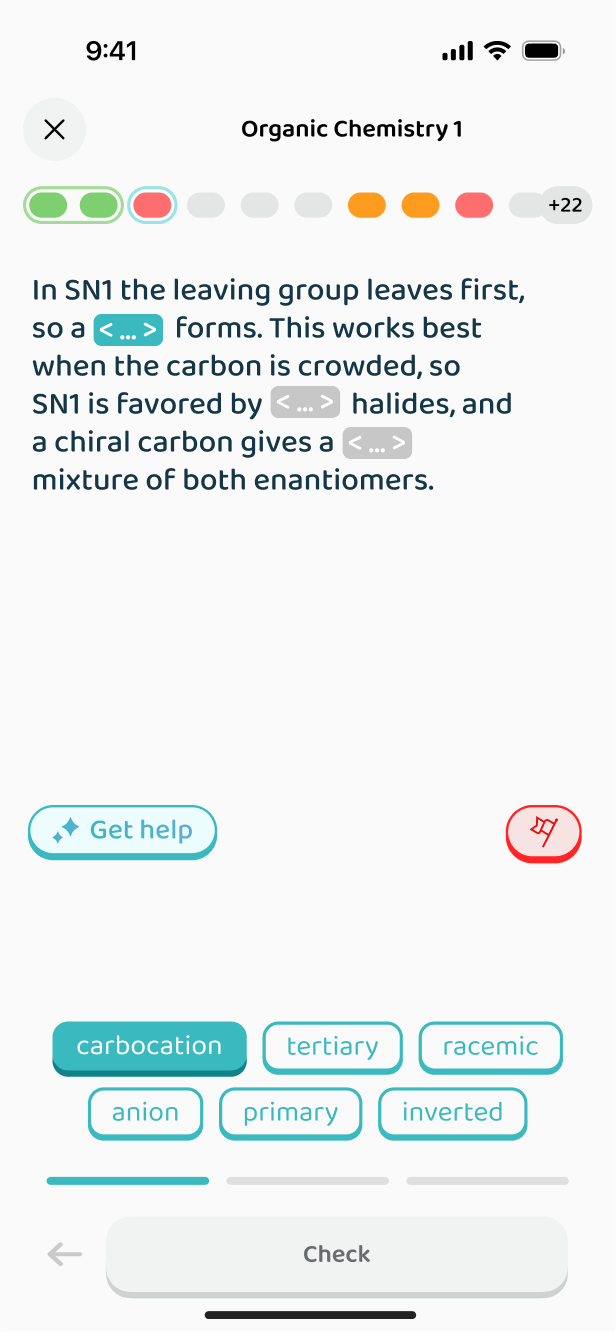
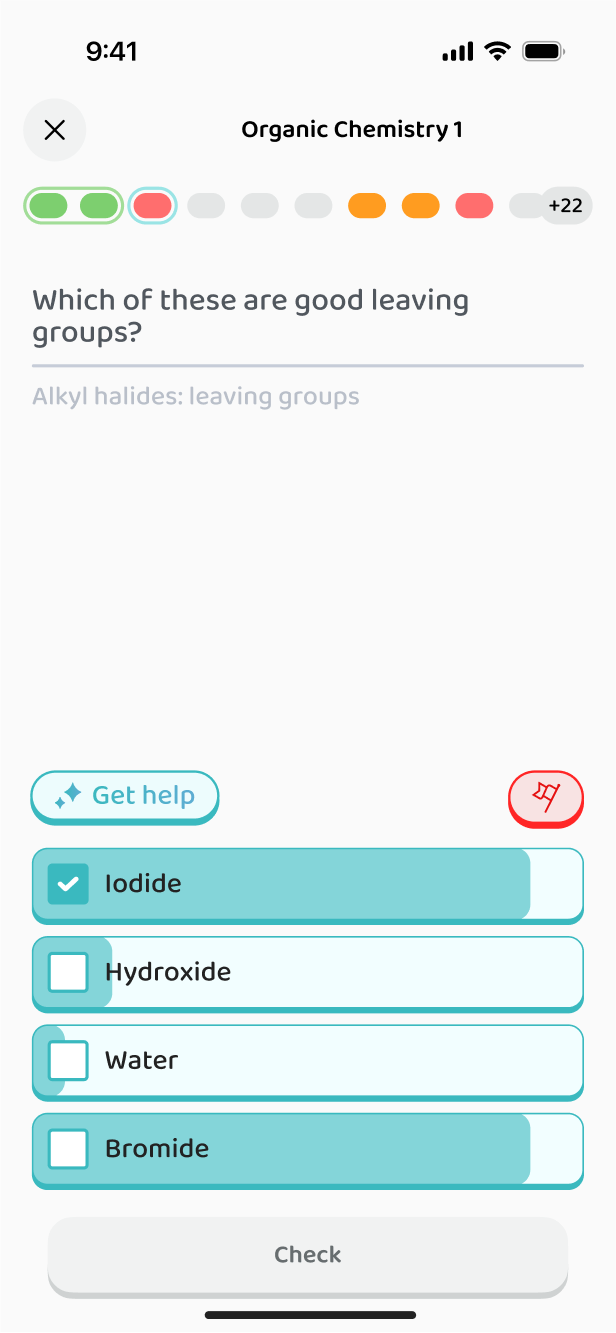
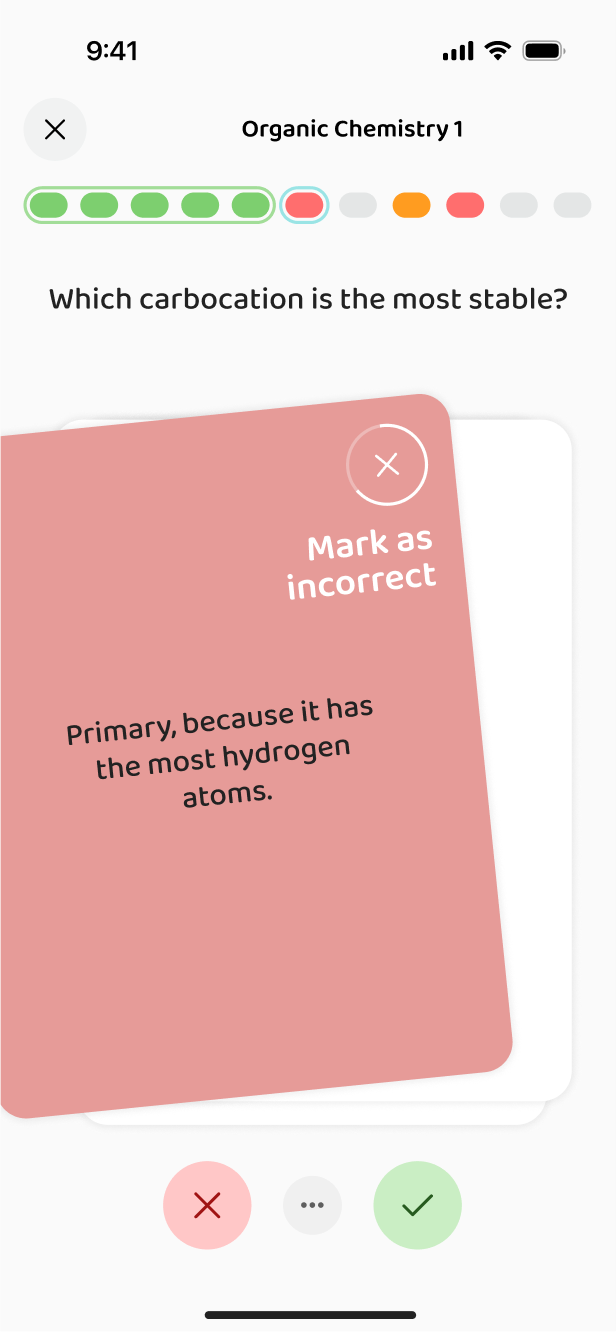
Ordering, matching, tables, labeling a diagram, fill in the blank, flashcards. The same idea gets asked more than one way, so you learn the chemistry, not the look of the answer.
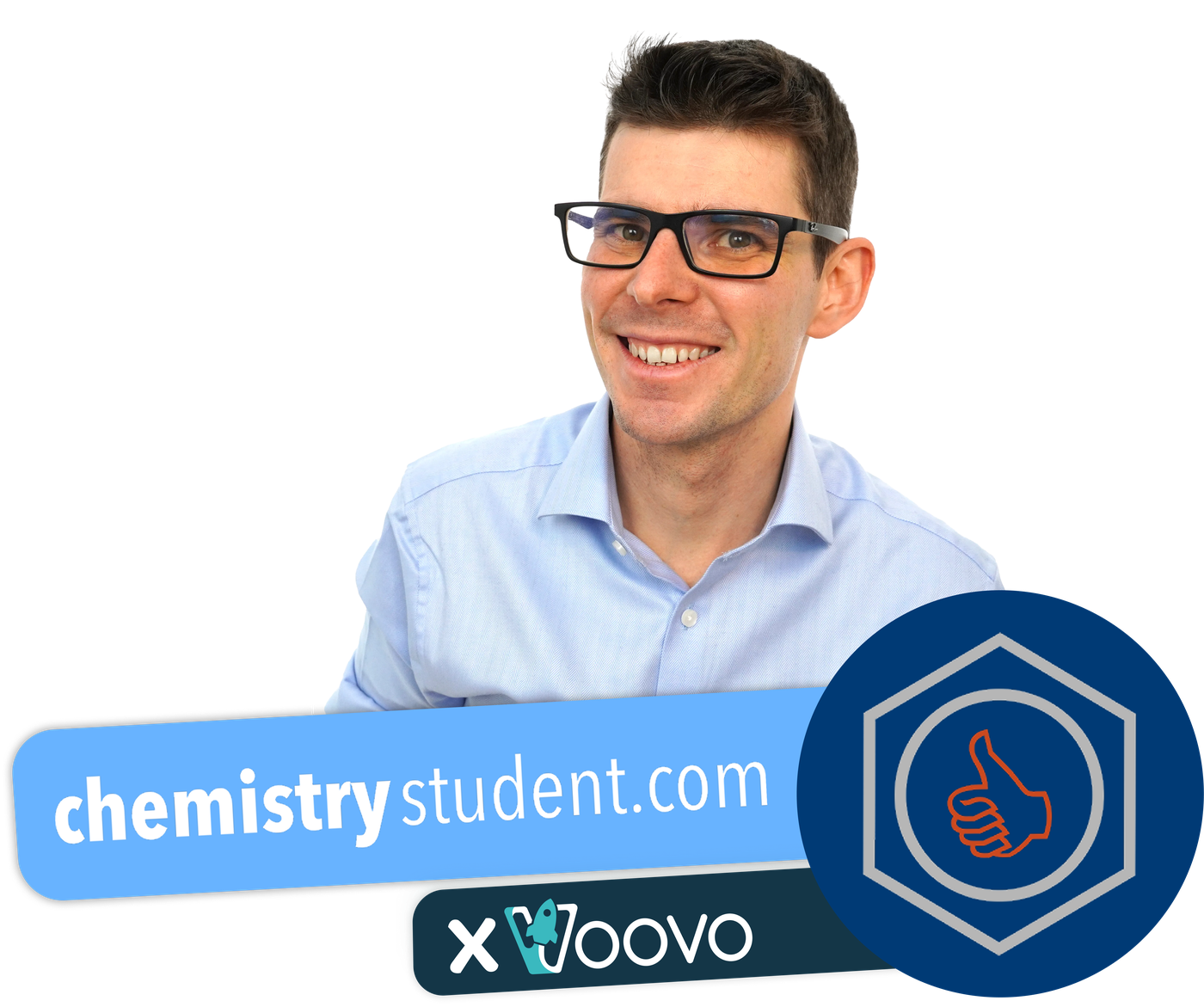
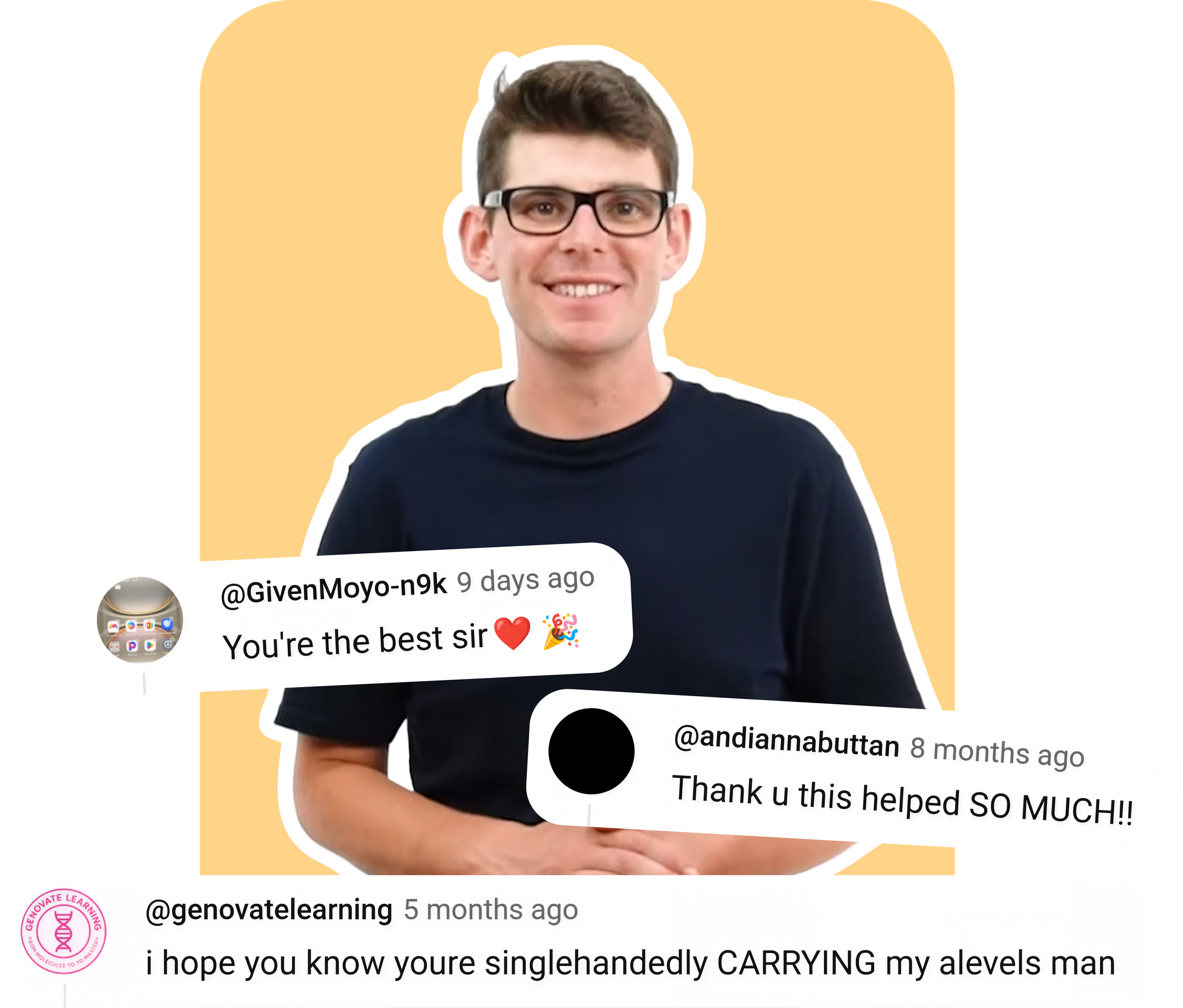
I'm a private chemistry tutor, and I started chemistrystudent.com in 2019 so the notes I use with my own students could be free for everyone.
Every page follows one course's syllabus, point by point, and every video starts with a recap of what you need to know first.
Reading notes feels like studying, but you learn far more by answering questions. So this course asks you about every point on your syllabus, until you master it. That is the best way to learn.
chemistrystudent.com, free since 2019
957 chemistry videos on YouTube
31,000 subscribers on YouTube
Mattchemistrystudent.com · private A-level and IB chemistry tutor
Questions
Aren't Matt's notes free?
Yes, and they stay free on chemistrystudent.com. The course is where you work through the material in order and get quizzed on it, with the things you miss coming back before the exam.
Will it match my university's course?
Organic Chemistry 1 covers bonding, acids and bases, mechanisms, alkanes, stereochemistry, alkenes, substitution and elimination, alcohols and spectroscopy. Some courses also teach alkynes or chair conformations in the first semester: those aren't in it yet. You can take the topics in any order you need.
Is Organic Chemistry 2 open?
Not yet. It's being built now. Leave your email on this page and you'll hear the day it opens, with 10% off.
Does it help with the ACS final?
The ACS exams are multiple choice across the whole course, which is exactly what the app practices: every topic, asked back to you, with the ones you miss coming back before the final.
Does it grade my problem sets?
No. Every question in the app has a checkable answer, so it can't grade written work or the mechanisms you draw. It drills the concepts and reactions your problem sets and exams are built from.
Your next exam
Start before your next exam.
Start now, and every unit gets its turn before exam day.