
01Lessons
Every point explained first
Gen Chem 1 from matter and the mole to intermolecular forces and spectroscopy, chapter by chapter. Each lesson explains the idea before it asks you anything about it.
- 12 topics
- 49 lessons

 Chemistry Student & VoovoGeneral Chemistry 1Chemistry Student × Voovo
General Chemistry 1 is open now, as lessons and questions built with Matt from chemistrystudent.com, so you're ready for each exam and the final. General Chemistry 2 is coming: sign up below and you'll hear the day it opens.
It's the course that decides a lot of pre-med, nursing and engineering plans: at some universities, 30–47% of students get a D, fail or withdraw.
The first one usually comes about a month into the semester, and exams are most of your grade. Falling behind in week three costs you in week five.
Many schools use the ACS exam: 70 multiple-choice questions in 110 minutes, across the whole course. Chapter one still has to be fresh in December.
Gen Chem 1 from matter and the mole to intermolecular forces and spectroscopy, each chapter with its lessons and questions. Gen Chem 2 comes next.
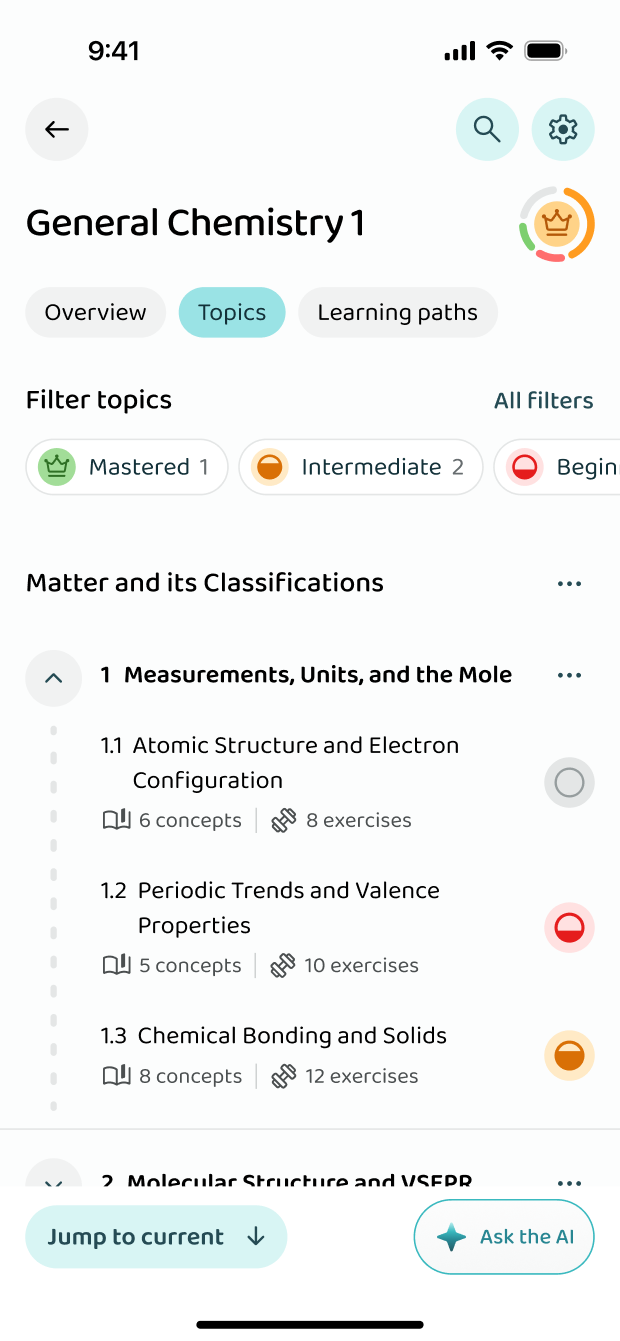
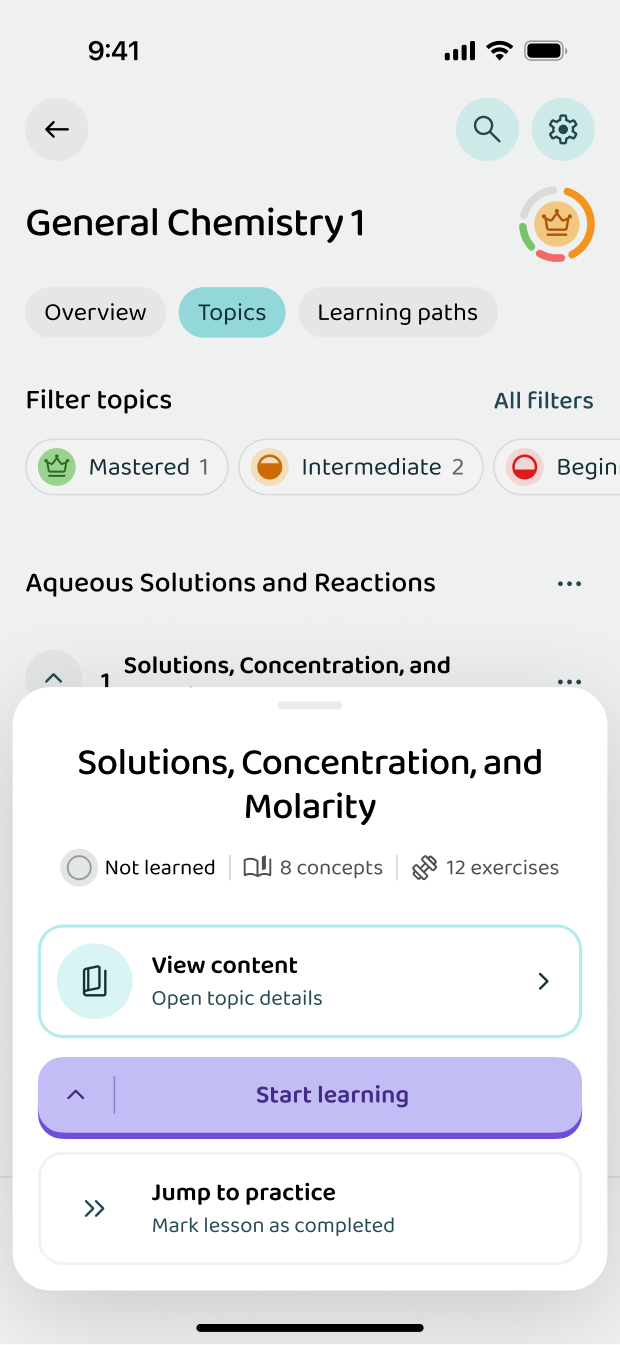
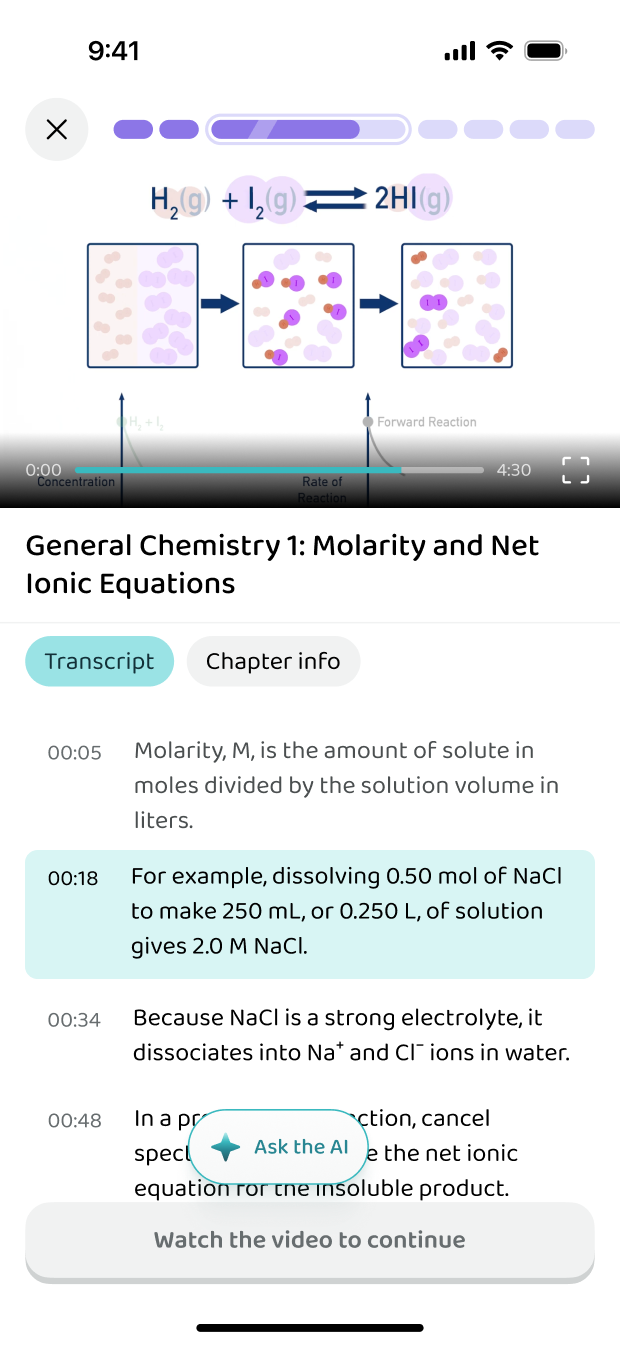
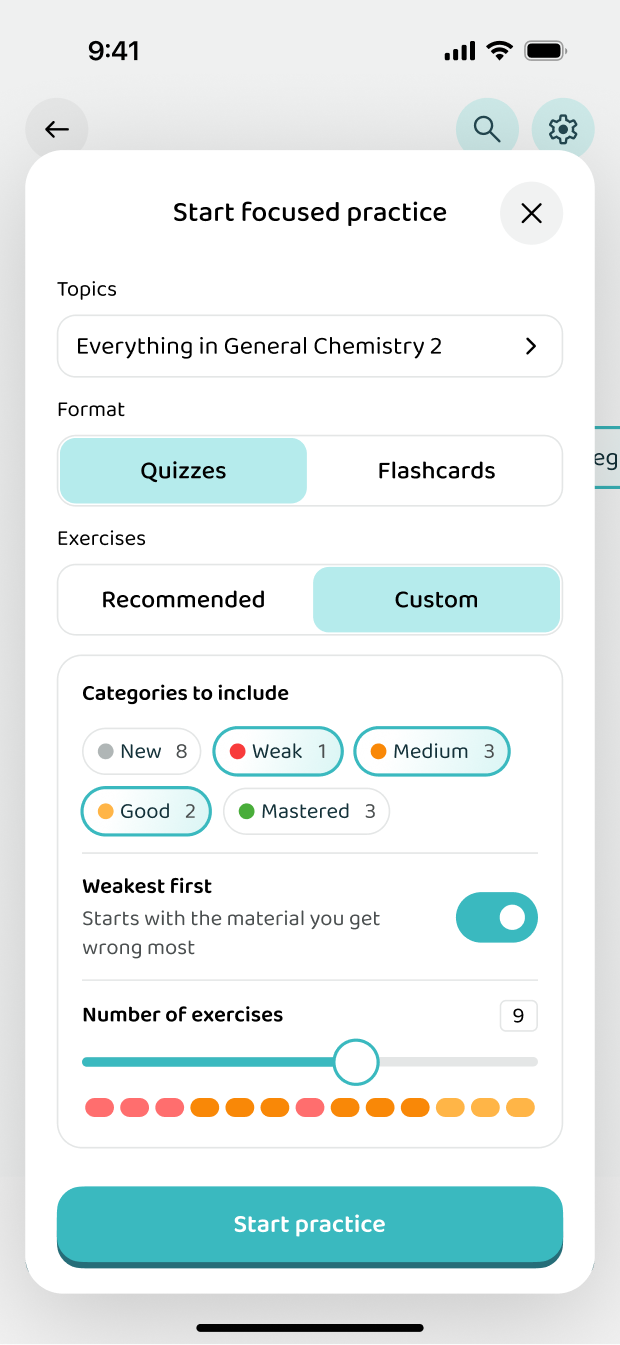
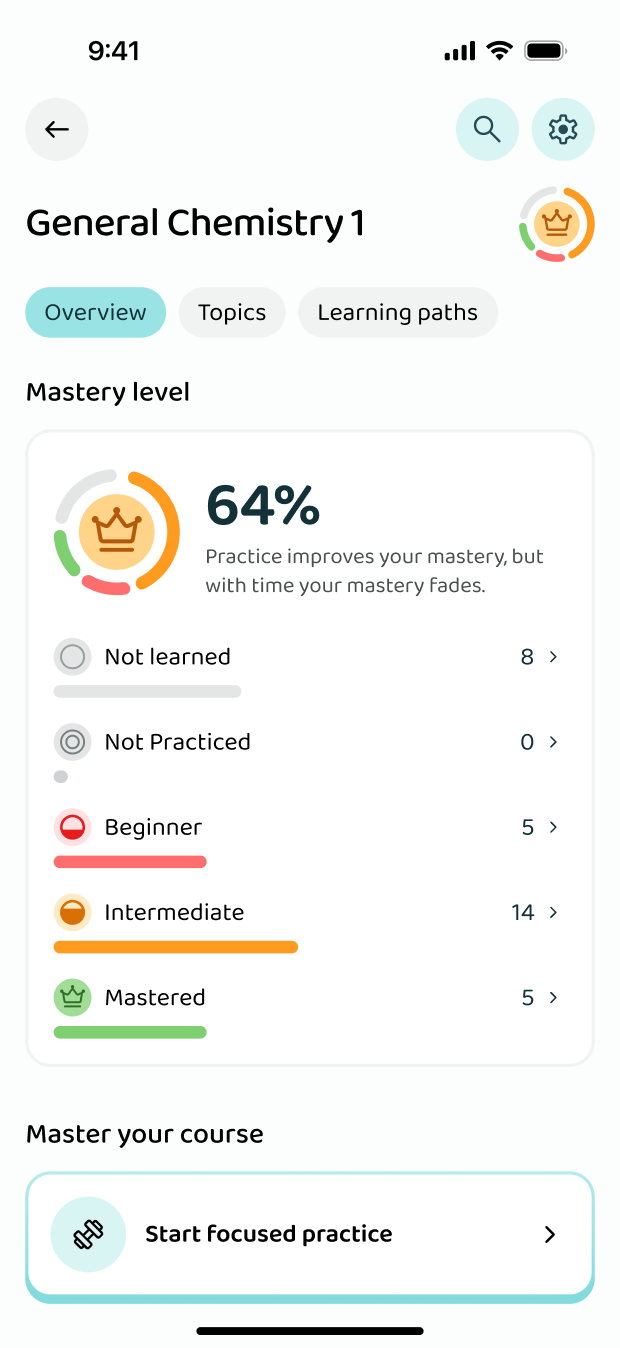
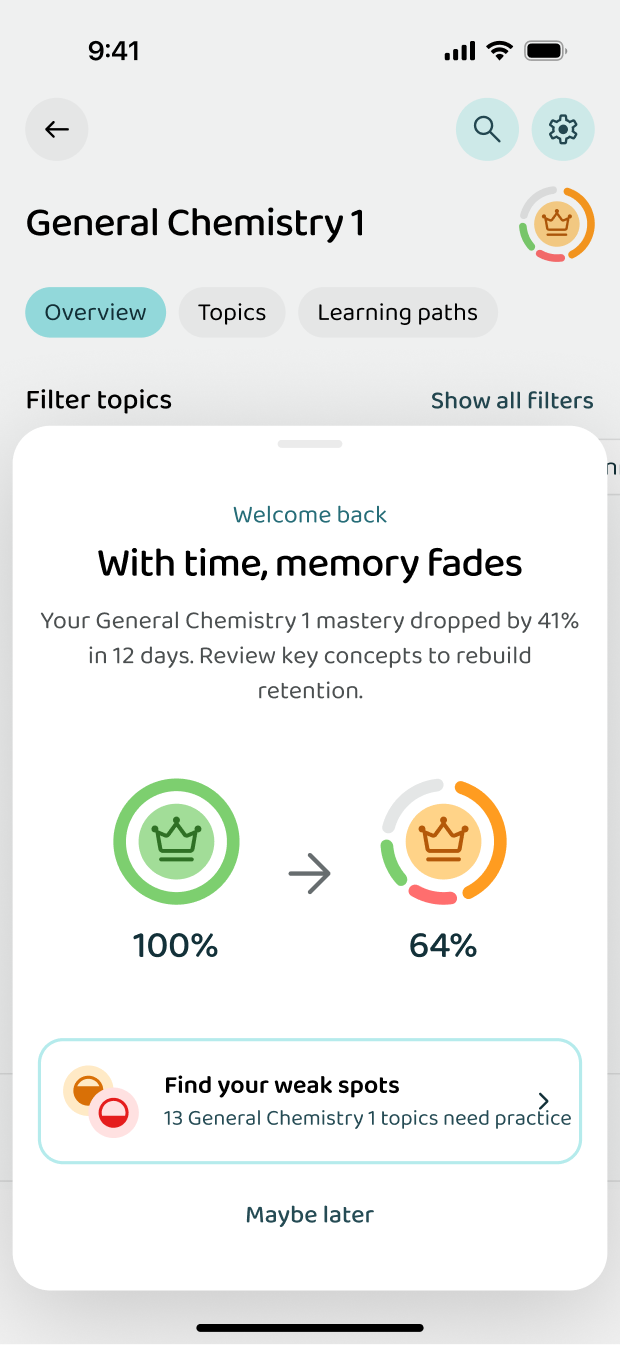
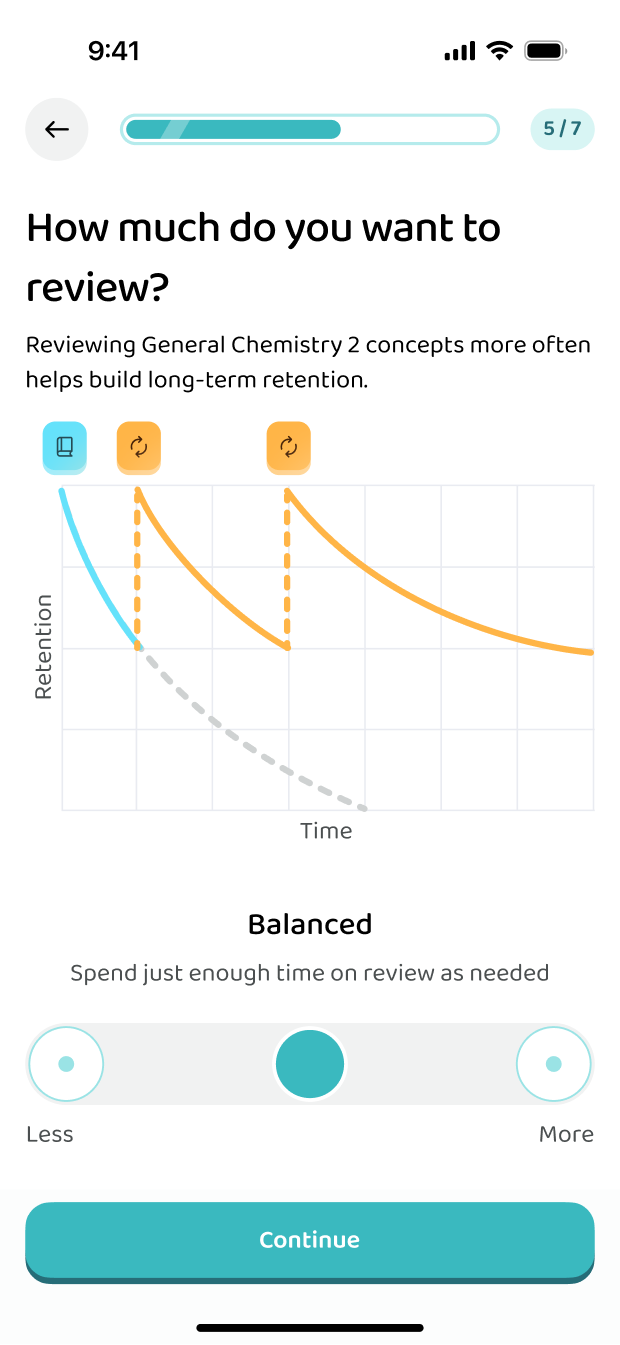
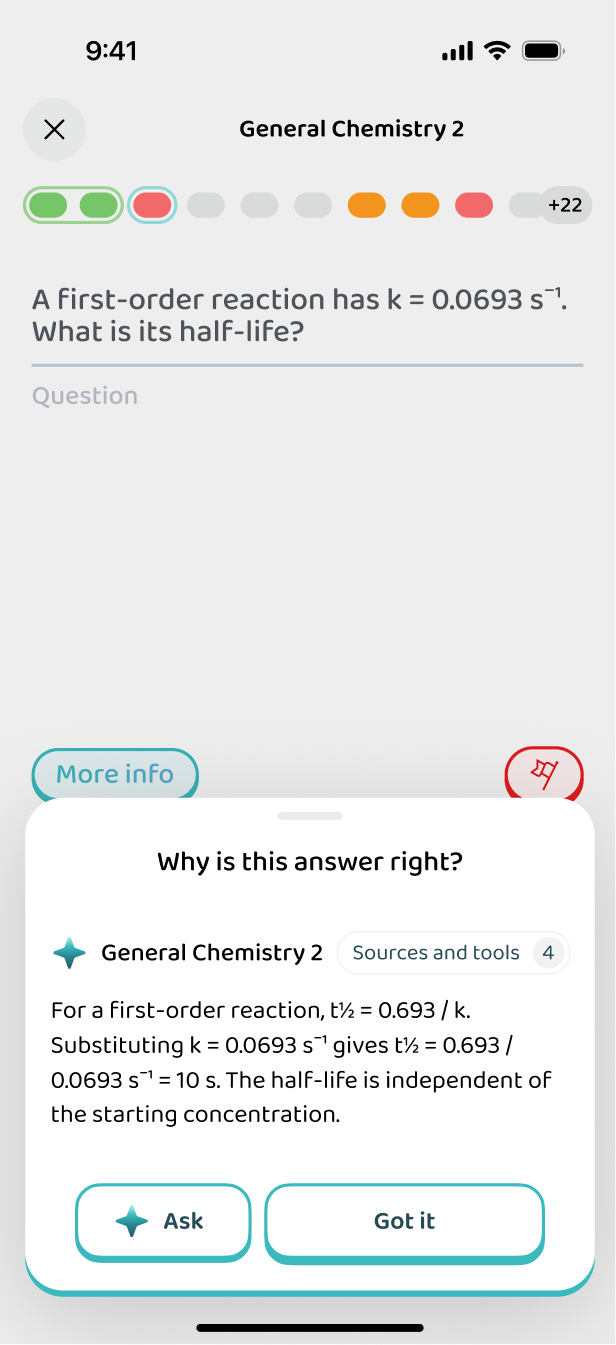
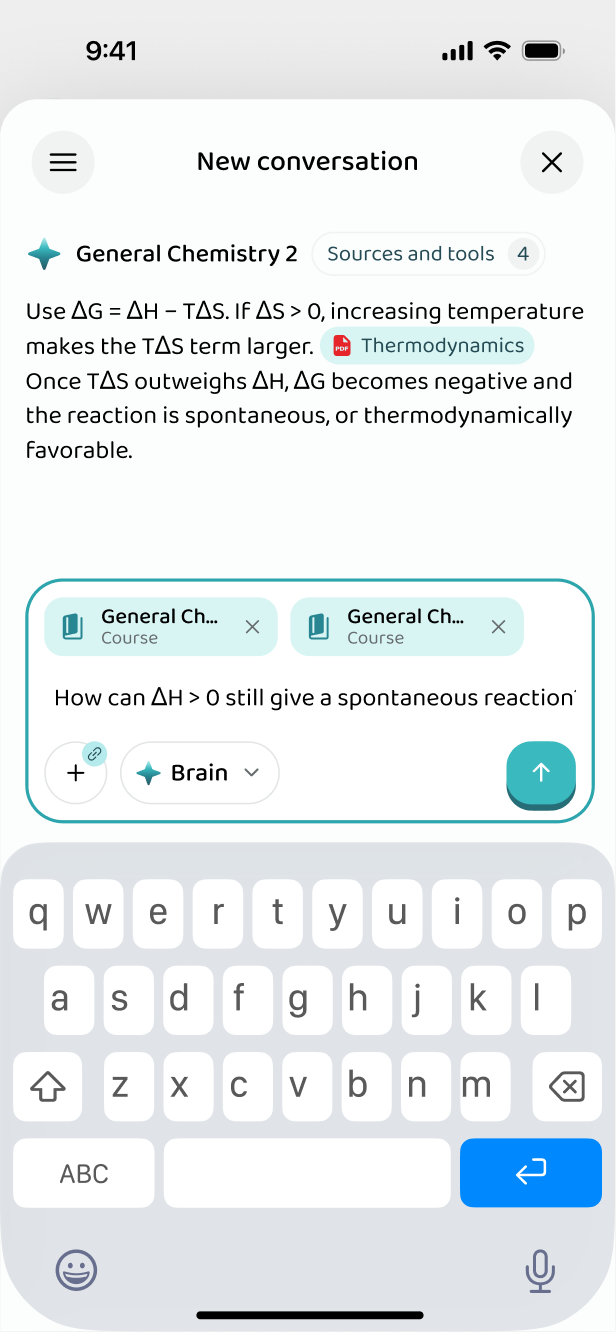
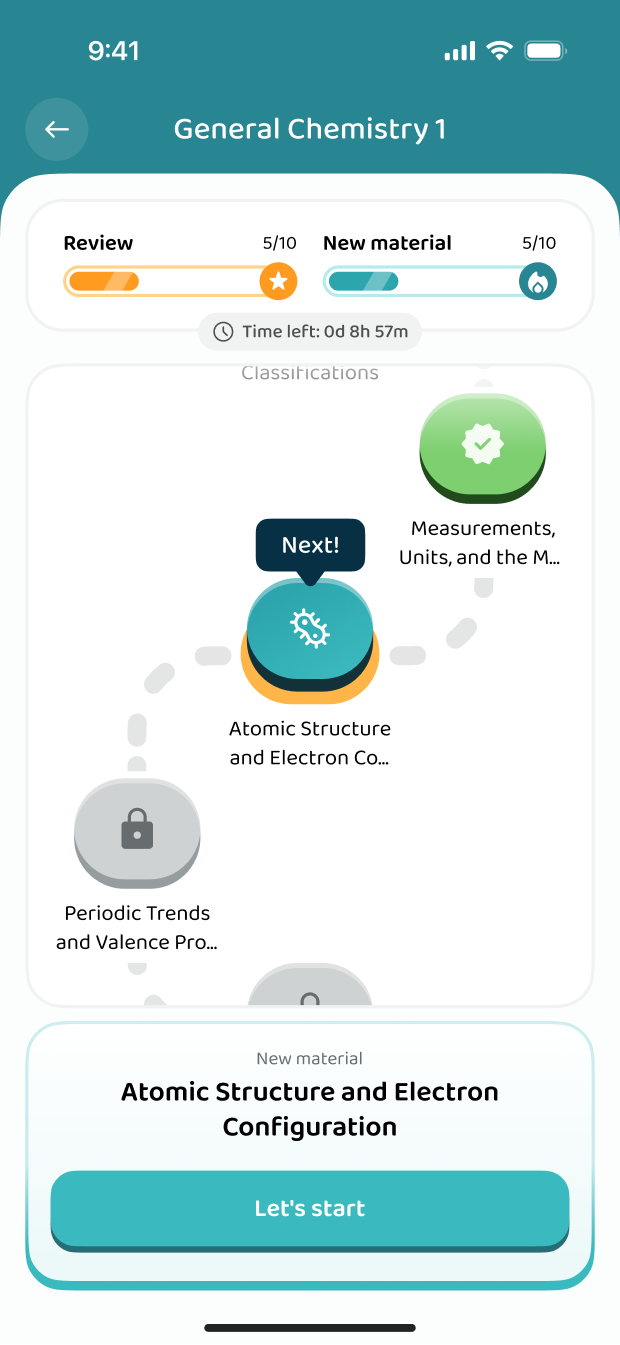
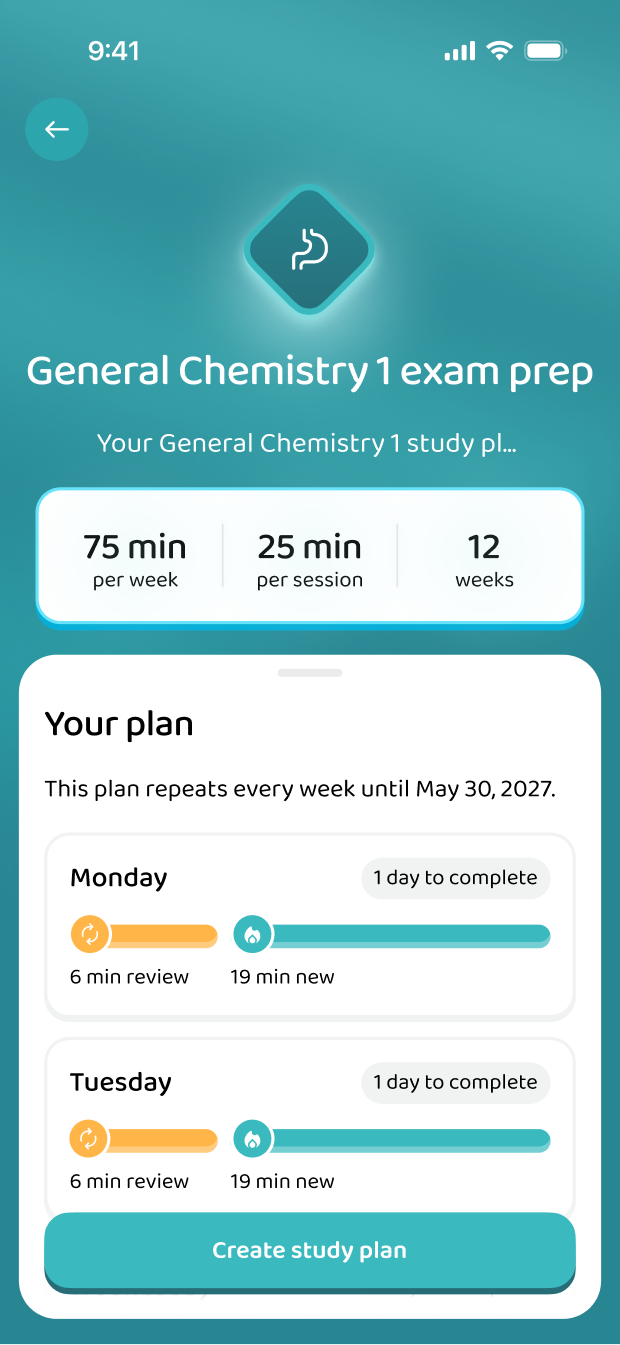
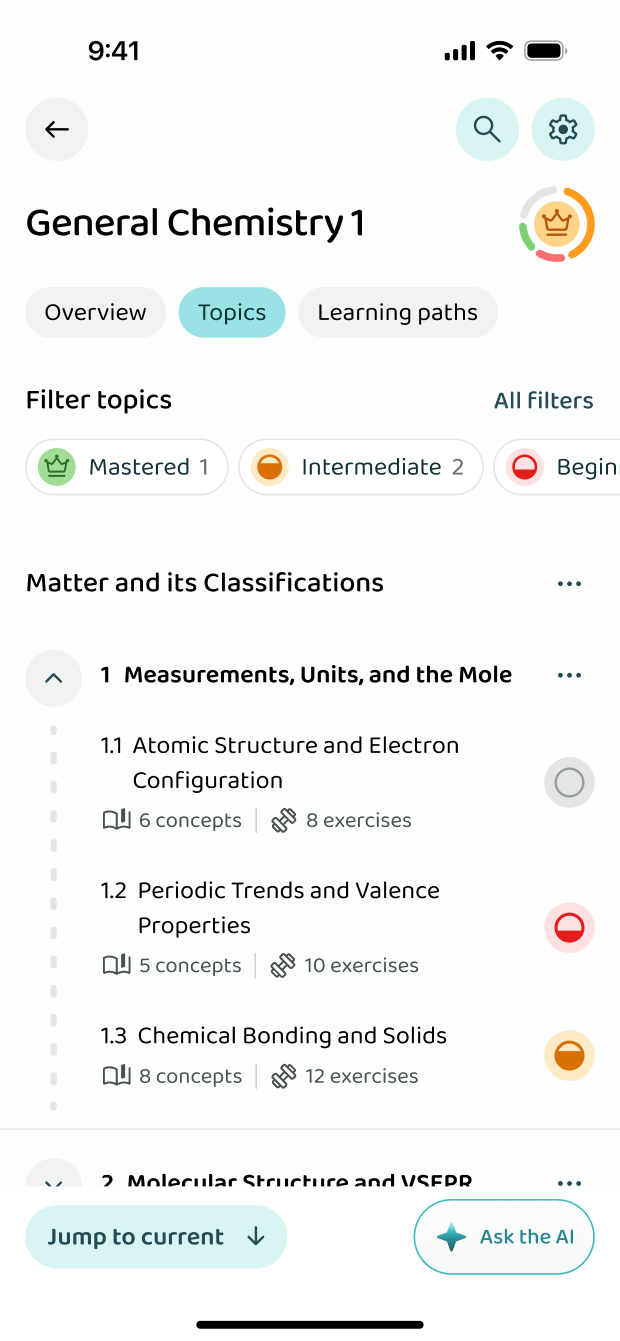
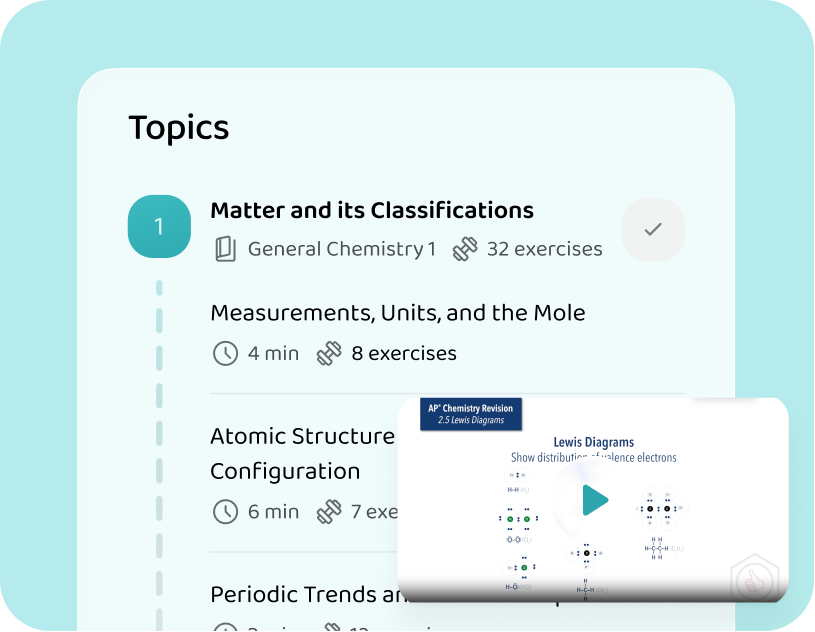
The course follows the Gen Chem specification in order, so you always know which part you are on and what is left.
Each lesson ends in questions, so you find out what you actually know before the exam does.
September's stoichiometry keeps coming up in practice, so you still know it for the final.
Matt tells his own students to study by answering questions, not by rereading notes. The course is built that way: a lesson, then questions, then practice on what you missed.
Gen Chem 1 from matter and the mole to intermolecular forces and spectroscopy, chapter by chapter. Each lesson explains the idea before it asks you anything about it.
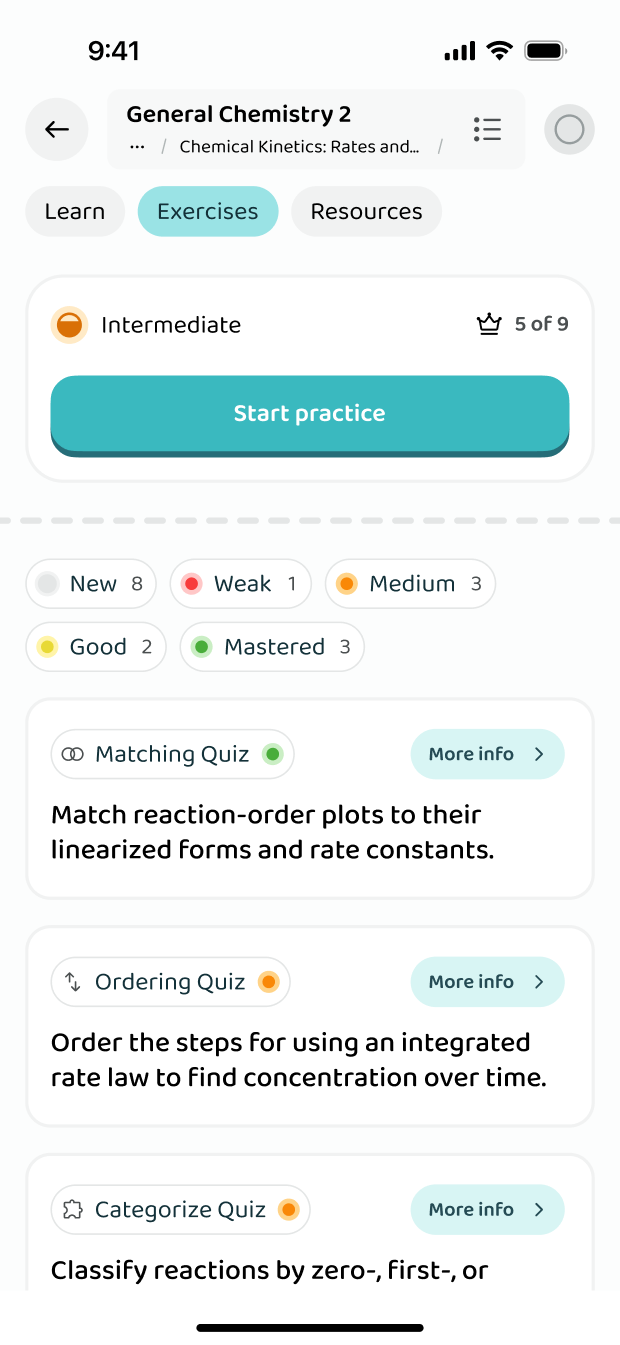
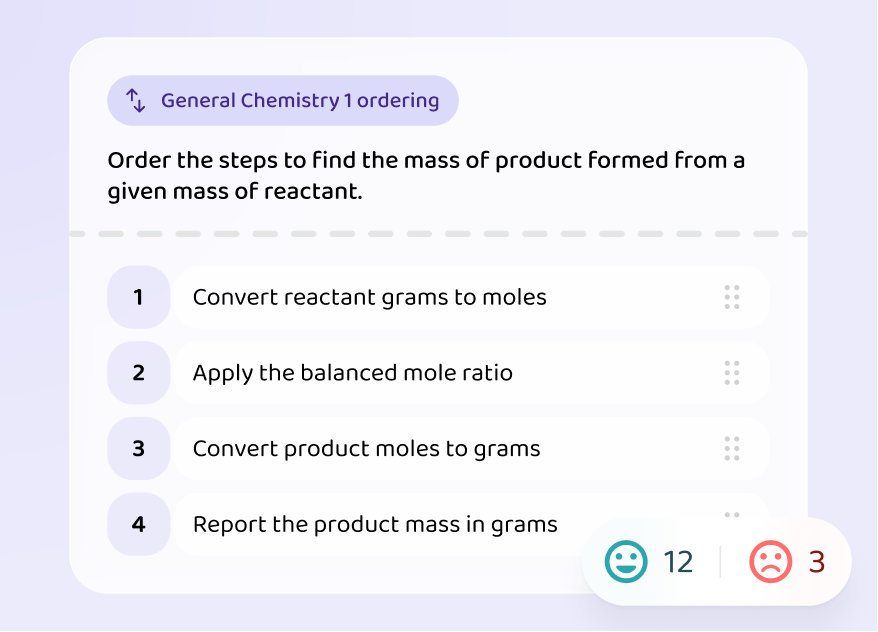
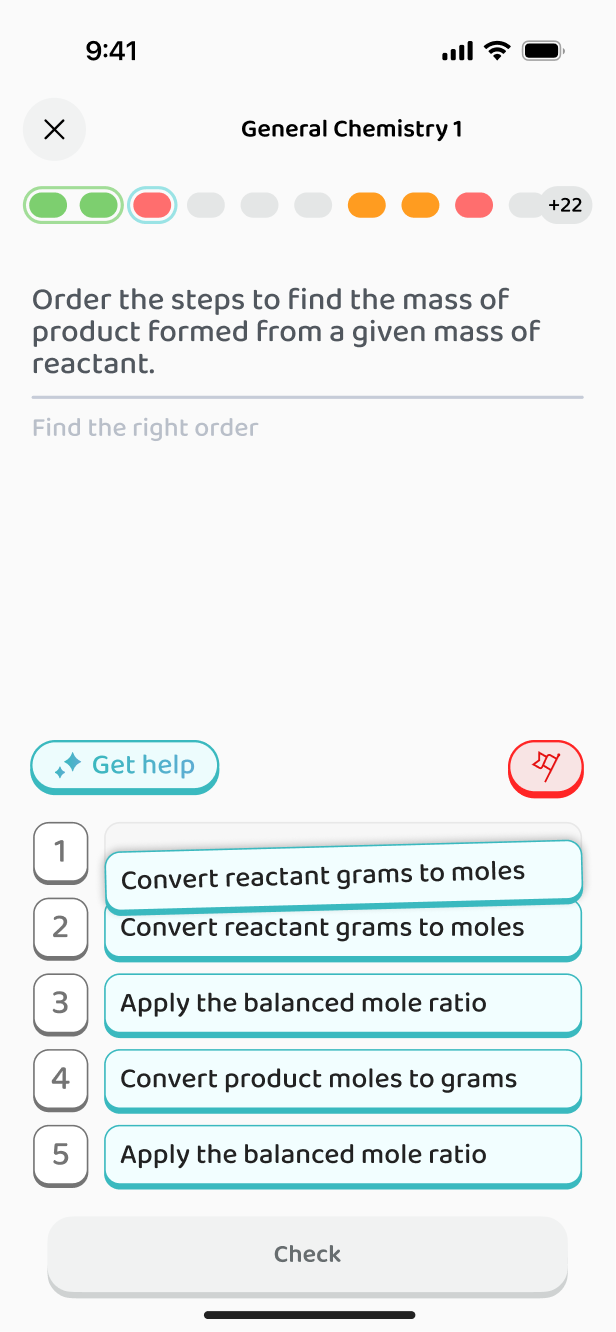
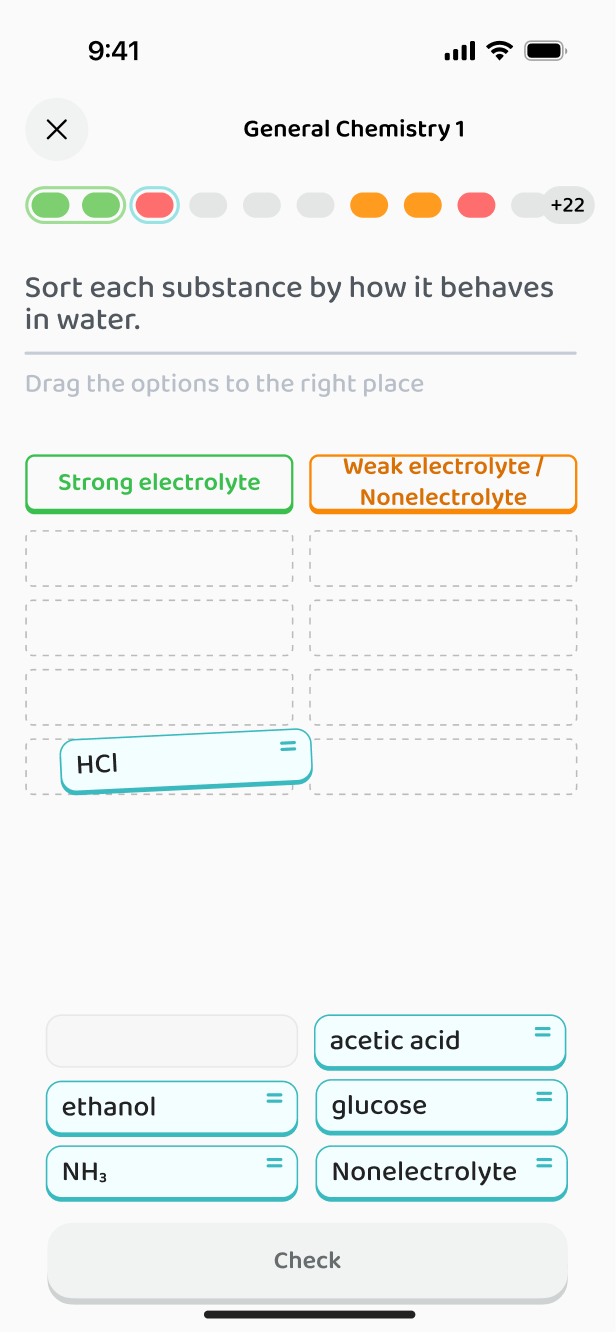
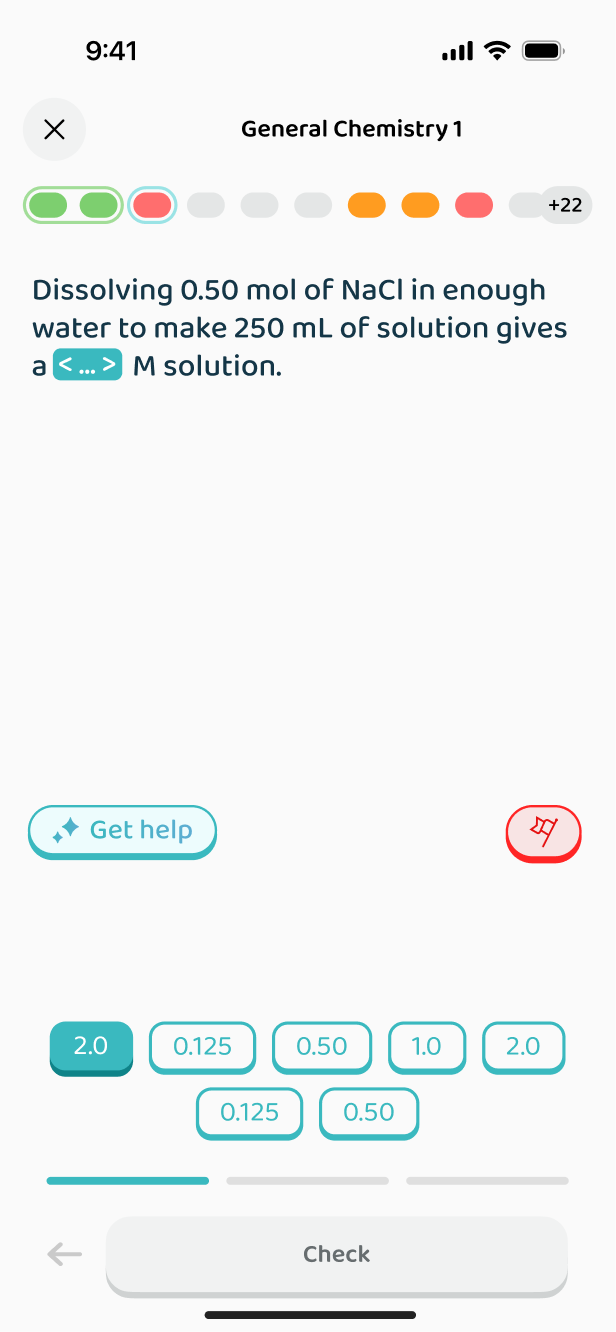
Work out the molarity of a NaCl solution. Put the steps from grams of reactant to grams of product in order. Sort strong electrolytes, weak electrolytes and nonelectrolytes.
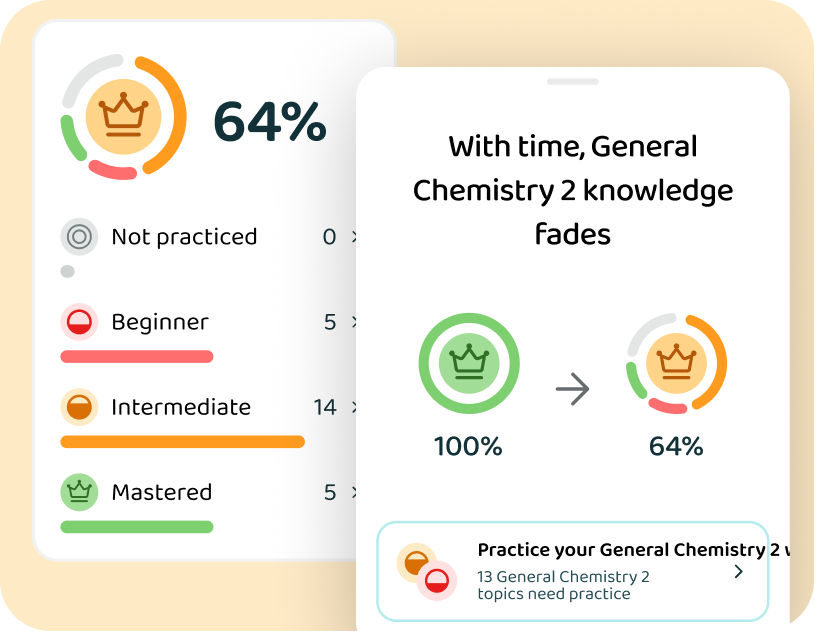
What you miss comes back within days, what you know comes back much later. So you still know September's stoichiometry at the final.
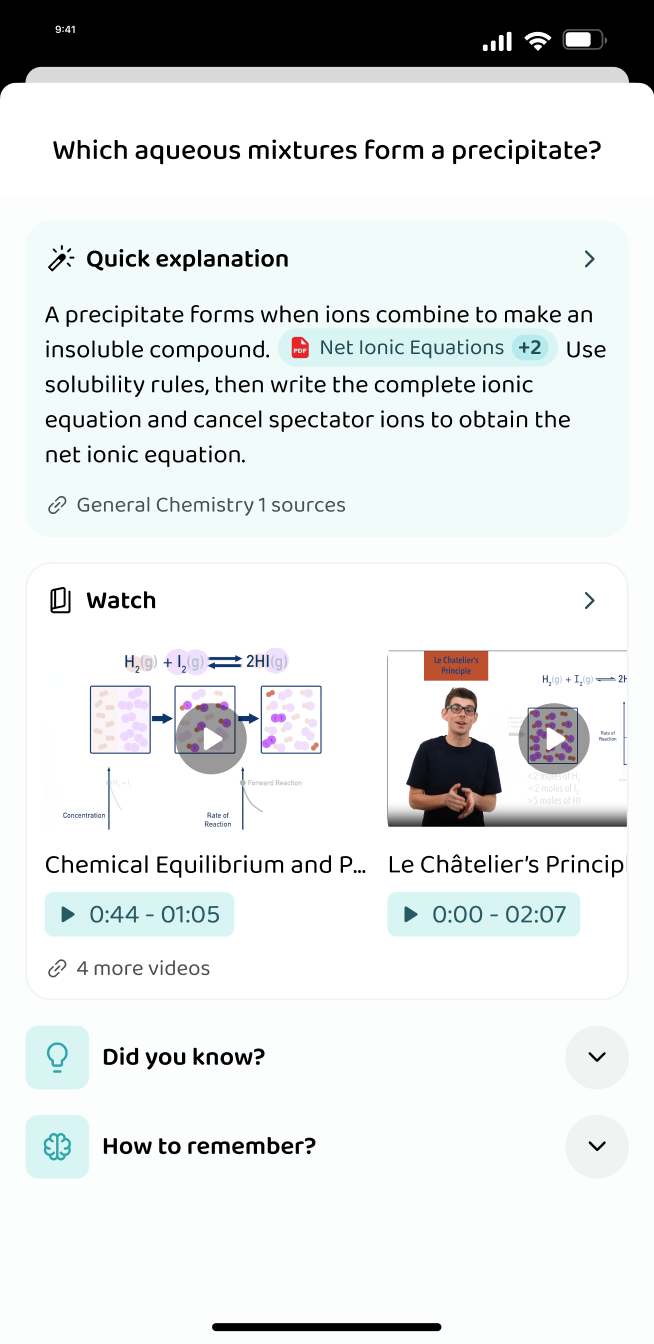
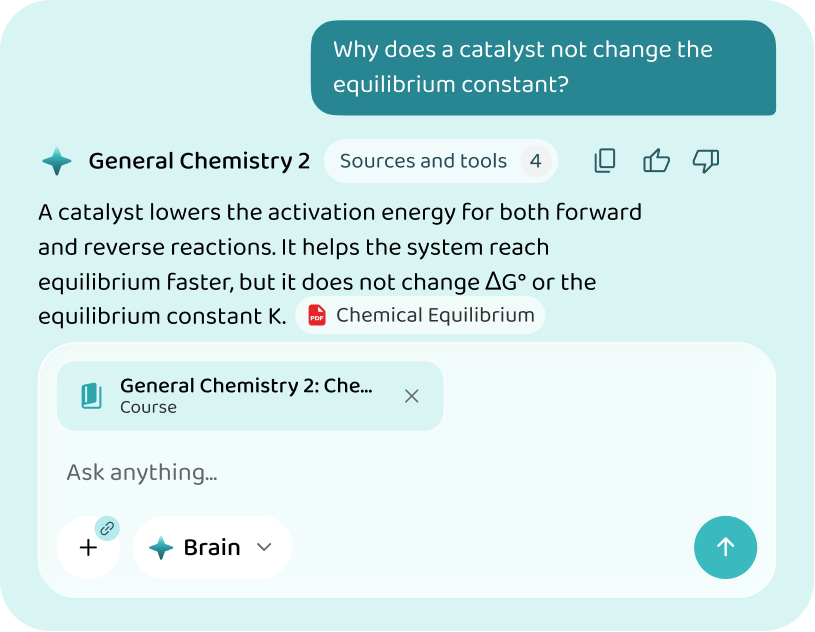
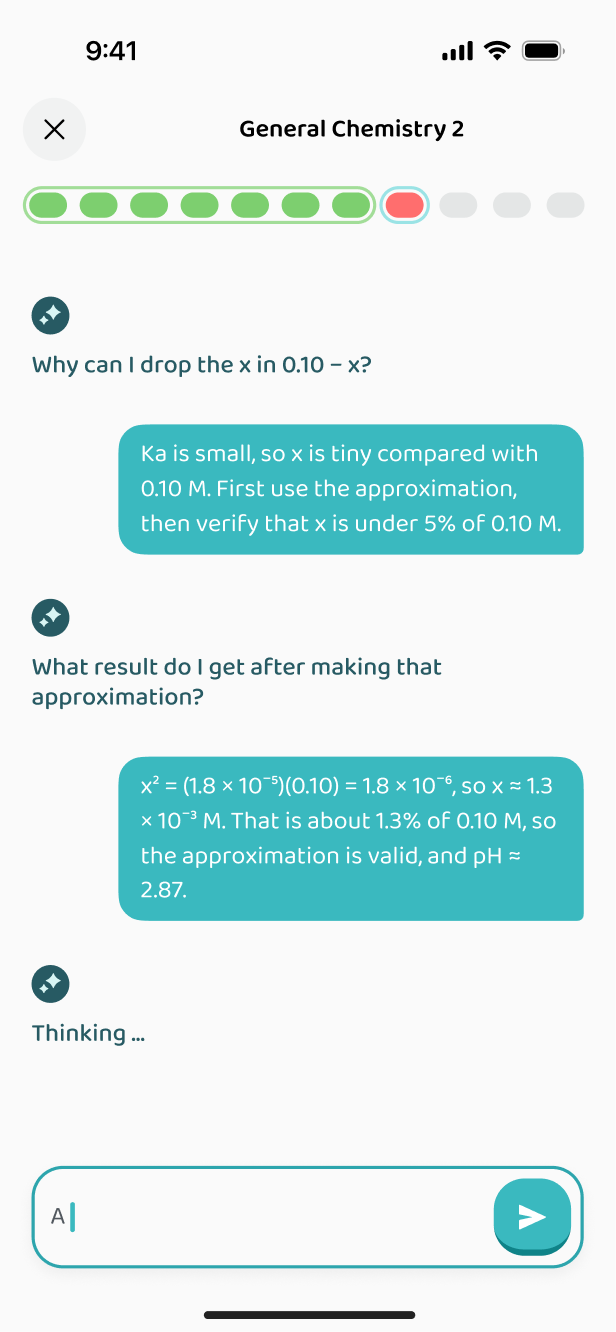
Type a question about any topic and the answer is drawn from this course's own lessons, with a link back to where it is explained. No weak sources, no AI hallucination.
The first semester of the sequence most US universities teach. Your professor's order may differ a little; you can take the chapters in any order. General Chemistry 2 is being built now: its chapters are below so you can see what comes next.
Courses from Chemistry Student, organized into focused paths so you can start with the right next lesson.
General Chemistry 2 is being built now. Leave your email and you'll hear the day it opens, with 10% off.
Your next midterm or the final: put in the date and the app spreads the chapters across the days you have.
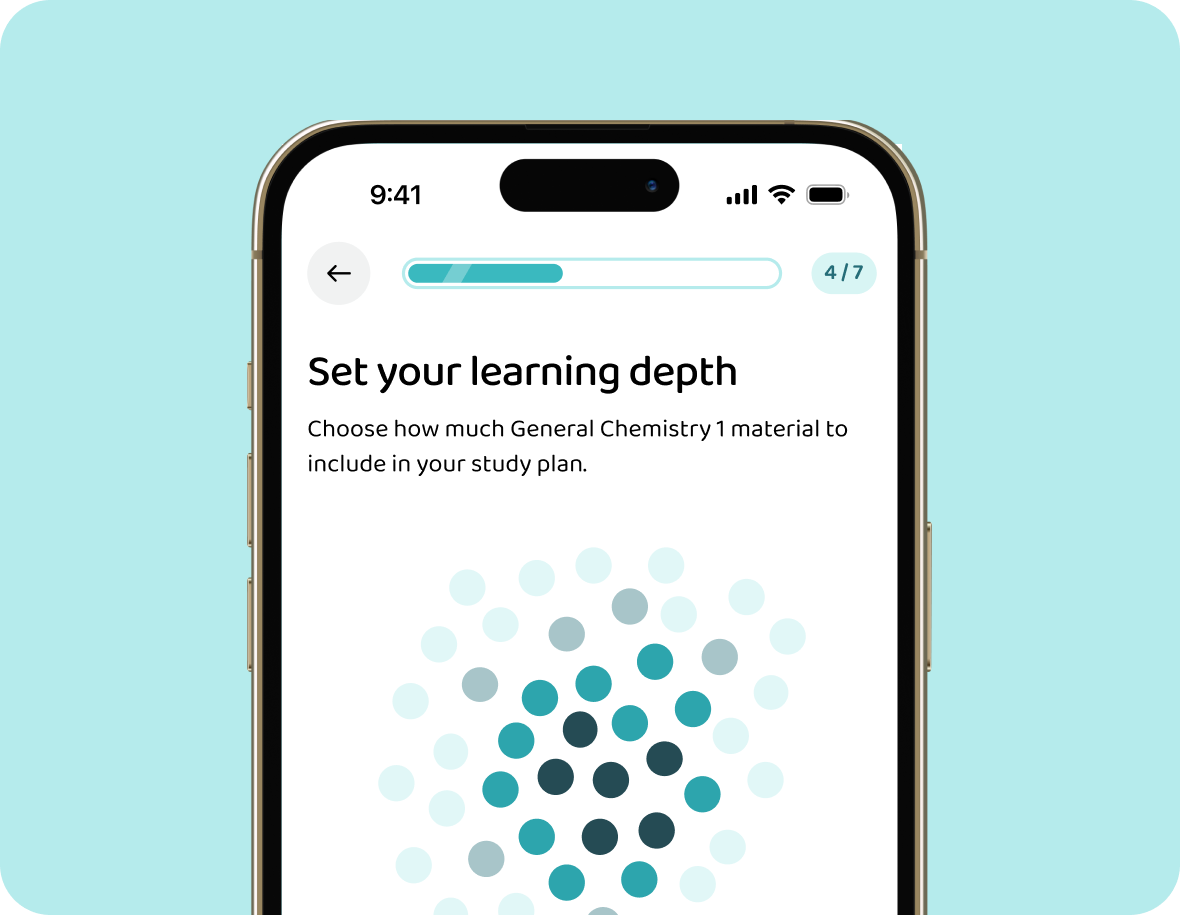
Everything in the course, or the essentials first. You decide how much goes into the plan.
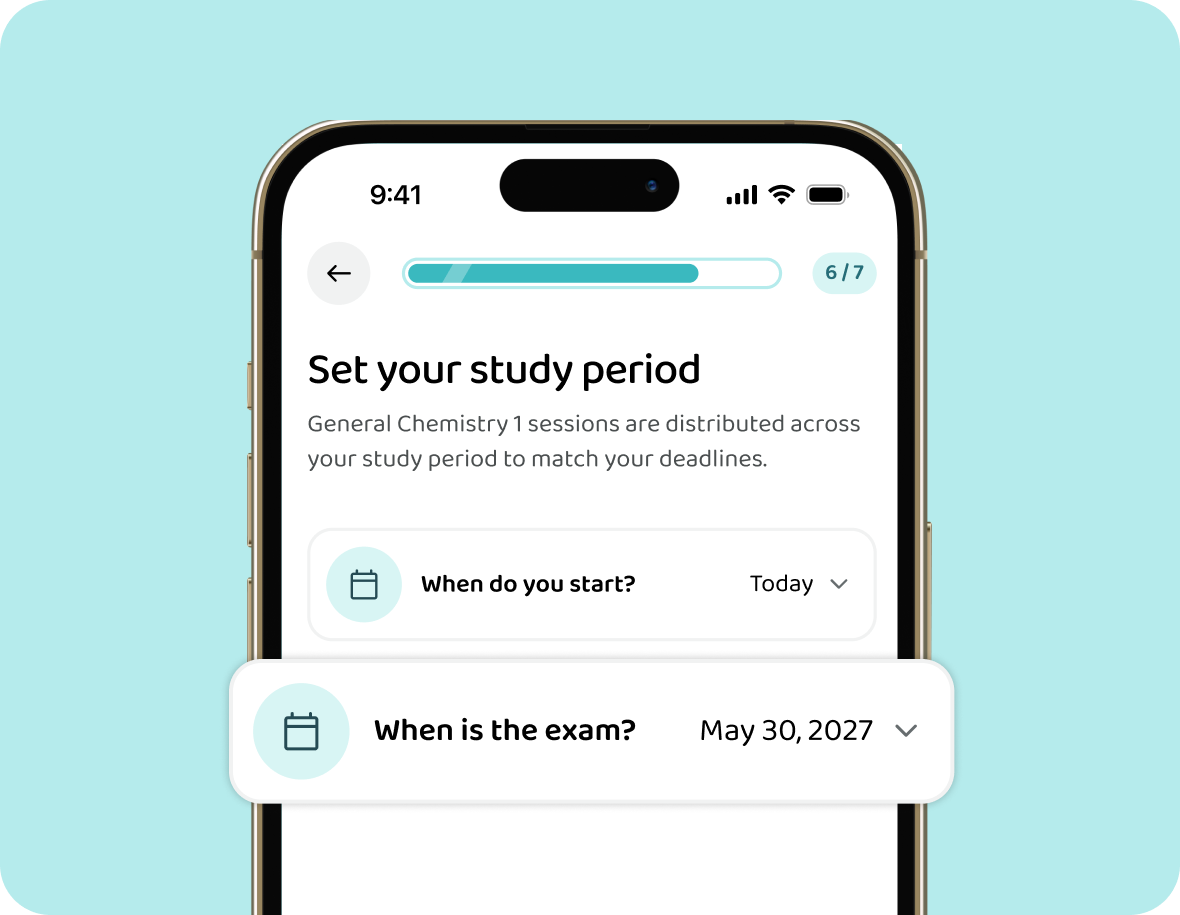
Set your exam date. The course is spread across the time you have until then.
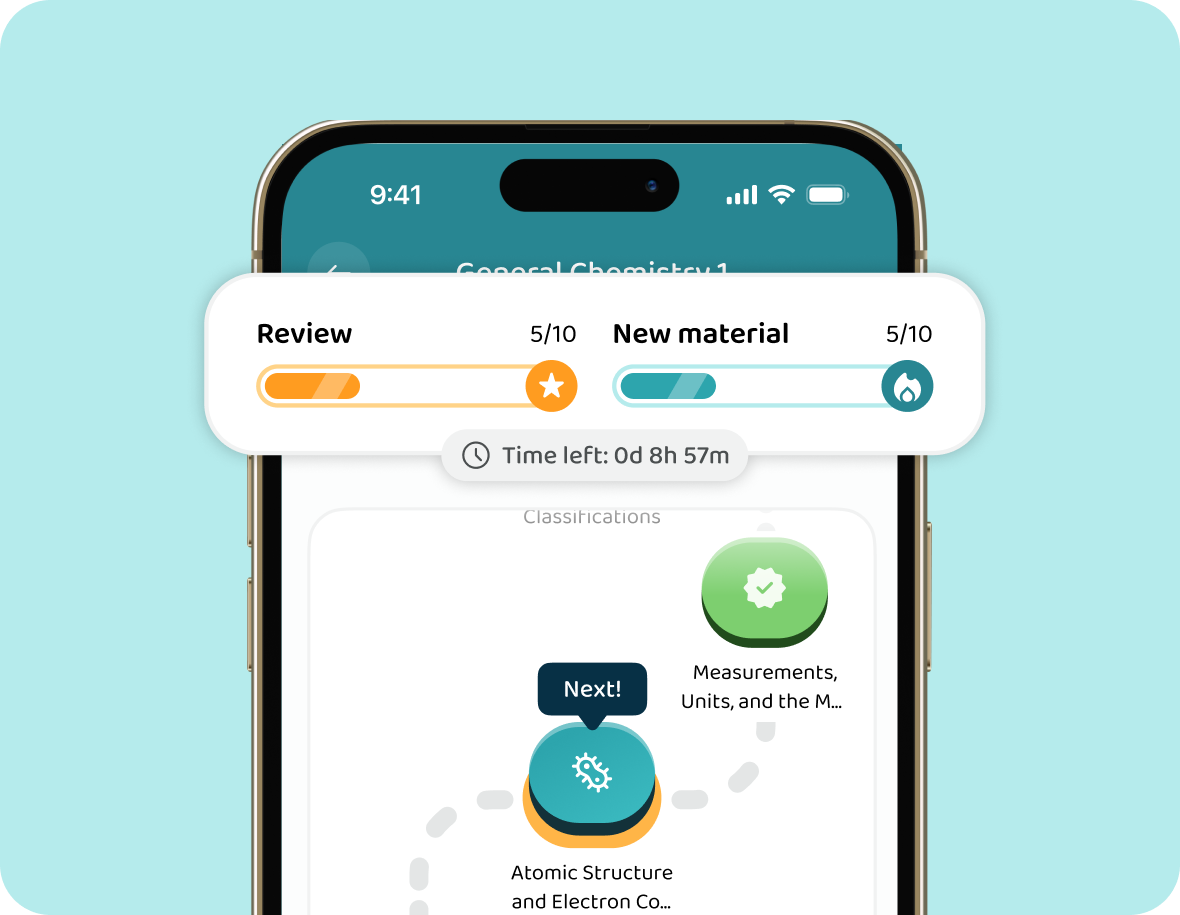
Each day mixes new lessons with the topics you are about to forget, so you never have to decide what to do next.
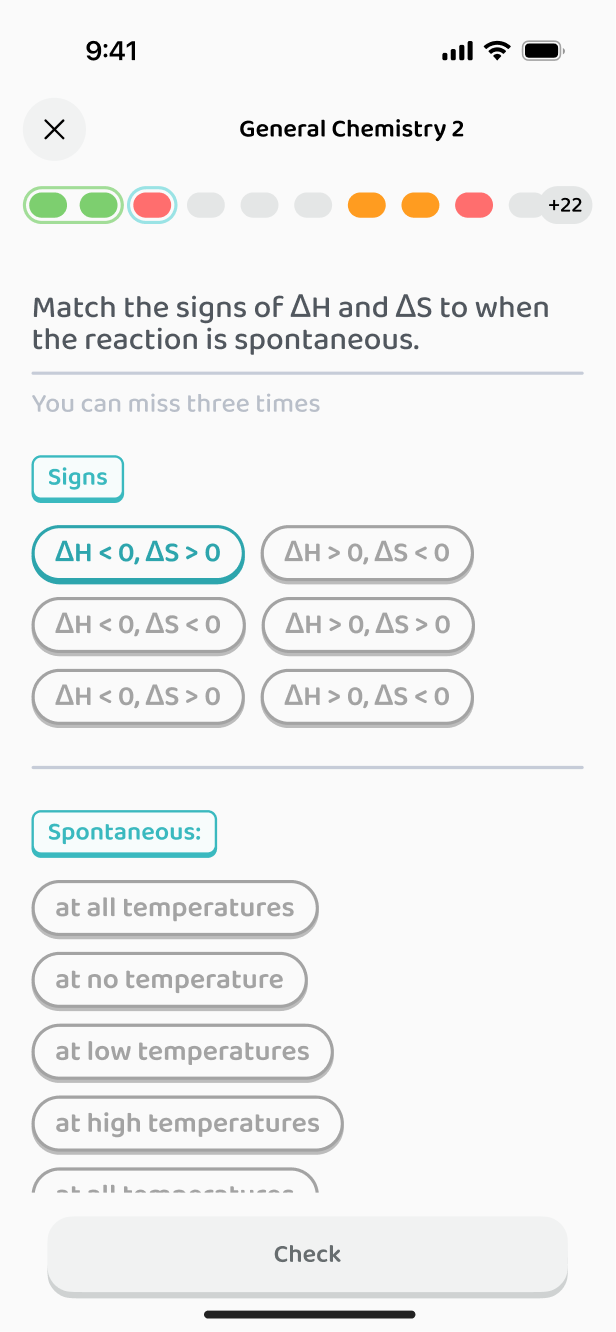
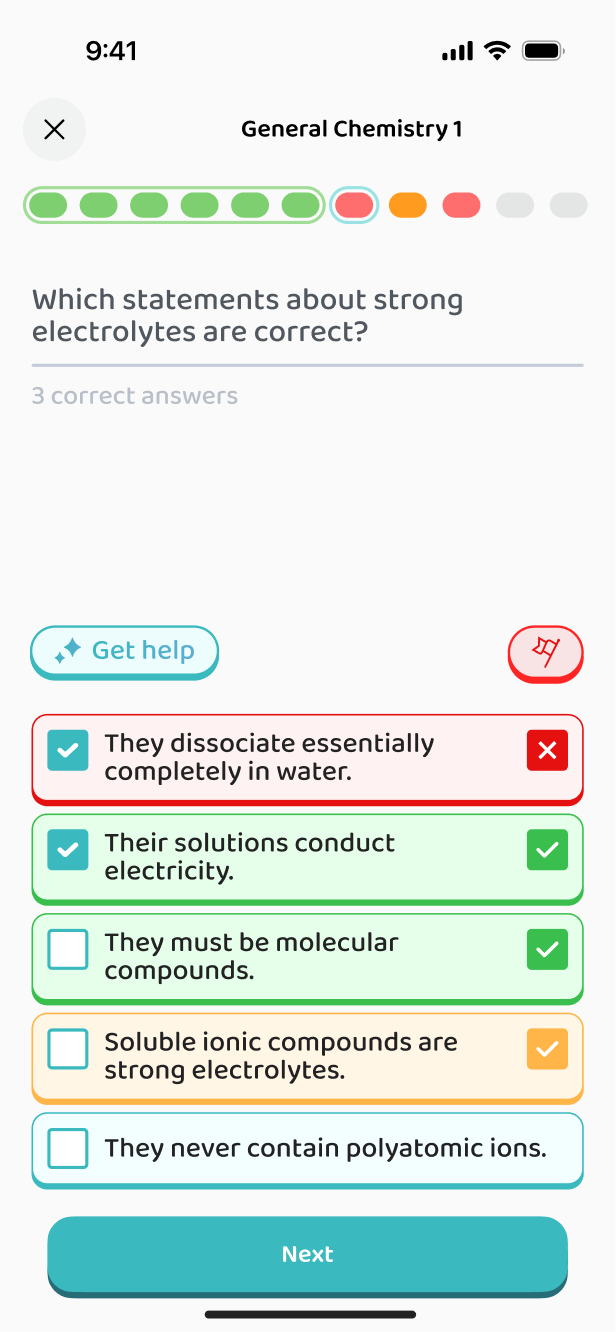
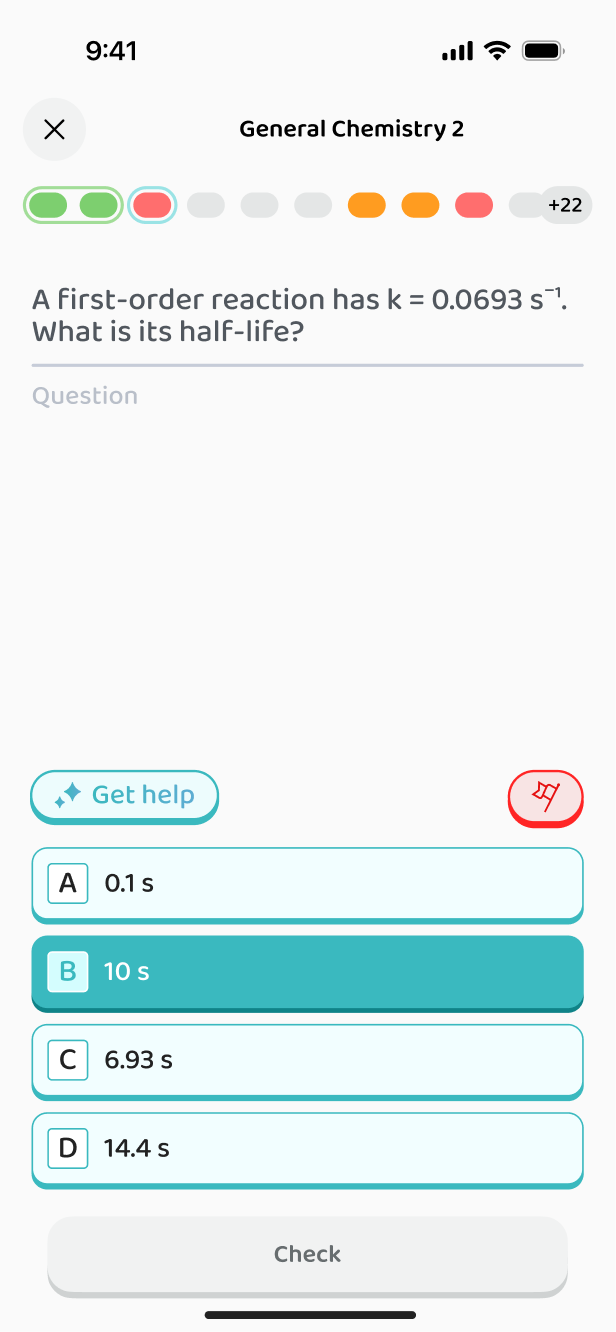
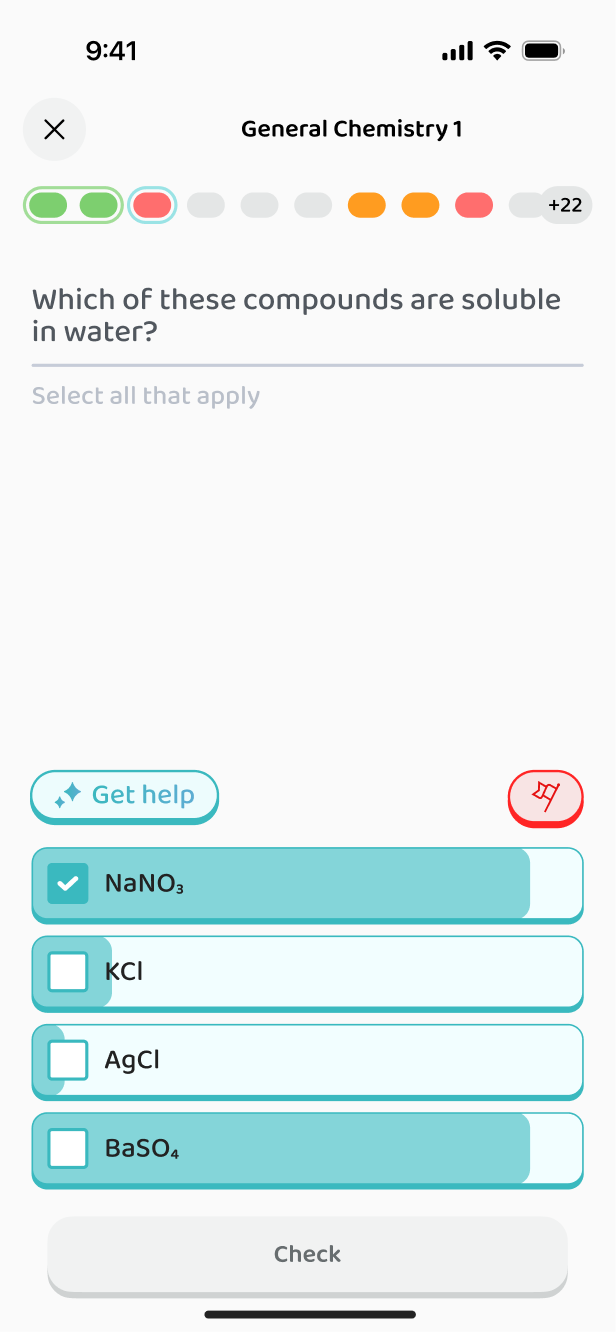
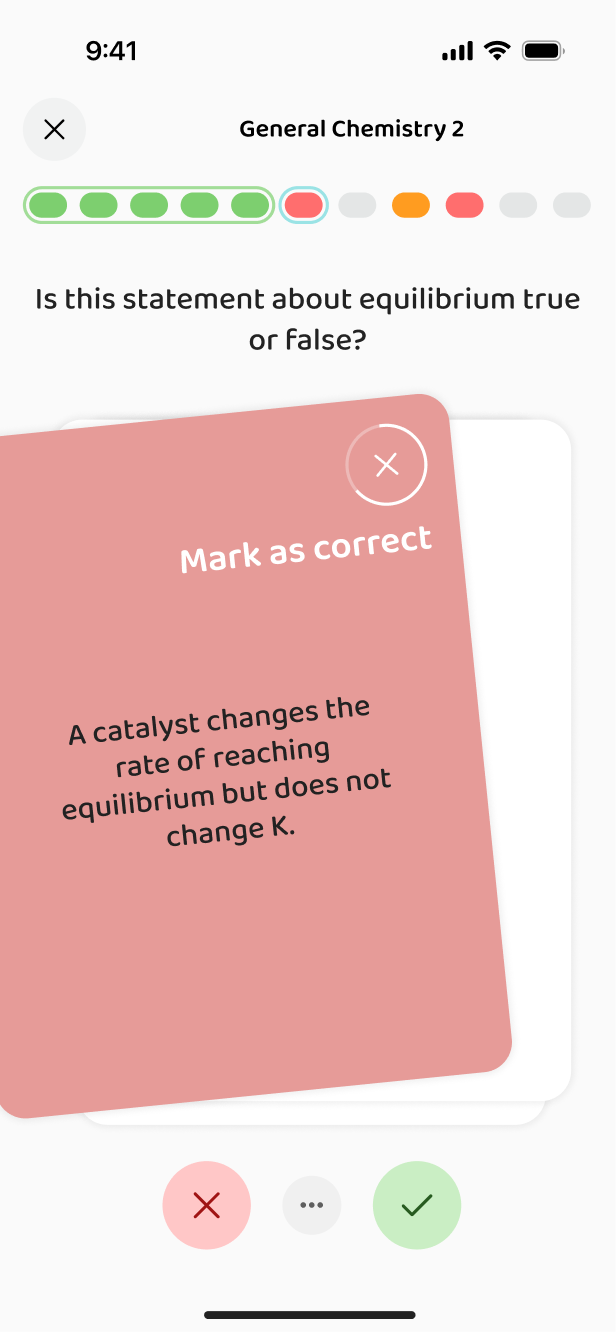
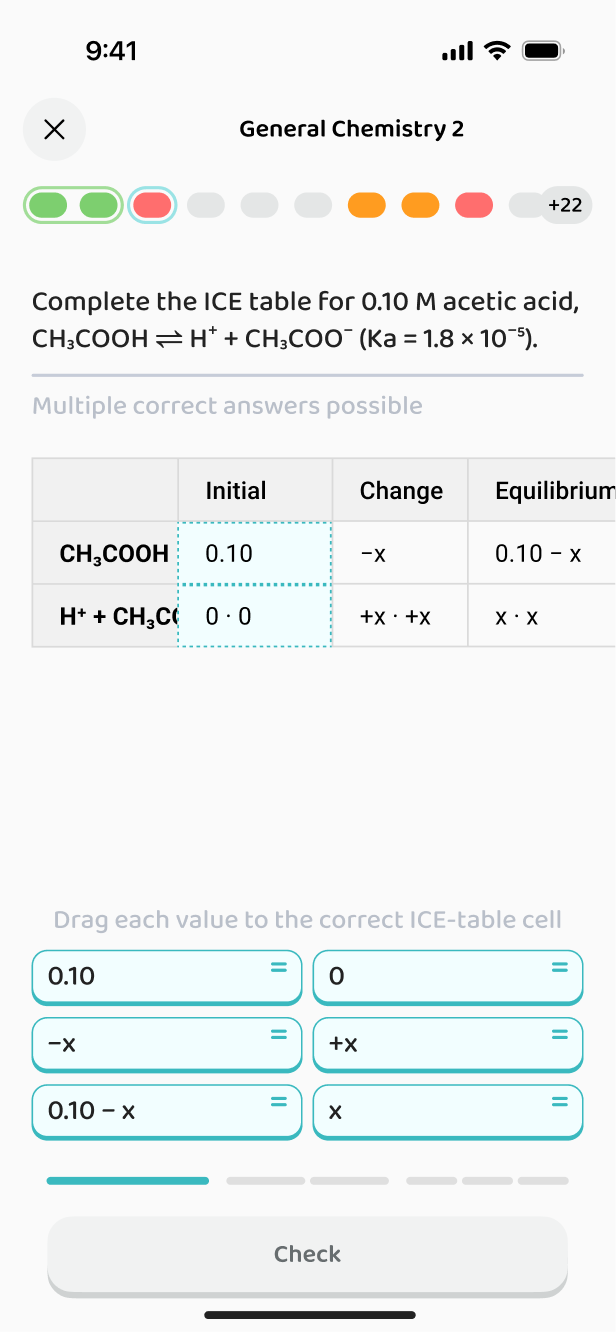
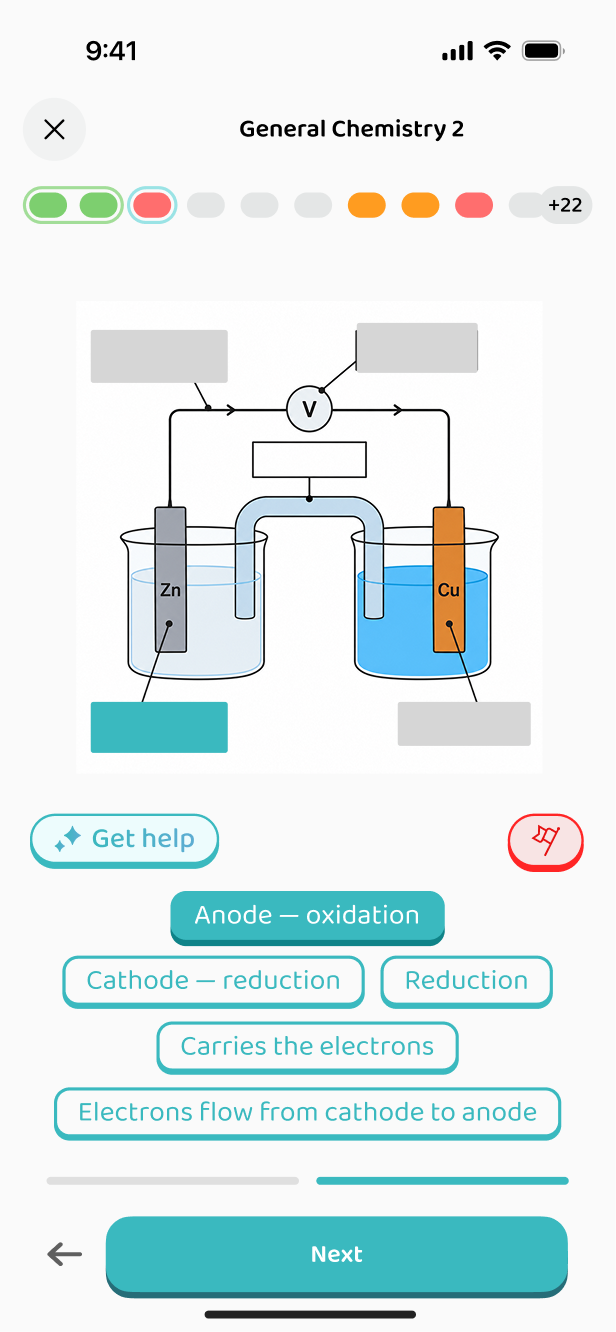
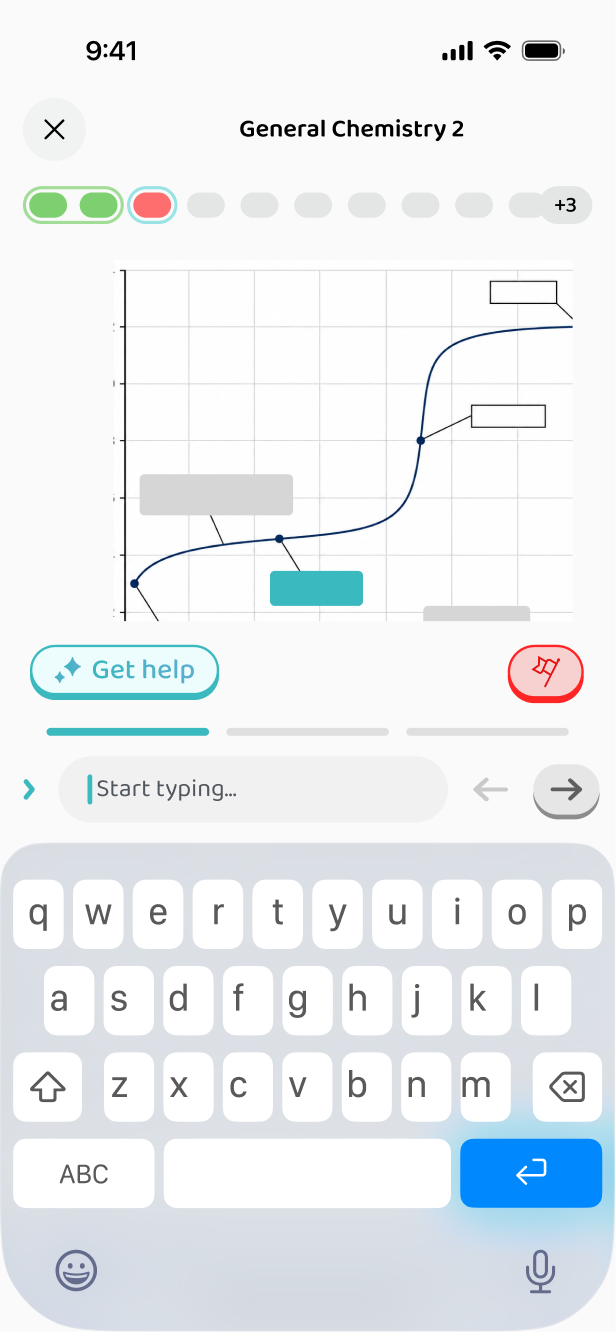
Ordering, matching, tables, labeling a diagram, fill in the blank, flashcards. The same idea gets asked more than one way, so you learn the chemistry, not the look of the answer.
I'm a private chemistry tutor, and I started chemistrystudent.com in 2019 so the notes I use with my own students could be free for everyone.
Every page follows one course's syllabus, point by point, and every video starts with a recap of what you need to know first.
Reading notes feels like studying, but you learn far more by answering questions. So this course asks you about every point on your syllabus, until you master it. That is the best way to learn.
Yes, and they stay free on chemistrystudent.com. The course is where you work through the material in order and get quizzed on it, with the things you miss coming back before the exam.
General Chemistry 1 follows the standard first semester, from matter and the mole to intermolecular forces. Your professor's order may differ a little, and you can take the chapters in any order you need.
Not yet. It's being built now. Leave your email on this page and you'll hear the day it opens, with 10% off.
The ACS exams are multiple choice across the whole course, which is exactly what the app practices: every chapter, asked back to you, with the ones you miss coming back before the final.
No. Every question in the app has a checkable answer, so it can't grade written work. It drills the concepts and calculations your problem sets and exams are built from.
Start now, and every unit gets its turn before exam day.
