On the exam, you have to know two years' worth of knowledge. The A-level is linear, so nothing is examined early and nothing drops off.
Paper 3 pulls in every module
Unified chemistry is 70 marks across all six modules, 26% of the grade. It rewards knowing all of it, not the last topic you revised.
A lot to know word for word
Reagents, conditions, tests in the right order, mechanisms. The wrong condition loses the mark even when you understand the chemistry.
Practical skills on paper
At least 15% of the marks test practical skills, in written questions about the practical work you did in class. Papers 1 and 2 also open with 15 multiple-choice questions.
What's in it
OCR (H432) on your phone, module by module
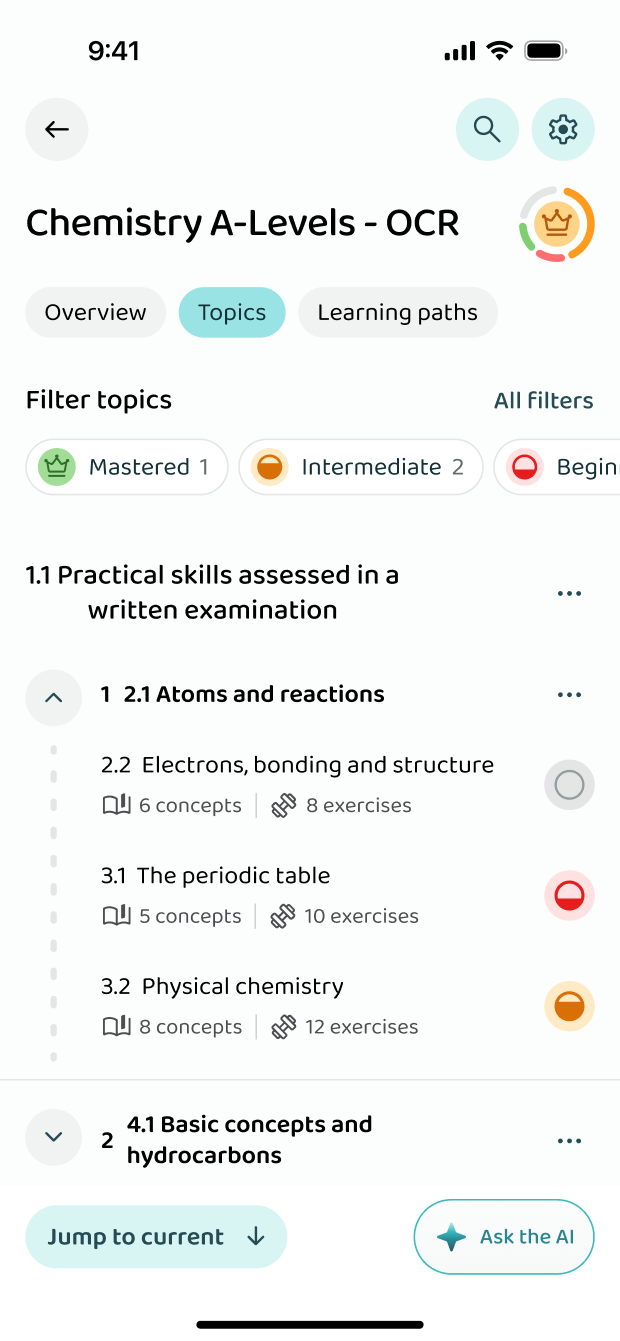
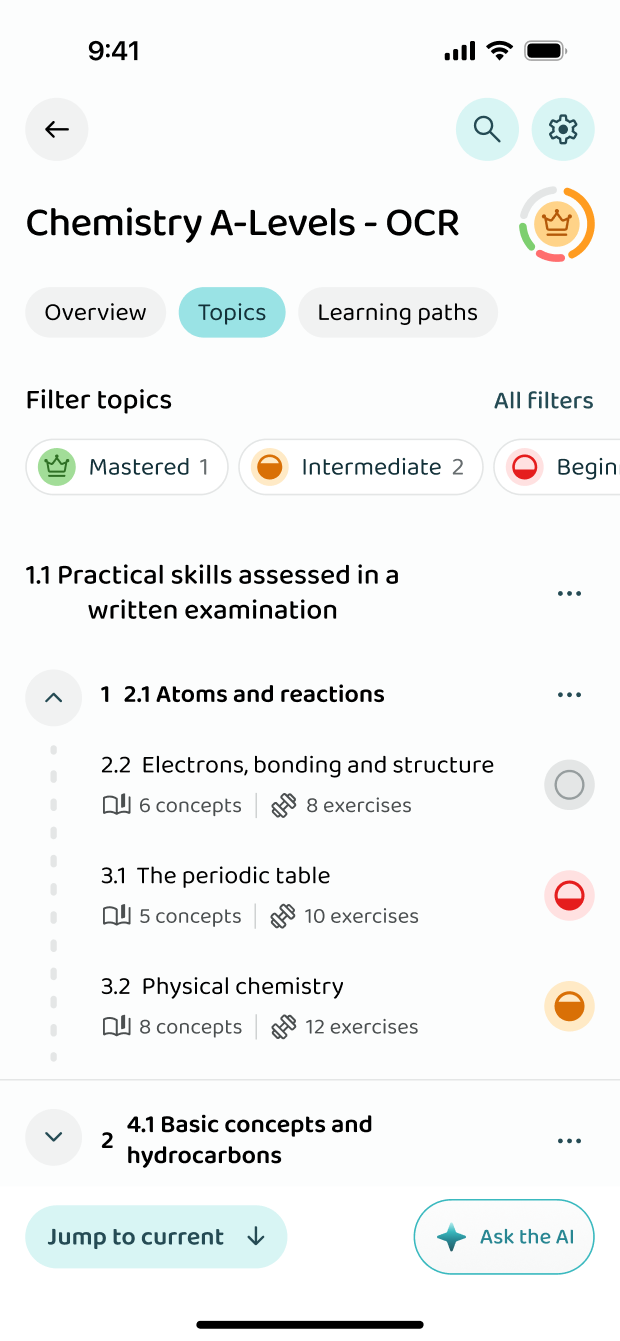
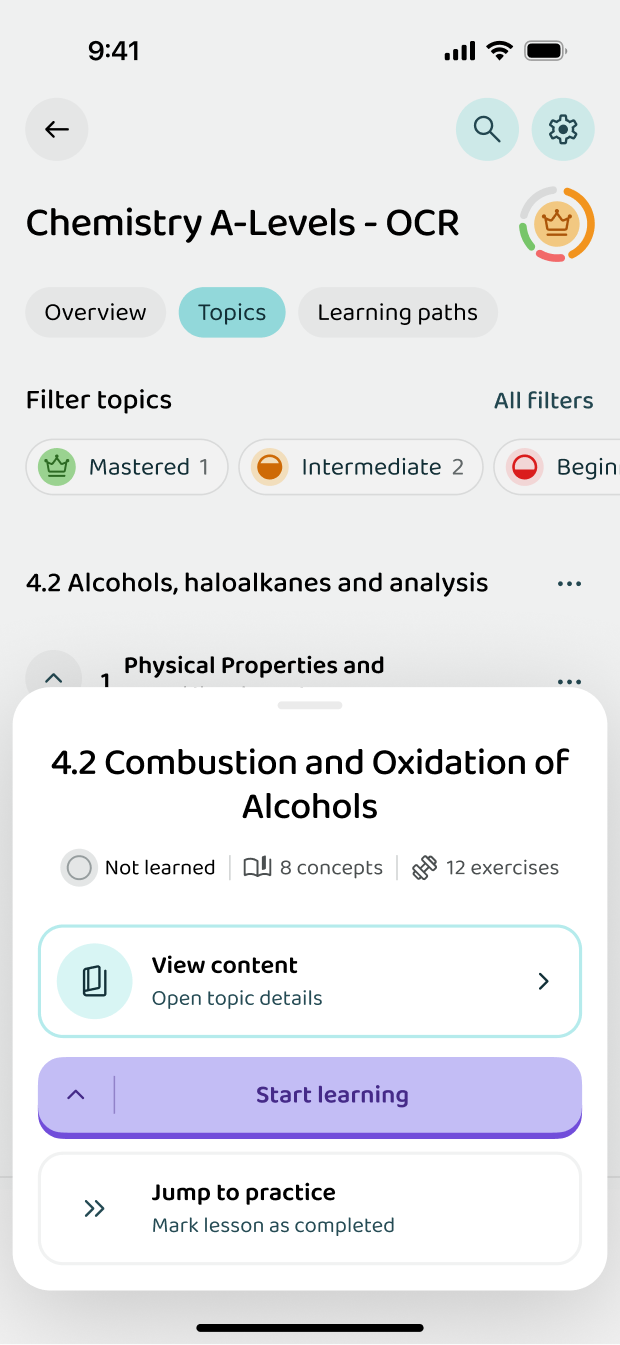
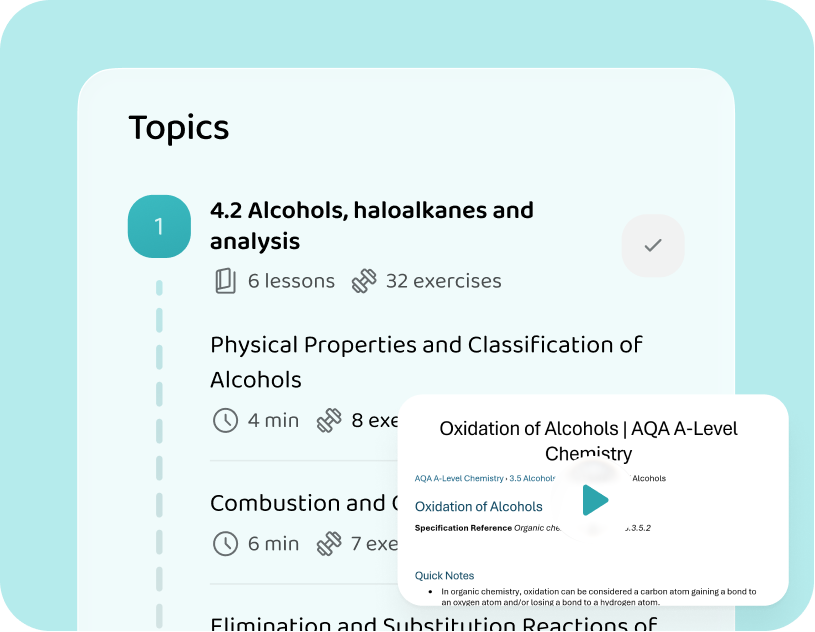
From 1.1 Practical skills to 6.3 Analysis, every part of the specification has its lessons and its questions.
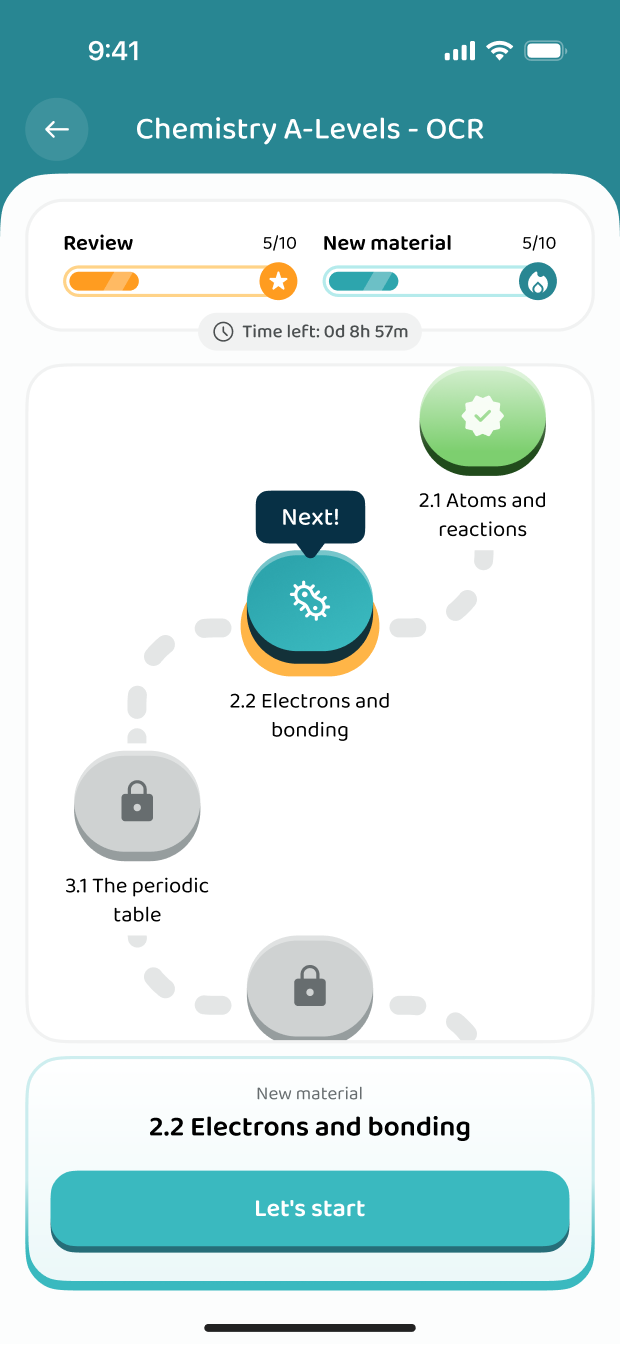
The course follows the OCR A specification in order, so you always know which part you are on and what is left.
You answer instead of re-reading
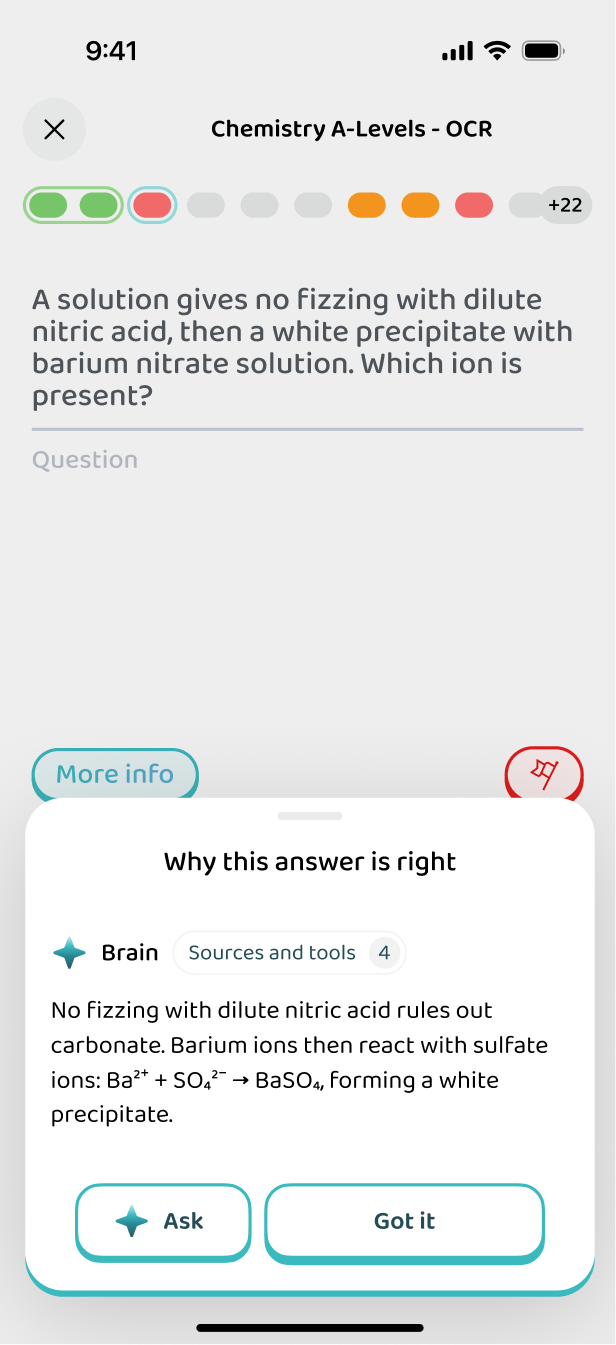
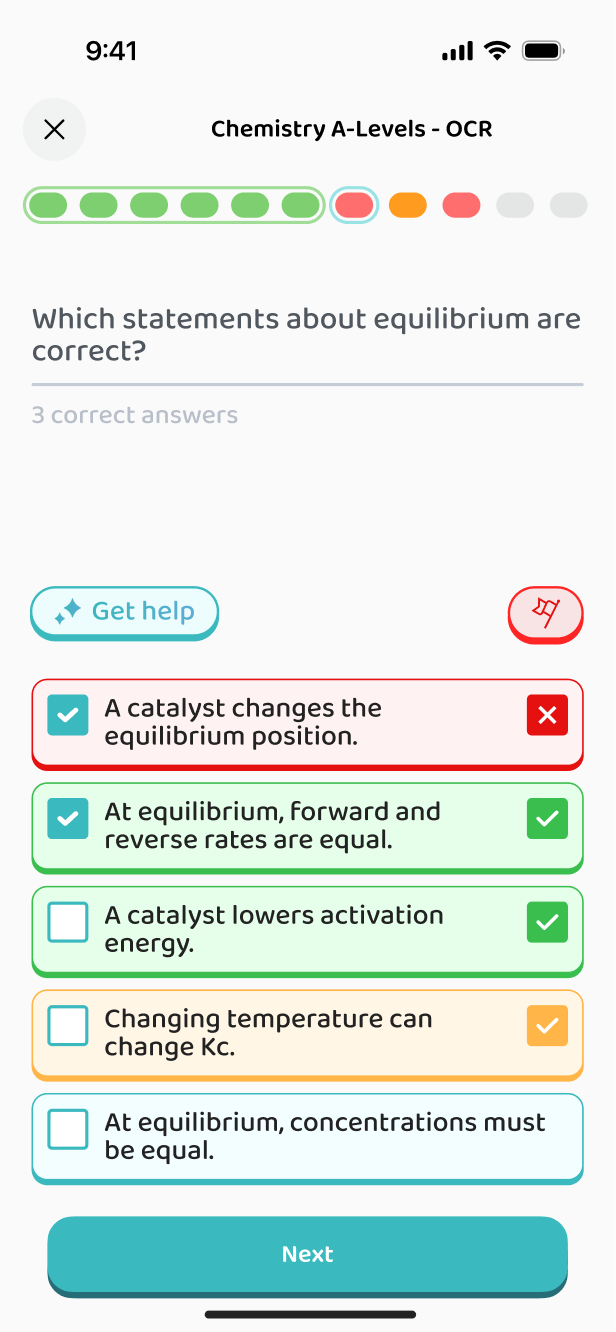
Each lesson ends in questions, so you find out what you actually know before the exam does.
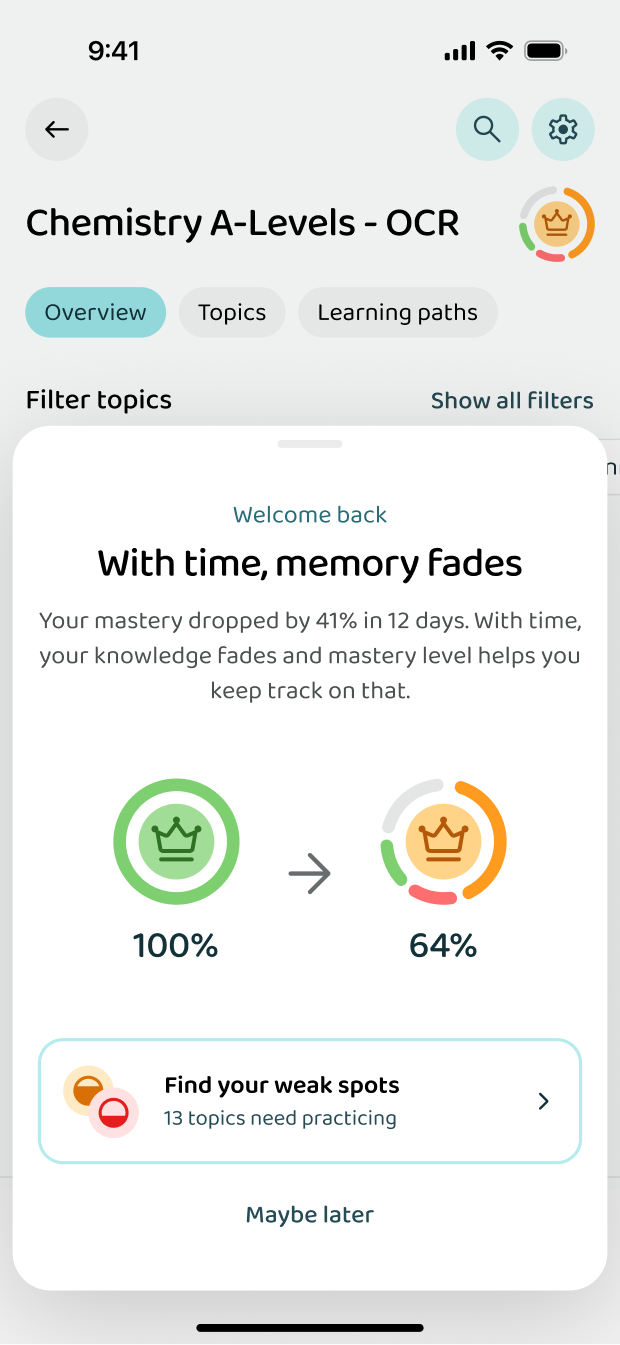
The app doesn't let you forget things
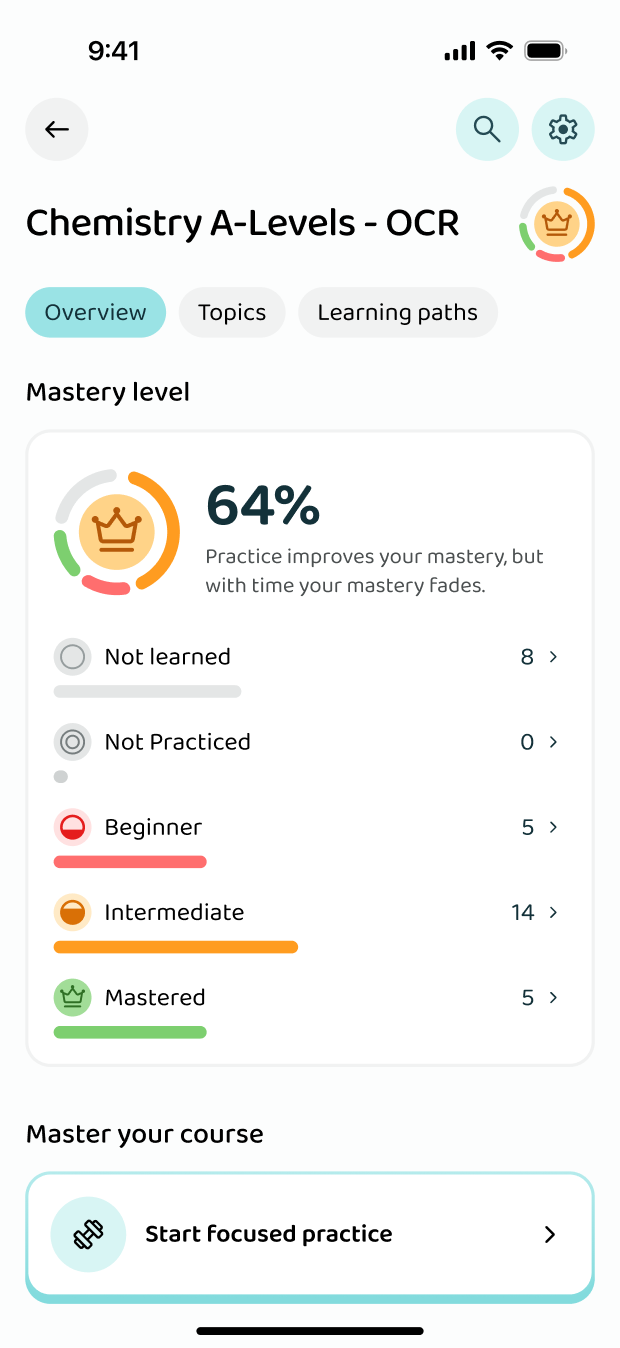
What you learned in Year 12 keeps coming up in practice, so it still feels fresh at the exam.
Not open yet
Get 10% off when it opens
The OCR A course is being built now. Leave your email and you'll hear the day it opens, with 10% off.
How it works
Learn it, answer it, practise it
Matt tells his own students to revise by answering questions, not by re-reading notes. The course is built that way: a lesson, then questions, then practice on what you got wrong.
01Lessons
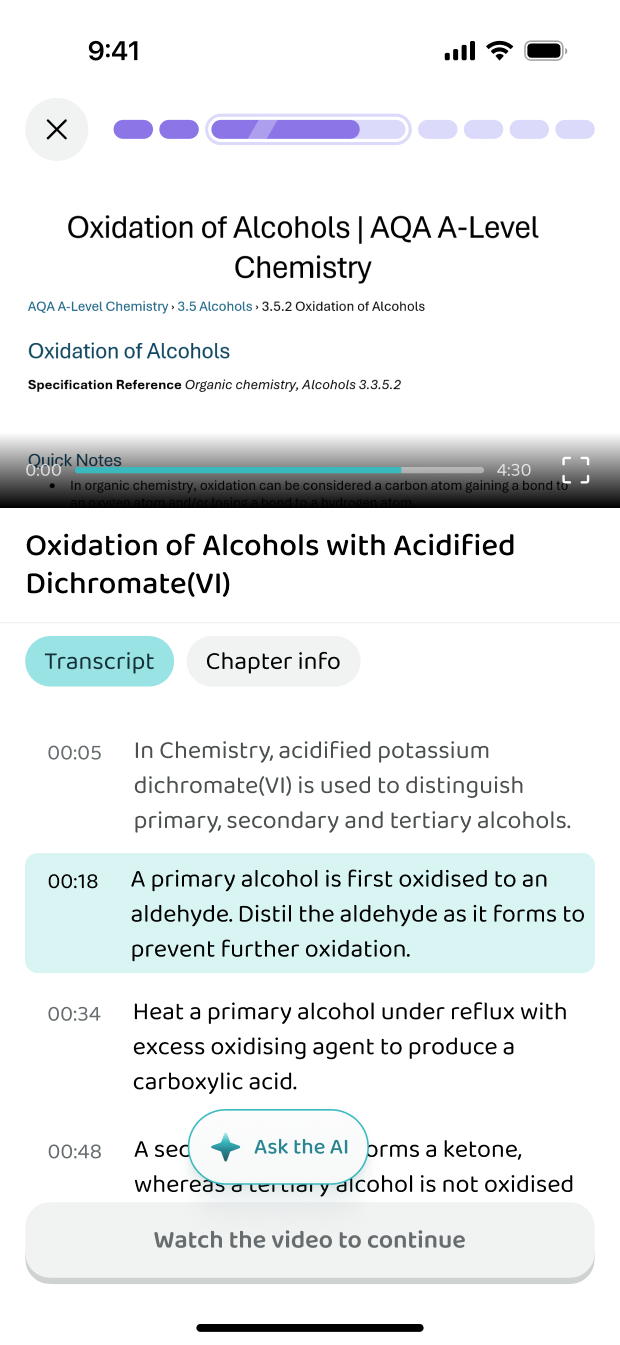
Every point explained first
Module by module, from 1.1 Practical skills to 6.3 Analysis, in the order of the H432 specification. Each lesson explains the idea before it asks you anything about it.
14 topics
132 lessons
02Practice
Then the app asks you
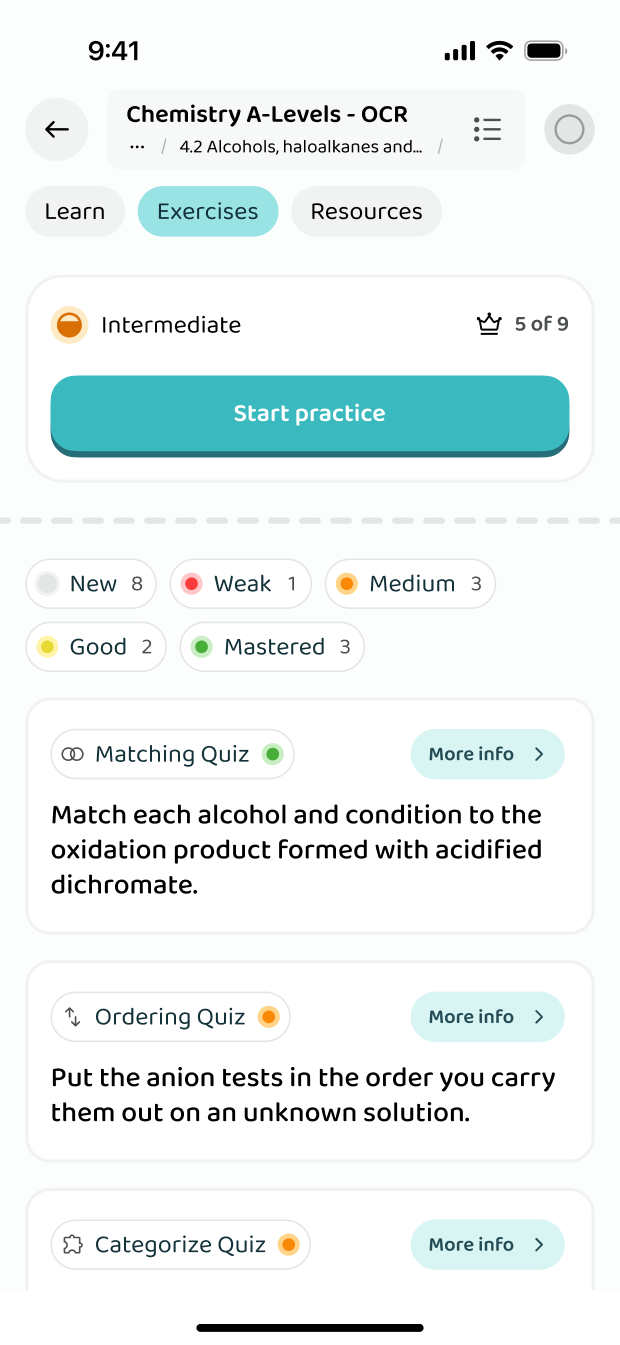
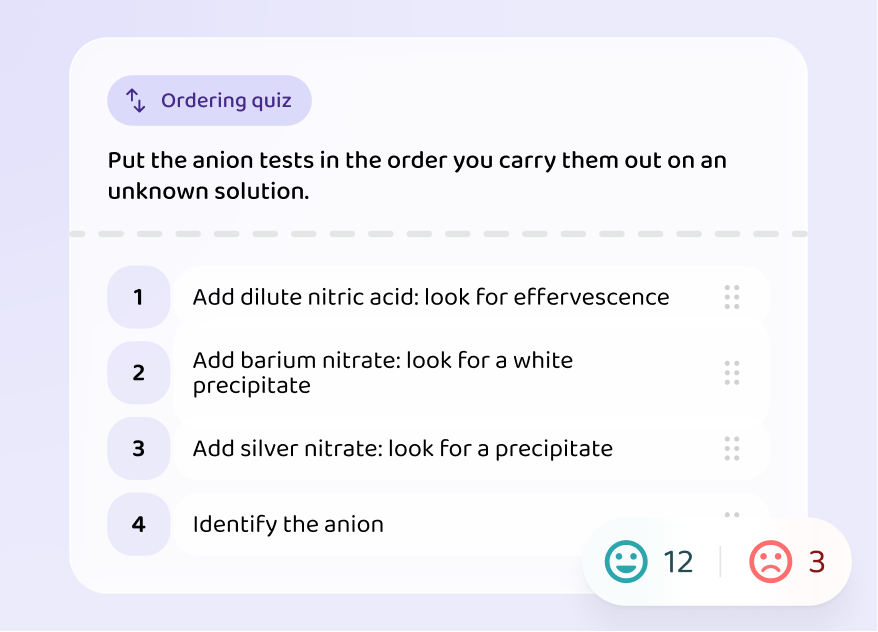
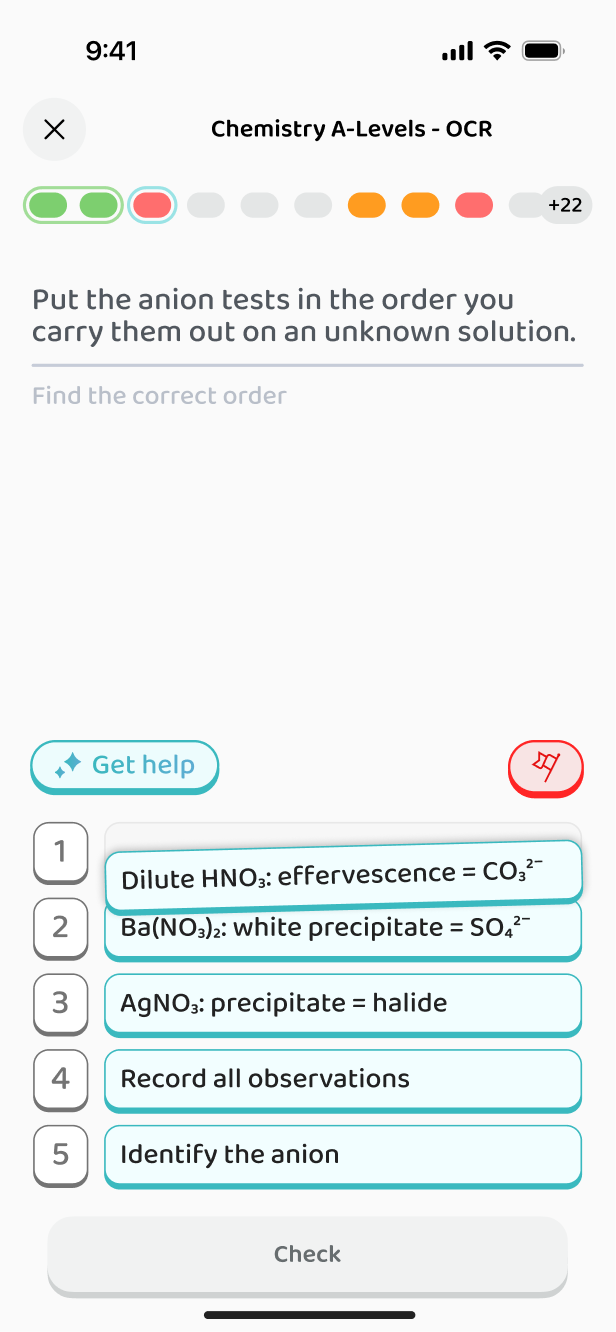
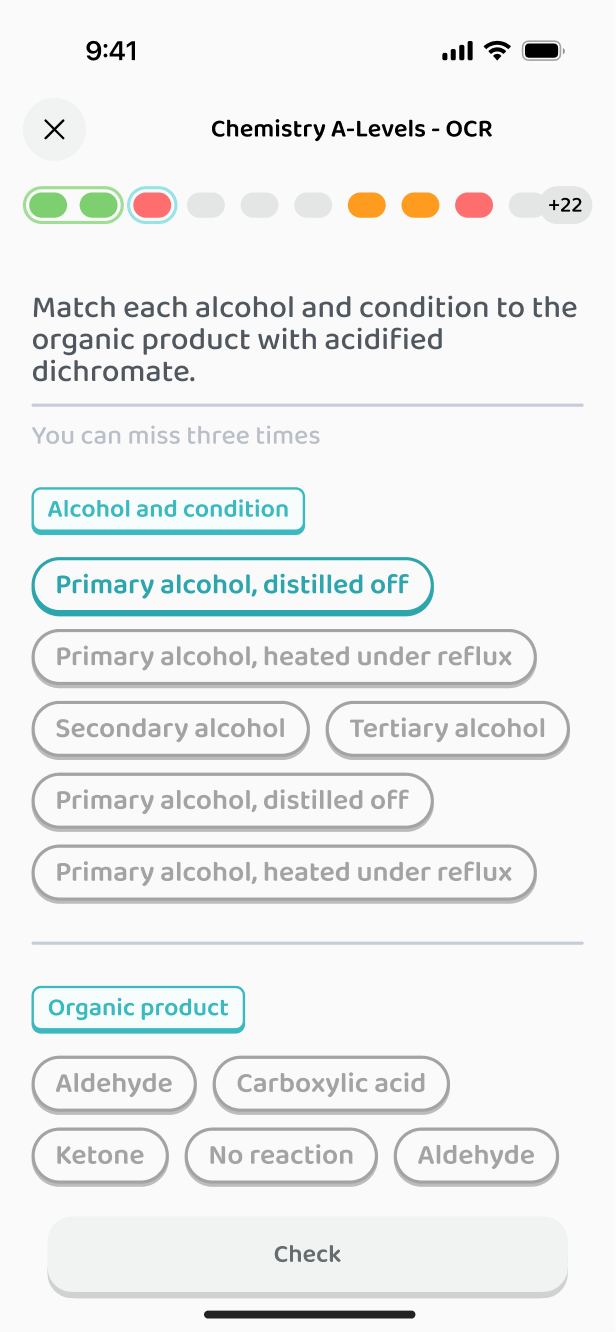
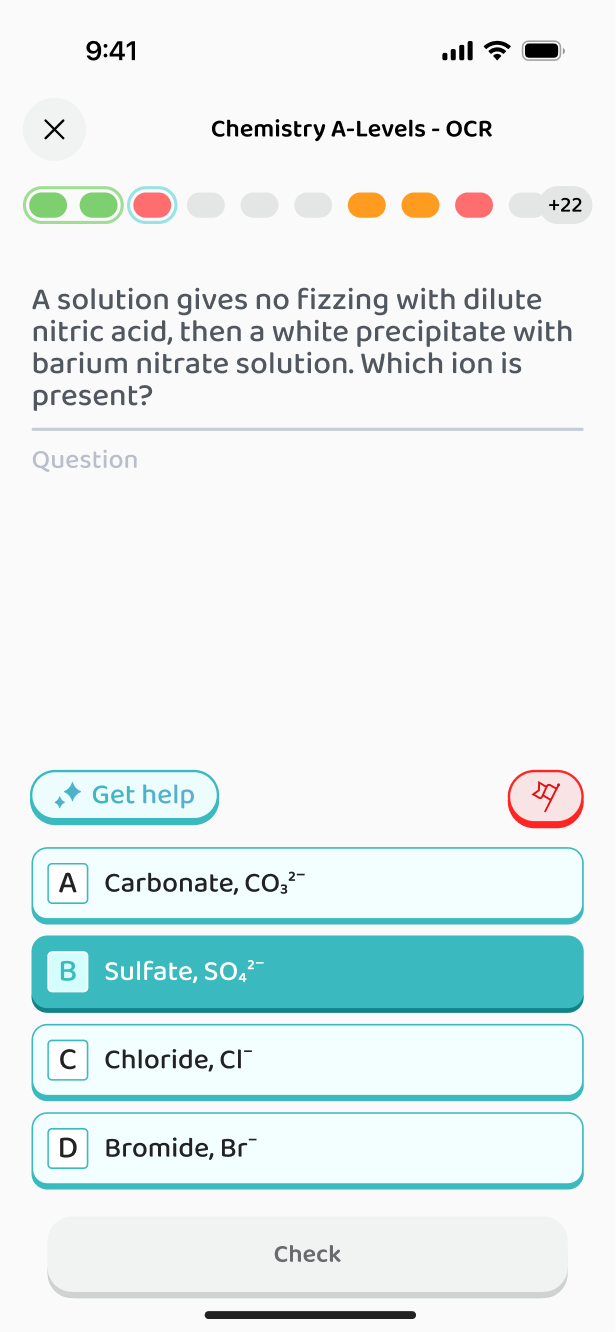
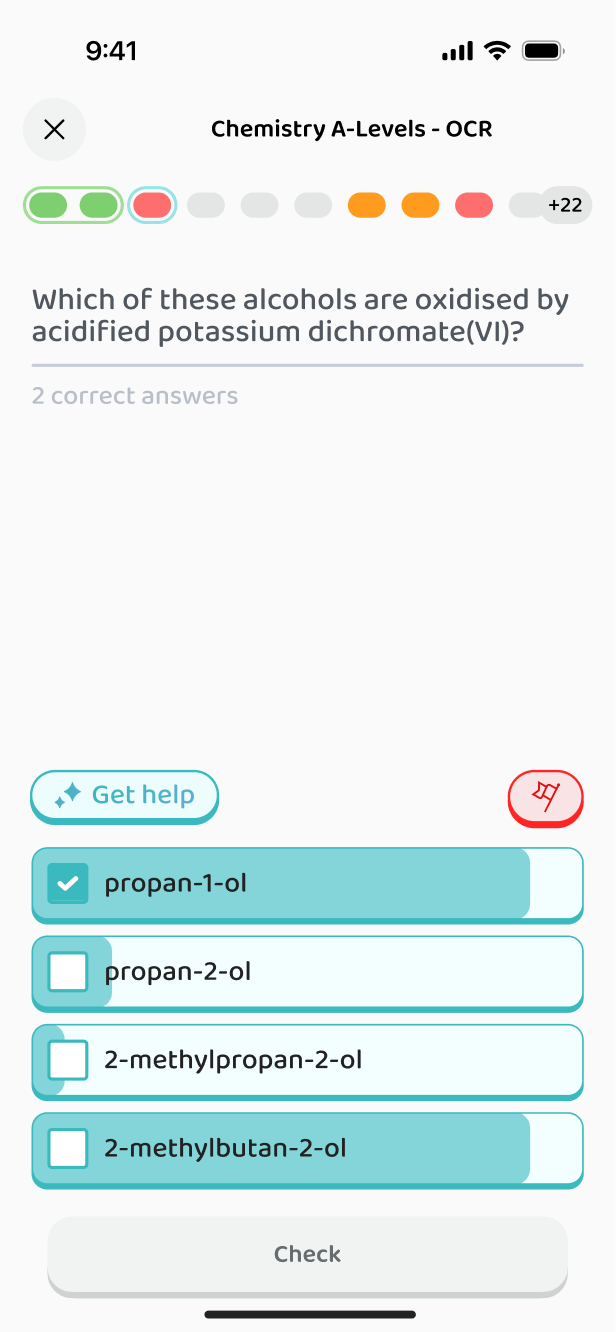
Put the tests for carbonate, sulfate and halide in order. Match each alcohol to what acidified dichromate turns it into. Name the ion behind a white precipitate with barium nitrate.
Twelve question formats
You see where you stand
03Repetition
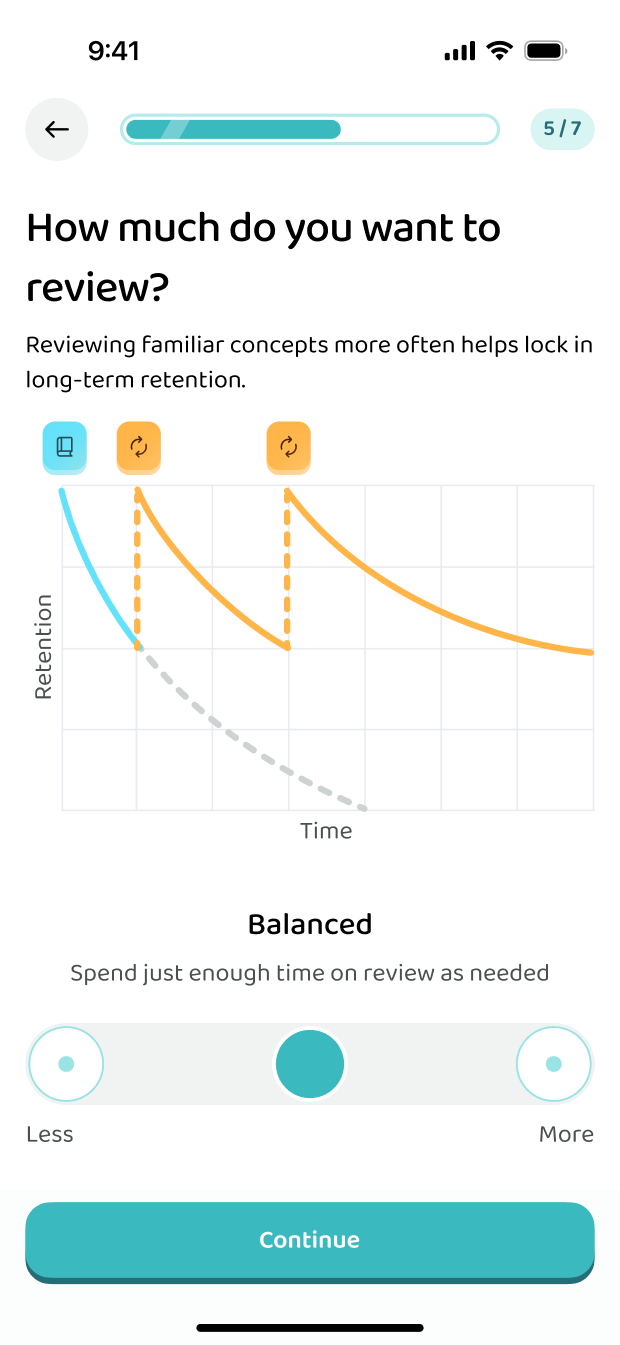
Older topics come back
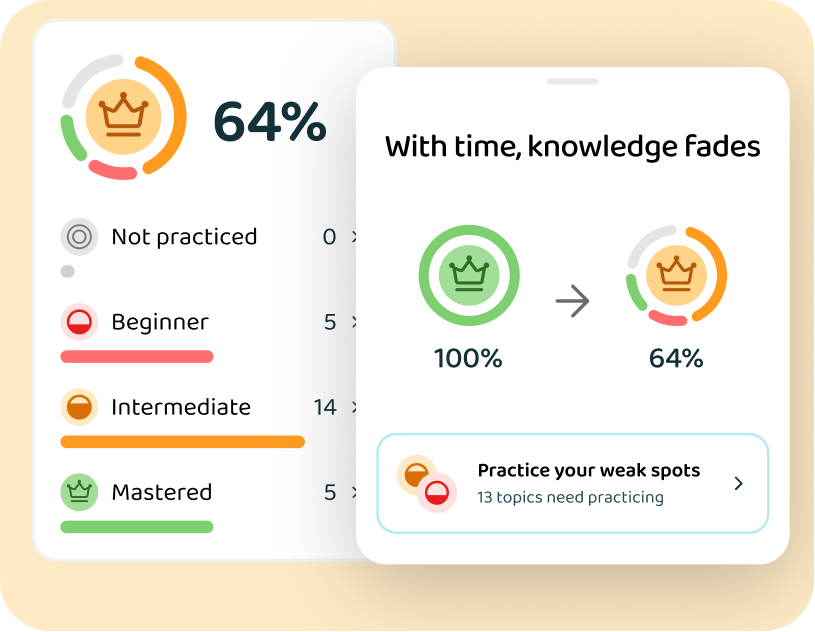
What you get wrong comes back within days, what you know much later. So you still know Module 2 two years later, when Paper 3 asks about it.
Spaced practice
Nothing quietly fades
04Help
Ask when you're stuck
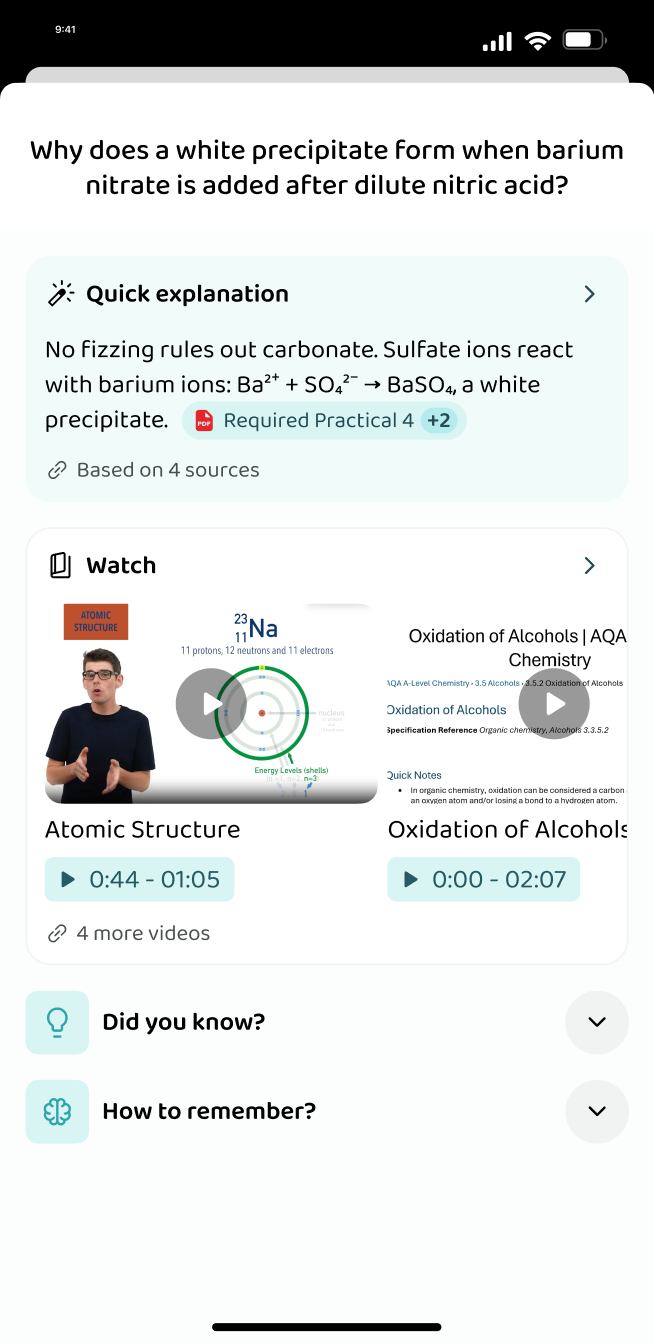
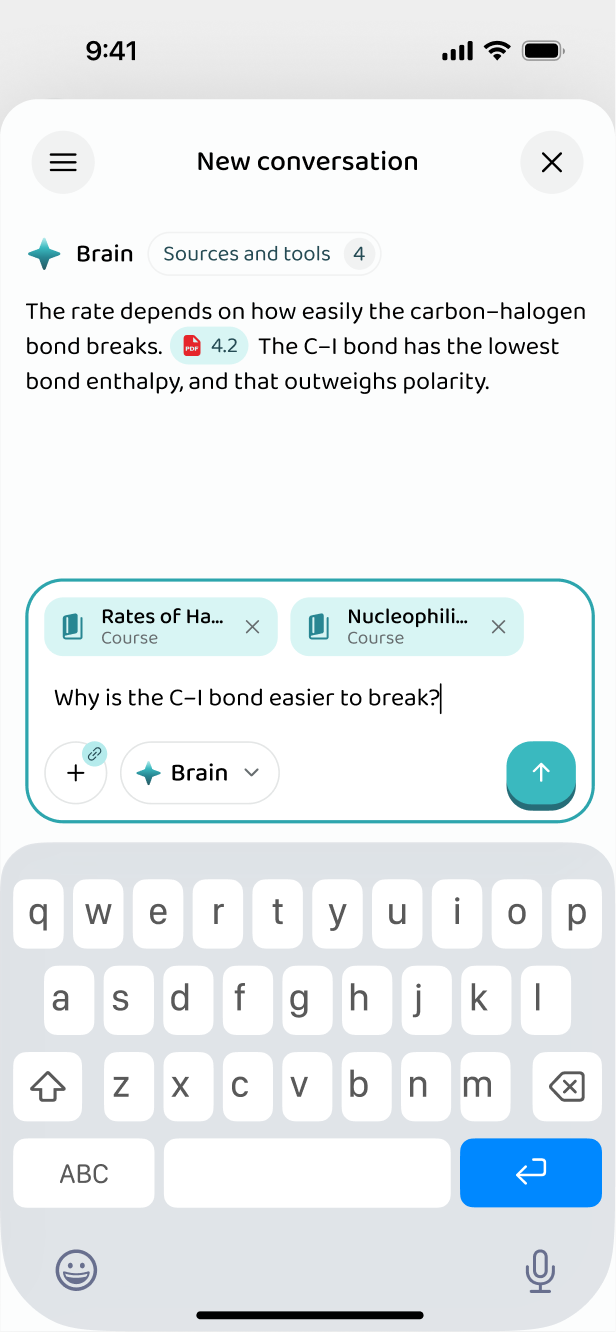
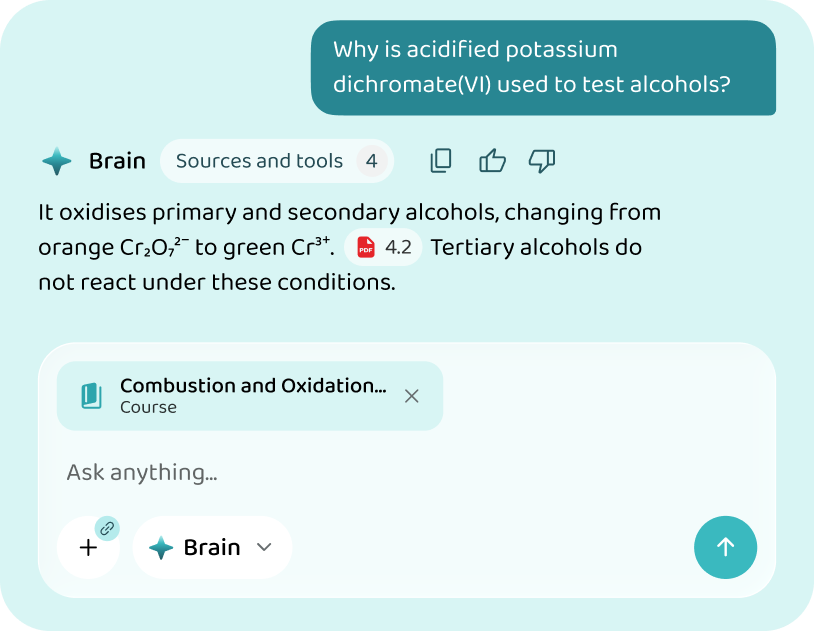
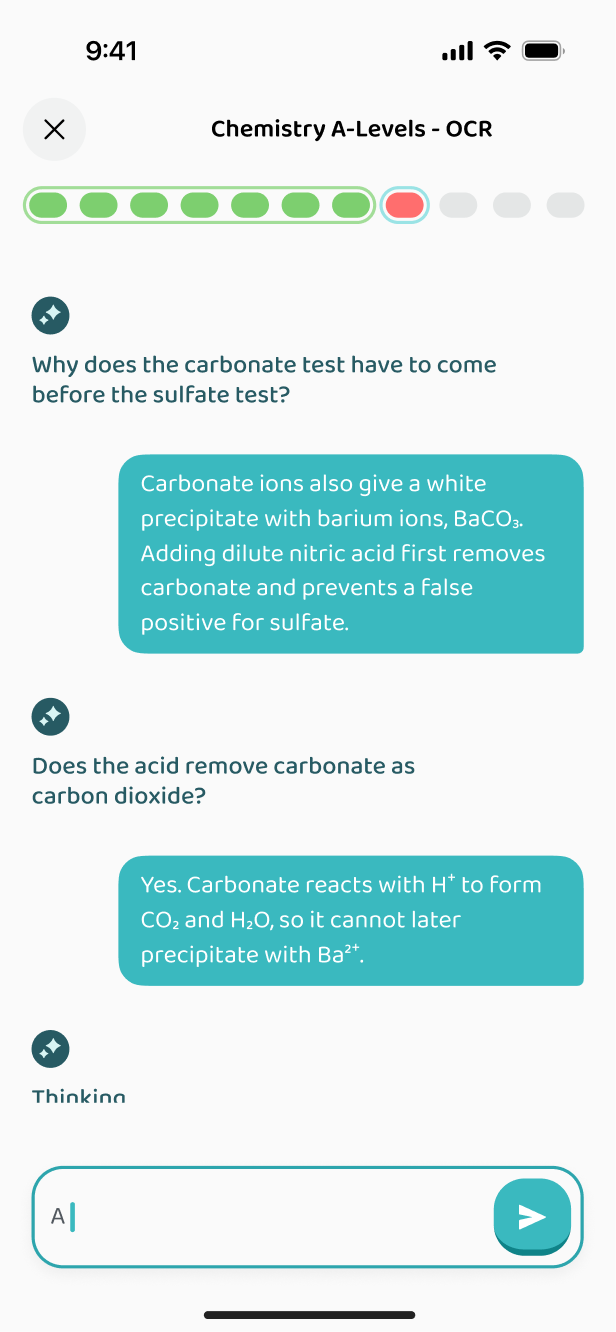
Type a question about any topic and the answer is drawn from this course's own lessons, with a link back to where it is explained. No weak sources, no AI hallucination.
Ask anything
Answers from the course
What's covered
The six modules of OCR A H432
Under OCR's own numbers, with the practical activities the course covers.
OCR A Level Chemistry A H432
1Development of practical skillsSkills assessed in the written papers · The practical endorsement
2Foundations in chemistryAtoms and reactions · Electrons, bonding and structure
3Periodic table and energyThe periodic table · Physical chemistry
4Core organic chemistryBasic concepts and hydrocarbons · Alcohols, haloalkanes and analysis
5Physical chemistry and transition elementsRates, equilibrium and pH · Energy · Transition elements
6Organic chemistry and analysisAromatic compounds, carbonyls and acids · Nitrogen compounds, polymers and synthesis · Analysis
Practical activities in the course
Determining moles
Acid–base titration
Measuring an enthalpy change
Qualitative analysis of ions
Making an organic liquid
Making an organic solid
Electrochemical cells
Initial rates: the iodine clock
pH and titration curves
Planning, evaluation and uncertainties
Not open yet
Get 10% off when it opens
The OCR A course is being built now. Leave your email and you'll hear the day it opens, with 10% off.
Planning
Learn with a personalised study plan
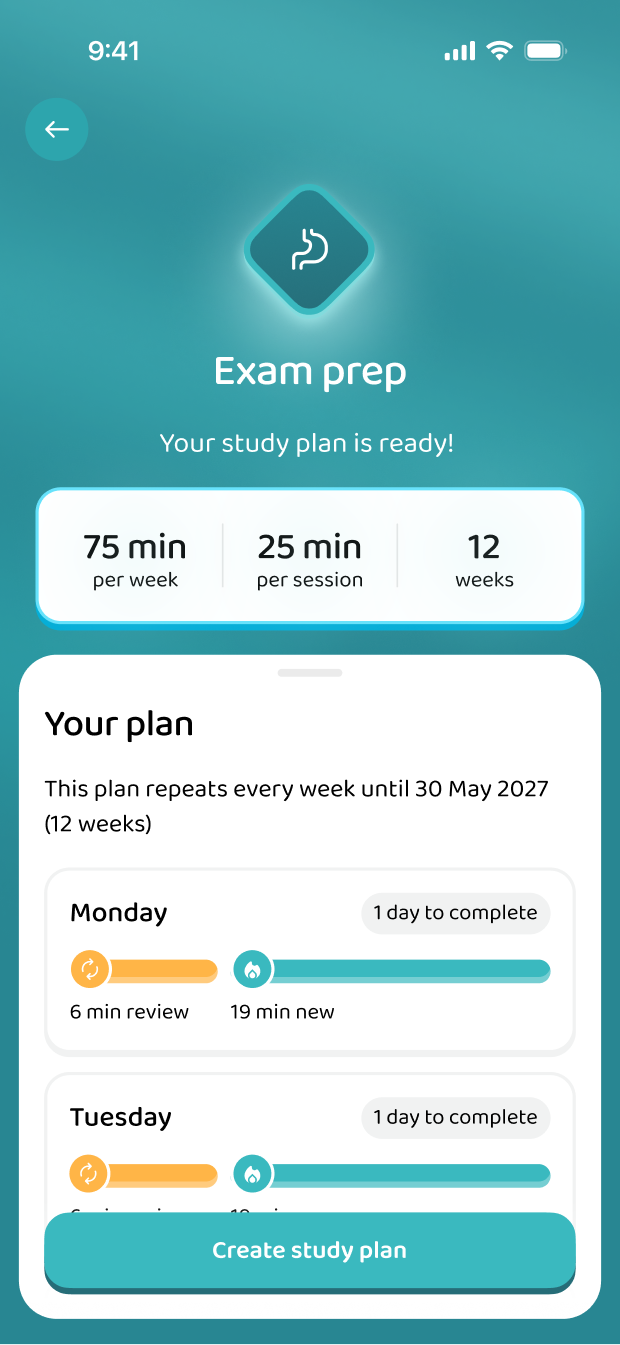
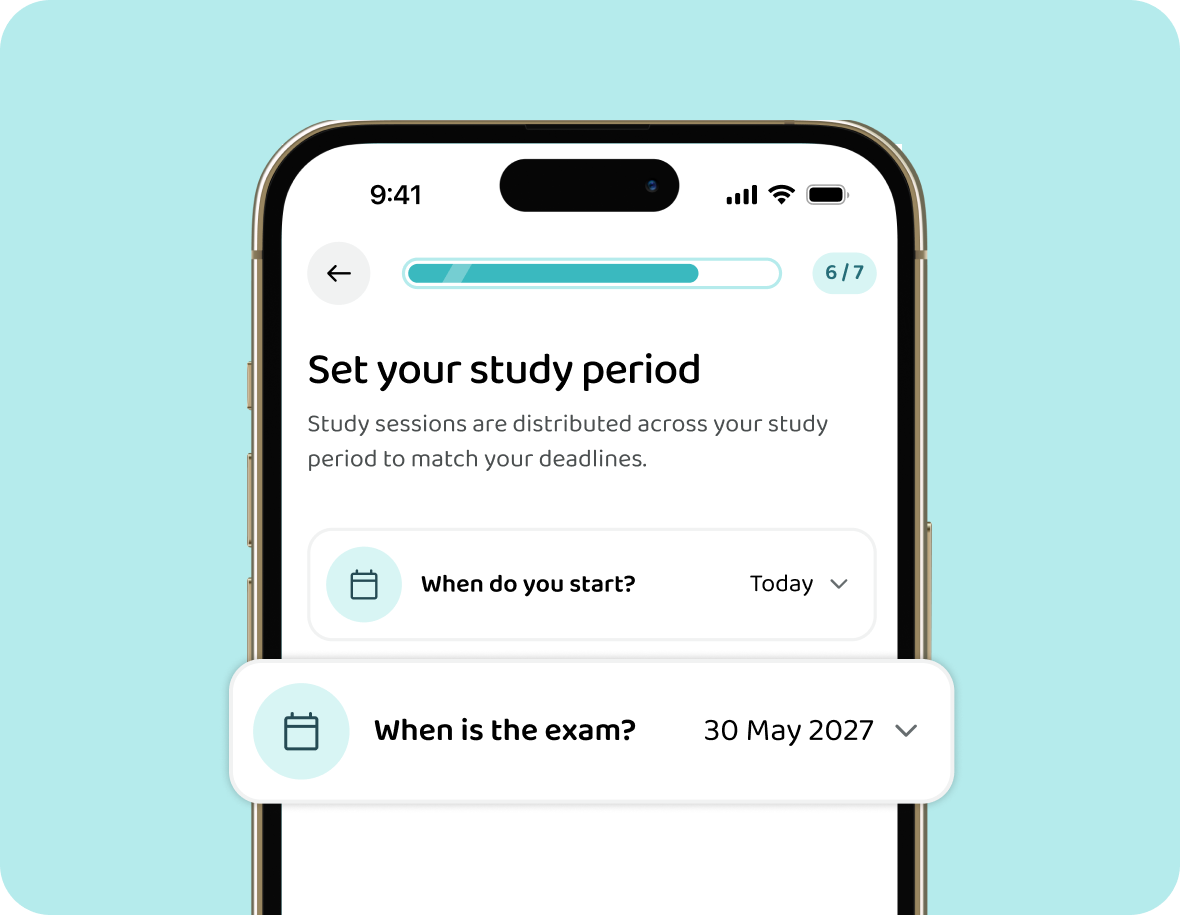
Paper 1 on Friday 28 May, Paper 2 on Thursday 10 June, Paper 3 on Thursday 17 June 2027. Put in the first and the app spreads all six modules across the weeks you have.
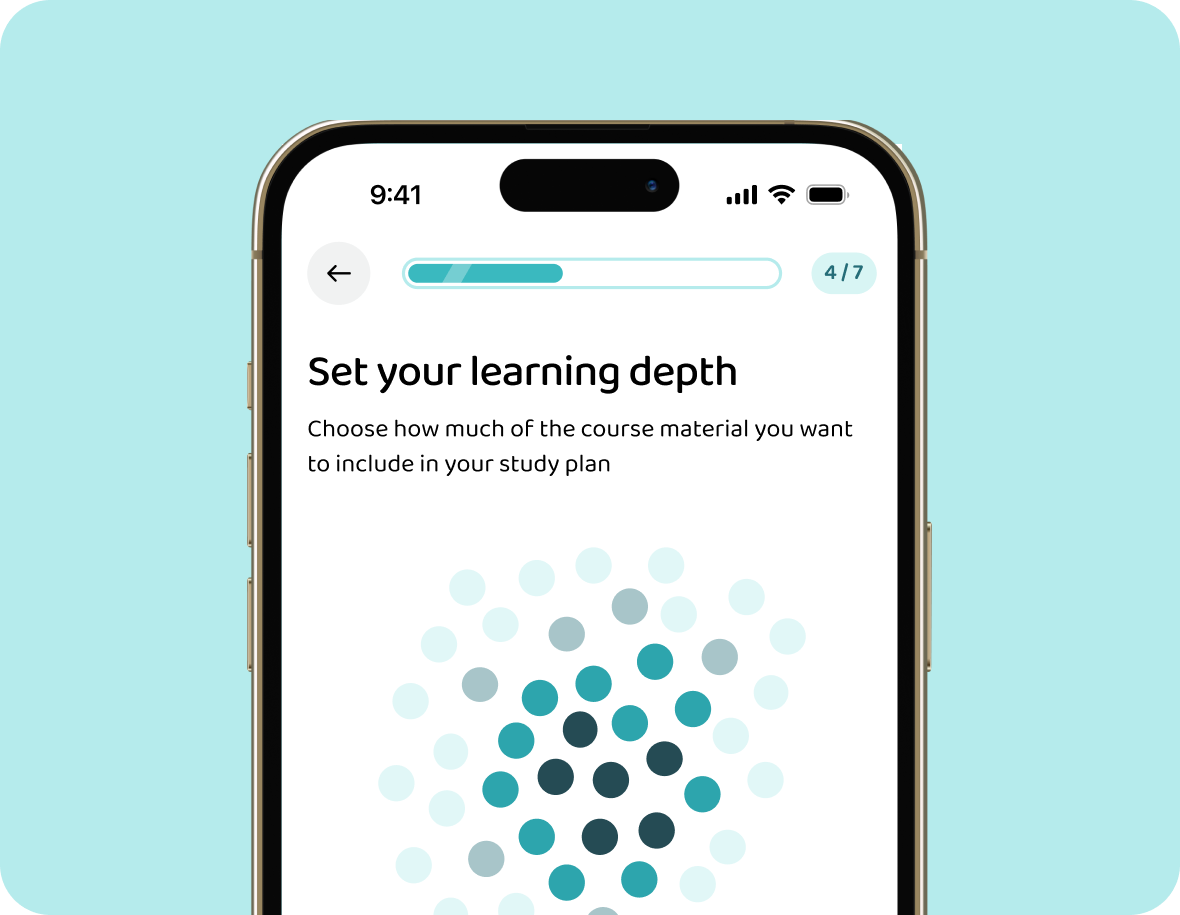
Everything in the course, or the essentials first. You decide how much goes into the plan.
2
Set the date
Paper 1 is on 28 May 2027. The course is spread across the time you have until then.
3
Follow the plan
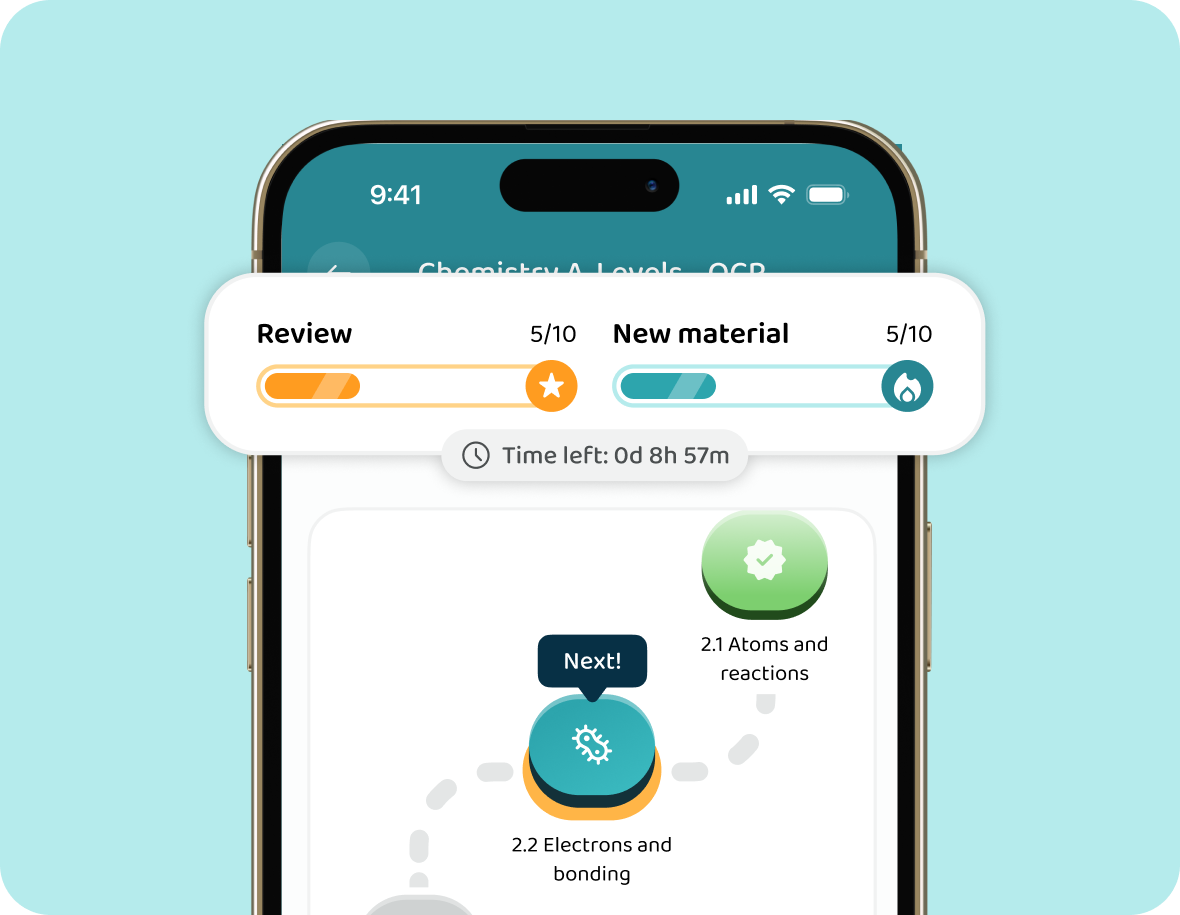
Each day mixes new lessons with the topics you are about to forget, so you never have to decide what to do next.
How you practise
Twelve ways you can practise
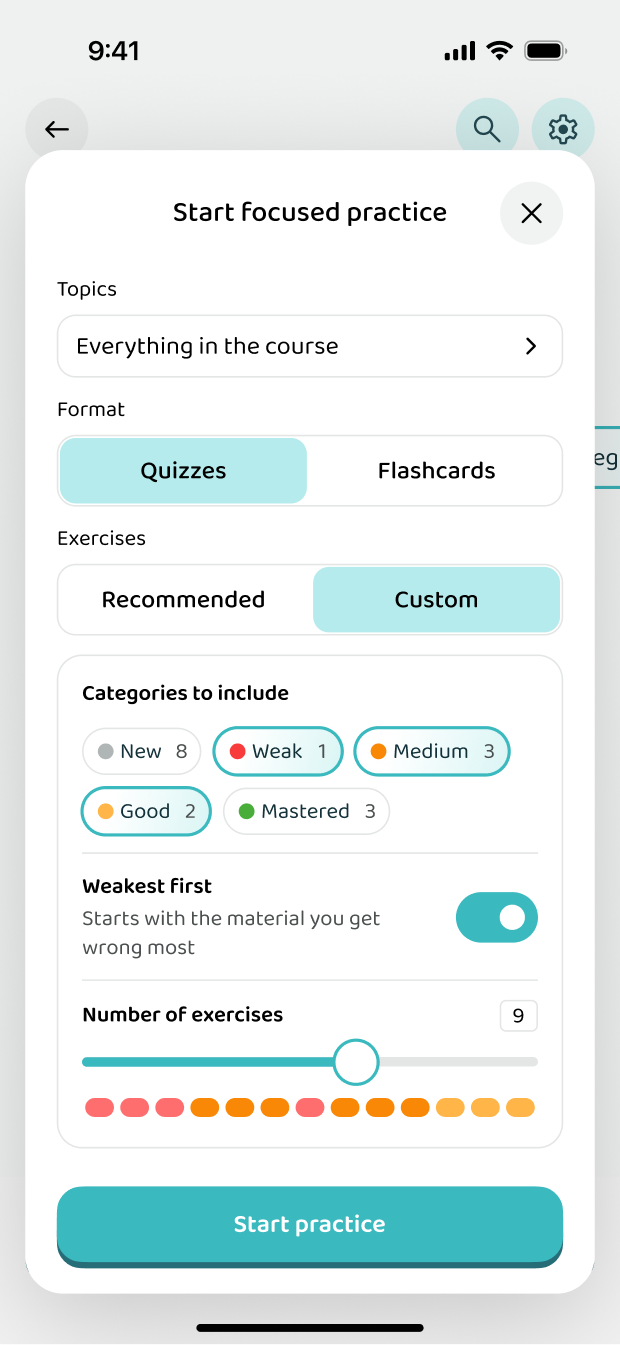
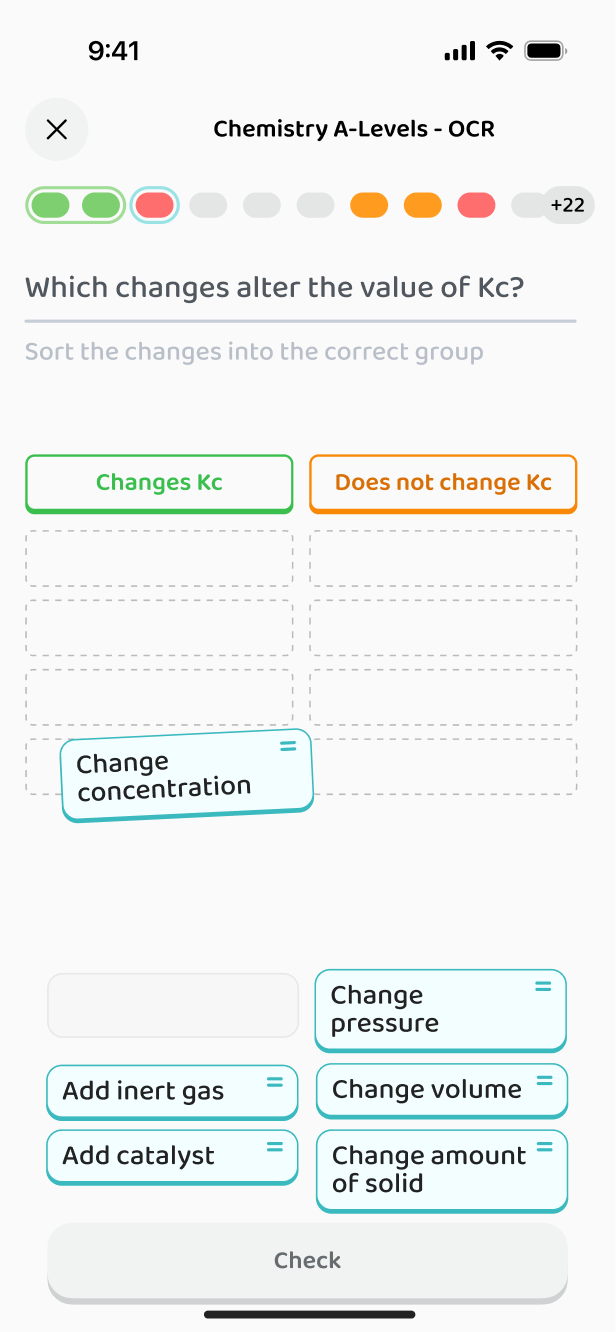
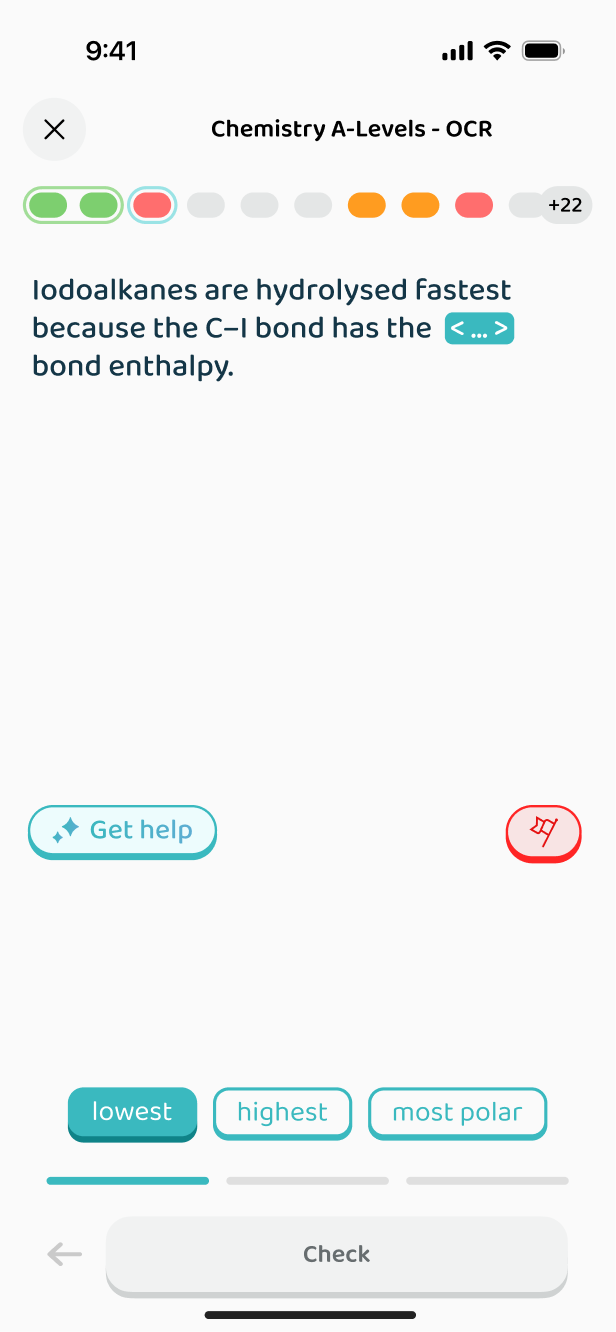
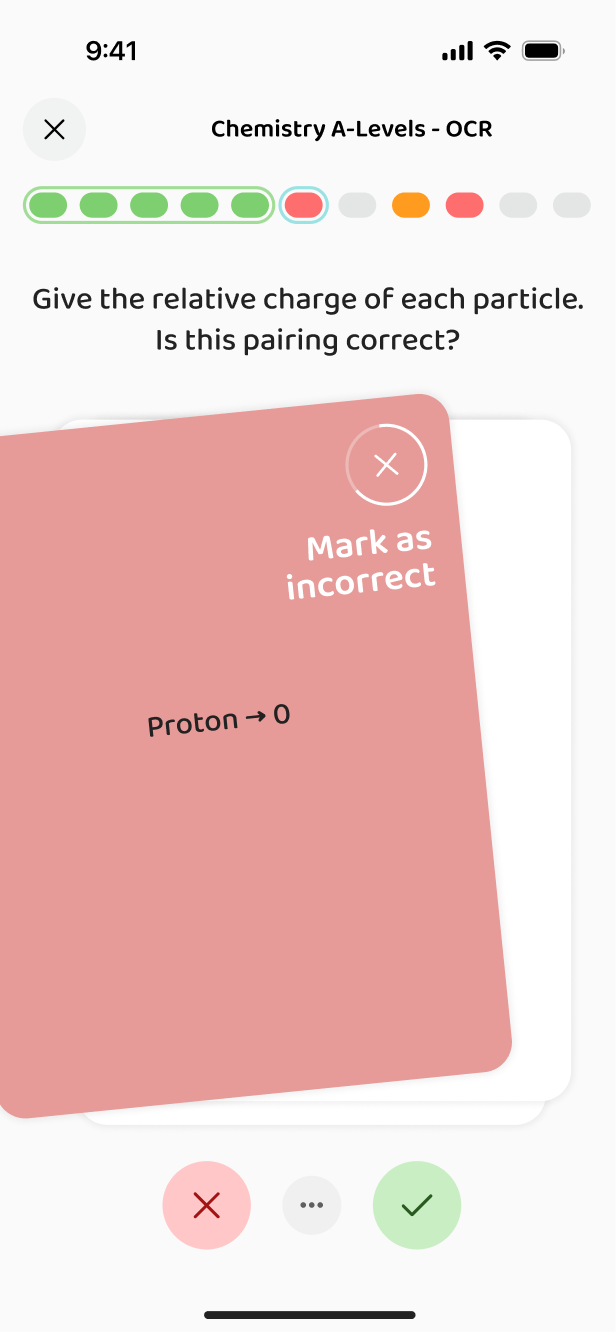
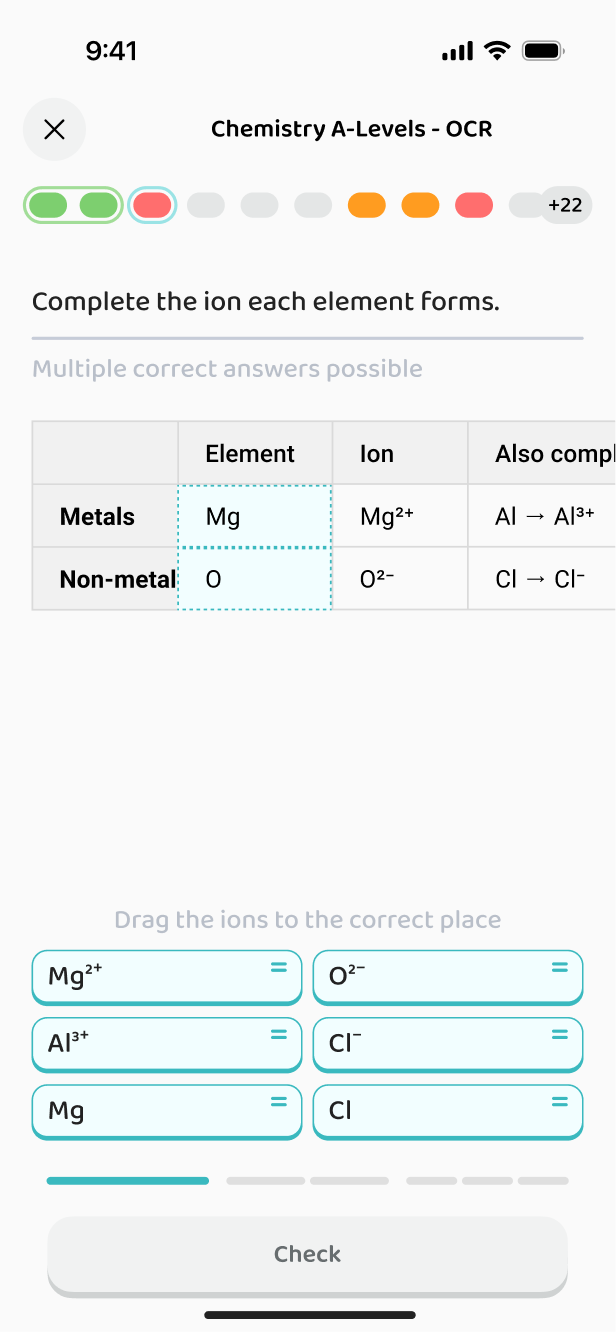
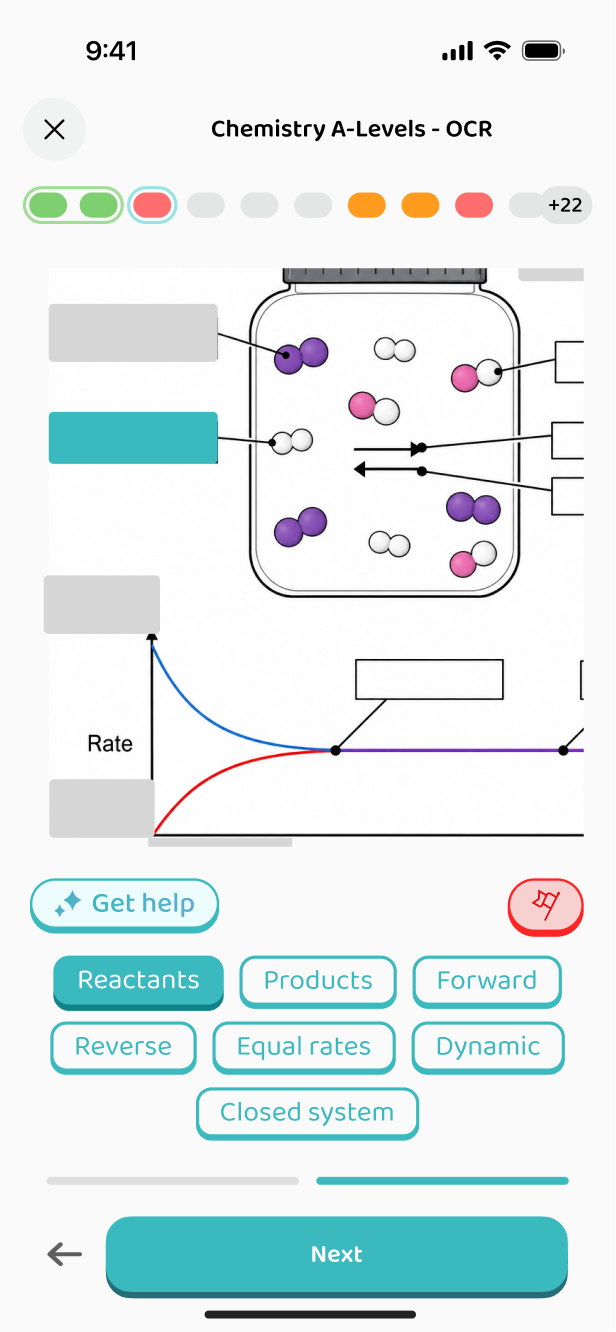
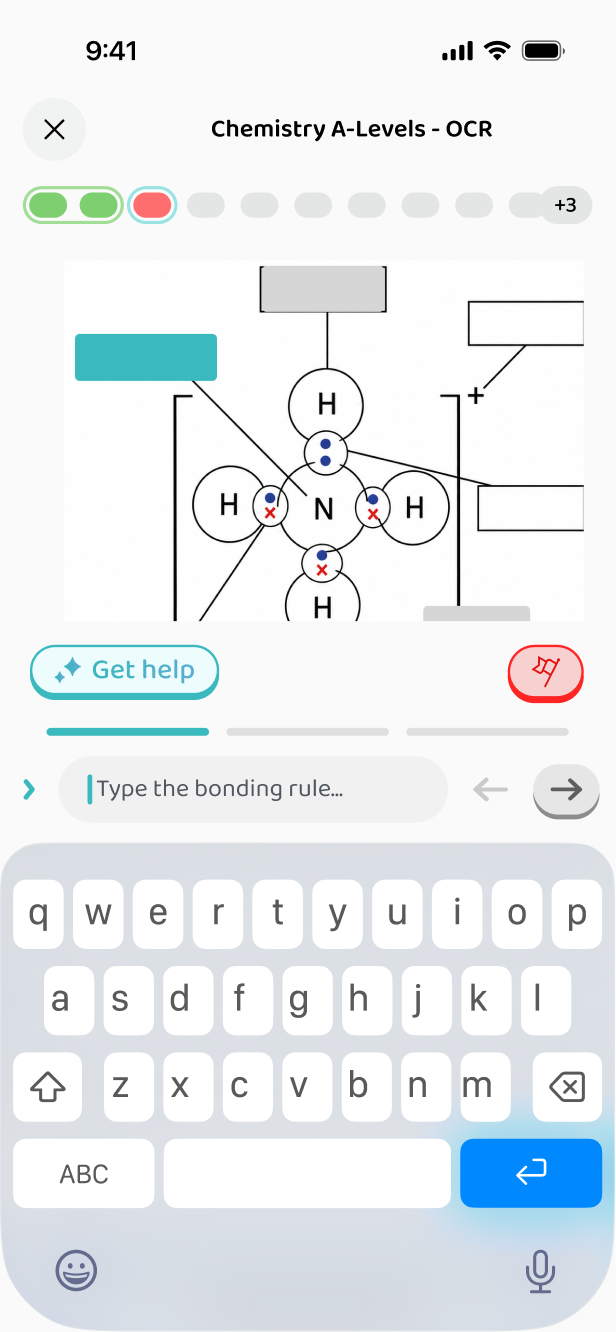
Ordering, matching, tables, labelling a diagram, fill the blank, flashcards. The same idea gets asked more than one way, so you learn the chemistry, not the look of the answer.
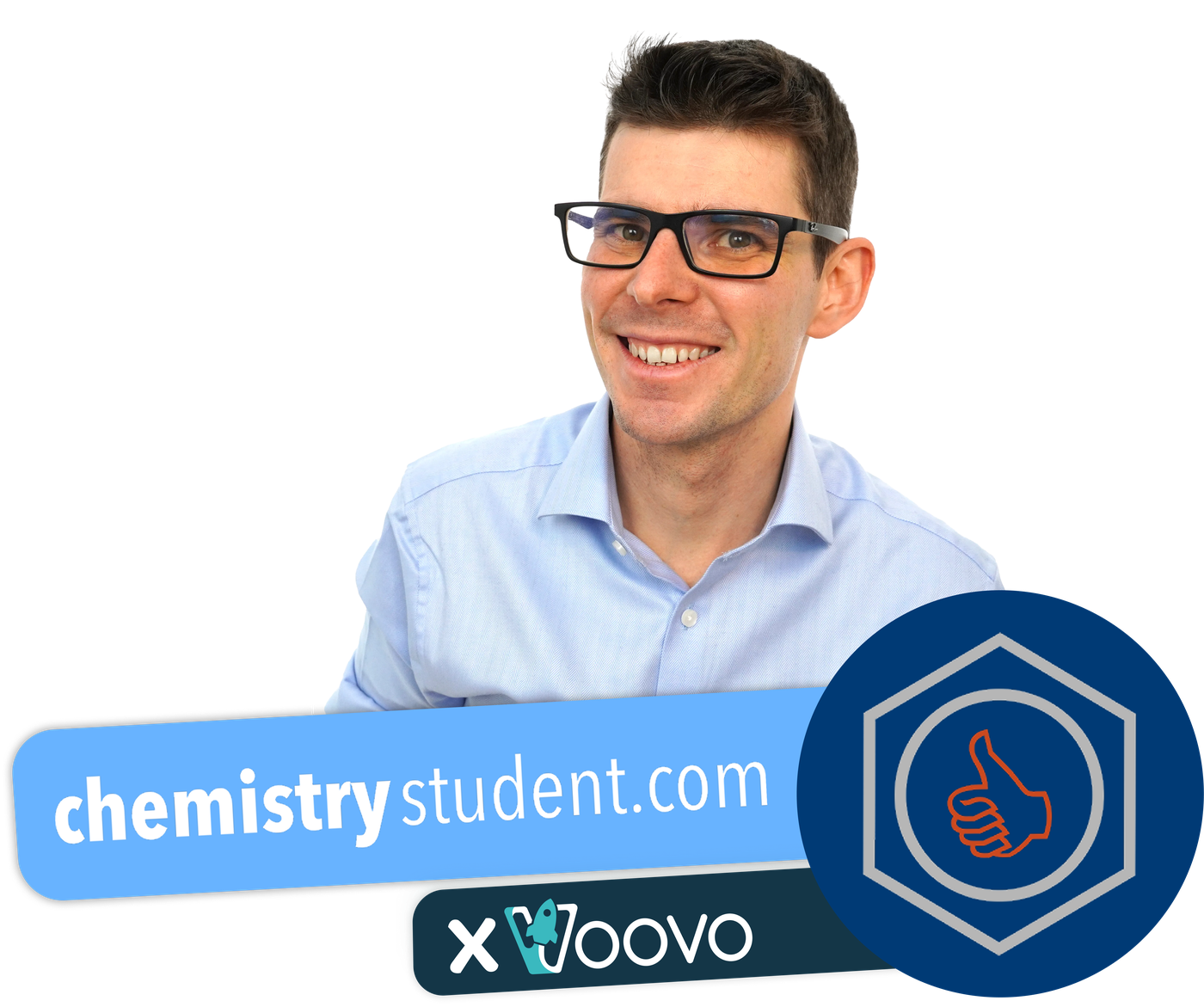
I'm a private chemistry tutor, and I started chemistrystudent.com in 2019 so the notes I use with my own students could be free for everyone.
Every page follows one exam board's specification, point by point, and every video starts with a recap of what you need to know first.
Reading notes feels like revision, but you learn far more by answering questions. So this course asks you about every point on your spec, until you master it. That is the best way to learn.
Private A-level and IB chemistry tutor
chemistrystudent.com, free since 2019
31,000 subscribers on YouTube
Mattchemistrystudent.com · private A-level and IB chemistry tutor
Questions
Aren't Matt's notes free?
Yes, and they stay free on chemistrystudent.com. The course is where you learn your spec in order and get asked about it, with the things you get wrong coming back before the exam.
Is this OCR A or OCR B?
OCR A, H432, module by module under OCR's own numbers. OCR B (Salters) is a different course. Neither is made or endorsed by OCR.
Does it cover the practical work?
As questions, yes: the methods, the measurements and how to evaluate them, for the activities listed above. It doesn't replace doing them in class.
Does it mark my written answers?
No. Every question in the app has a checkable answer, so it can't mark a long answer and doesn't pretend to. What it drills is the chemistry those answers are built from: the facts, the steps of a calculation and the reasons behind them.
I'm in Year 12. Is it too early to start?
No. You choose which topics go into your plan, so you can start with what your class has covered and add the rest as you go.
For parents: what is this?
A A-level chemistry study course in the Voovo app, built with Matt, a private A-level and IB chemistry tutor who runs chemistrystudent.com. It doesn't replace school or a tutor; it's the practice in between. It isn't open yet: sign up on this page and you'll hear the day it opens, with 10% off.
The date
Paper 1 is on 28 May 2027.
Sign up now and you'll hear the day it opens, with 10% off.